Monday, April 13, 2009
Trouble Under Oz by Sherwood Smith
This sequel to The Emerald Wand of Oz continues the adventure of Dori and Em, two modern sisters who think they are related to Dorothy Gale (whose adventures in Oz over 100 years ago were chronicles in 14 books by L. Frank Baum). The Nome Prince Rikiki is planning to return home to claim the throne from Kaliko who has been ruling since Rik's father was driven out. Ozma summons Dori, who became friends with Rik in the first book, and asks her to accompany Prince Inga of Pingaree on a mission to visit Rik. She fears that a struggle for power in the Nome Kingdom might trigger a war with their hostile neighbors, and feels Inga, with Dori's help, will be able to communicate with Rik. Meanwhile Em is left at home to cover for Dori's absence.
It is best to be familiar with Baum's original stories to appreciate the many adventures Dori has with Inga and Rik as they revisit lands and people that Dorothy knew 100 years ago. For those familiar with Baum's work this can be a delightful chance to learn more from the latest Royal Historian of Oz. Being the second book of a trilogy, however, do not expect all plot themes to be completely worked out. The third book of this trilogy, while written, has not yet been published. Hopefully soon, the final volume will become available and we can learn the conclusion of this interesting contribution to the Oz series.
Tuesday, April 01, 2008

All Things Oz is editor Linda Sunshine's "whirlwind tour" of Oz, L. Frank Baum's literary fairyland. She teamed up with Oz memorabilia collector Willard Carroll to put together a sampling of Baum's writings, surrounded by images from Carroll's collection that provides a delightful introduction to new readers and wonderful memories for loyal fans.
Sunshine scoured all 13 of Baum's Oz novels as well as his short stories for passages that exemplify the wit and wisdom that has endeared these books to readers for over 100 years. Each page is in full color with illustrations of Oz and its citizens from all over the world. The result is a beautiful book in word and image that is truly a delight for anyone interested in learning about Oz.
Thursday, February 07, 2008

Scouts in Bondage is a photographic collection of book covers of titles that have not withstood the test of time. Compiled by a retired British secondhand book seller, this is an amusement for the bibliophile with a taste for the double entendre. This is a very short book with minimal text. Highlighted are about 45 photos of book covers whose intent was serious at the time but, over time, have developed unintended secondary meanings. Facing these covers is the bibliographic details (Author, title, publisher, date, and size) and occasional excerpts or additional information to add to the amusement.
Being an engineering librarian, I
The Resistance of Piles to Penetration
and
Hardening and Tempering Engineers' Tools
as well as the illustration of the goddess Hygieia holding a water closet pull chain on the cover of The Modern Plumber and Sanitary Engineer.
Sunday, September 24, 2006

I Love [heart symbol] Lord Buddha. Hillary Raphael
The setting for I Love Lord Buddha is the hostess bars of Tokyo in 1997. The main characters are western hostesses who spend their nights socializing and drinking with men in these bars. Amongst them is a charismatic leader from New York who takes the name HIYOKO and starts recruiting these displaced women into a new-Buddhist group called the Neo-Geisha Organization. Reinterpreting Buddhist philosophy through her cultish mind, HIYOKO plans for a cataclysmic event that will shake humanity into exercising Buddhist values so as to avoid a larger global catastrophy. It is a lively story with lots of sex, drugs, and Buddhist theory, which portrays the lack of spiritual values in modern commercial Tokyo.
The plot unfolds as HIYOKO's cousin Heidi Peterson, a sociology grad student from the States, arrives and starts doing her research on the Neo-Geishas and their enigmatic leader. It takes the form of Heidi's notes, interviews, police reports, and pages from various documents following each other in brief chapters, many only one page long.
Fast pacing and an interesting structure give the novel a unique look and feel. Very little is capitalized. which makes reading a bit hard since the break between sentences is only the tiny period. Without a leading capital letter new sentences can be hard to find at times. However this typographic style contrasts well with the fact that HIYOKO is always in all caps.
Well written and plotted the novel does a good job of creating the world of the characters and the moral dilemma of our times.
Monday, September 11, 2006

The Visitors from Oz. L. Frank Baum
This book is considered by some to be the lost "Third Book of Oz" since the material it contains was written in 2004 and 2005 after the publication of Baum's first two Oz books: The Wonderful Wizard of Oz (1900) and The Marvelous Land of Oz (1904). The book features six characters from The Marvelous Land of Oz who leave Oz to travel through the United States of America.
This is probably the worst of Baum's Oz writing. Baum reused ideas from other books, and engaged in what are today offensive racial and ethnic stereotypes. Twenty six chapters of this book were originally Sunday newspaper pieces that were written as promotional material to advertise the books and the upcoming 1905 stage musical called Woggle-Bug. Seventeen of these were part of a contest in which each story ended in a situation that puzzled all the visitors except the Woggle-Bug who told them the answer but which wasn't revealed until the next week. The readers were invited to guess the answers for a chance at a prize. The last and longest chapter was originally published in 1905 as The Woggle-Bug Book. This segment follows the plot of the stage musical and, with its heavy reliance on ethnic humor, gives a pretty good idea as to why the musical failed. At the end of the book are 15 newspaper articles dated between August 18 and October 3 1904 that detail the flight to Earth by the Oz characters and relate their adventures in false news story style.
At the back of the book is a history of the material's creation and publication called "American Fairyland" that was written by David Maxine. Here we learn that two prior attempts to publish these stories in 1960 and 1986 were edited or abridged to remove offensive words and dialect. This is the first time since its original publication that the stories are printed as they were written.
The book does provide a look into life in the US as it was perceived by Baum 100 years ago. In that sense it provides a clearer perspective on Baum's world than his fairy tales. Also the illustrations by Eric Shanower, although created much later than the text, are delightful representations of the stories by the best Oz illustrator.
Friday, September 08, 2006

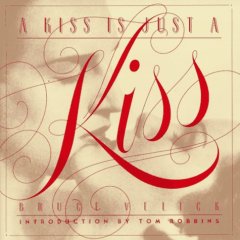
A Kiss is Just a Kiss. Bruce Velick
This is not a narrow-minded boy kisses girl tribute to heterosexual romance although there are lots of pictures like that. The book contains 60 black and white pictures that span the 20th century from 1915 to 1988. In addition to the heterosexual romantic kiss there are men kissing men, women kissing women, people kissing animals, animals kissing people and other animals, children kissing each other, adults kissing children, people kissing statues, statues kissing statues, kissing in the foreground, kissing in the background, and even a person kissing the pope's ring.
Each picture has the photographer's name beneath it and a list at the end of the book lists the photographer, the title, the date, and the owner of each photo. Two are from before the 1920s, three are from the 1920s and 30s, eight are from the 1940s, nine are from the 1950s, five from the 1960s, eleven from the 1970s, and 12 are from the 1980s. Ten have no dates associated with them.
These are famous photographic kisses. Included are William Mortensen's The Kiss, Robert Doisneau's Le Baiser de l'Hotel de Ville, Dennis Stock's Cafe de Flore, Weegee's Palace Theater, an untitled kiss by Elliott Erwitt, Louis Stettner's On a Dutch Ferry, and Alfred Eisenstaedt's Times Square VJ Day,
There are also pictures by Peter Marlow, Bruce Davidson, Joan E. Biren (JEB), Chris Steele-Perkins, Henri Cartier-Bresson, Leonard Freed, André Kertész, Burt Glinn, Mary Ellen Mark, Ernst Haas, Barbara Crane, Gilles Peress, Lou Stoumen, Josef Koudelka, Sage Sohier and many others.
Combine this with a delightful essay on the history and importance of kissing by Tom Robbins and you have a great book. It would make a wonderful gift for a lover or a friend. Buy one for yourself and be inspired.
Tuesday, September 05, 2006

Forever Fifty. Judith Viorst
Judith Viorst has become the poet of aging with books of poetry dedicated to her lyrical and funny perceptions of each decade of life from the 20s to the 60s. With Forever Fifty And Other Negotiations she explores with insight and humor the joys and fears of being in your fifties. The book contains 24 one-page poems that are accompanied by full page graphic illustrations in green ink on a rich cream paper. The 24 graphics are reproduced on the end papers. The attention to design makes this a wonderful gift for a quinquagenarian friend.
The poems are funny and sentimental yet bittersweet. In some poems we see a person who is struggling to accept the limitations of middle age (where running wild is to go for a walk without sunscreen and memory can't be relied upon). In others she seeks the joys that come with the wisdom of years as when she says "We're quicker to laugh, and not so eager to blame." In yet others, she makes affirmations to live life "as a sexy old lady" and lists the things she'd like to do before she goes.
There are poems that take humorous looks at adult children, long-term marriage partners, and young doctors.
Overall, a wonderful but light look at the aging process of the 50s. It is a book you will enjoy, but one that will not burn into your soul.
Monday, September 04, 2006

Nothing Natural. JennyDiski
I found this to be a powerful book that delved deeply into the life of a woman named Rachel who becomes involved in a sadomasochistic relationship with an emotionally distant man. Initially I felt the title referred to this s&m relationship. However, as the author reveals more of Rachel's life, it appears that there is nothing natural in her emotionally starved world. Her parents fought bitterly when she was a child. She struggles with paralyzing spells of depression and is incapable of emotional closeness. She is delightfully articulate and quick witted - an intelligent woman with a large share of emotional distress. We watch her spiraling deeper into a suicidal state and it takes a strong reader to maintain compassion. Finally her darkest hour passes, and the novel ends with her first steps towards a healthier self concept. Compelling reading and wonderful character development - a great first novel.

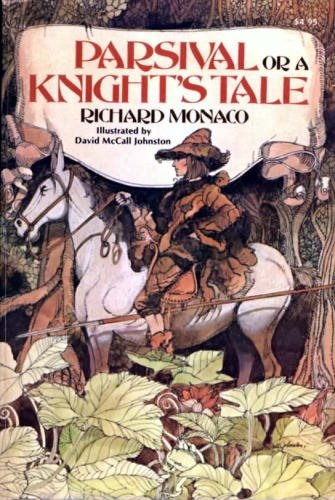
Parsival: Or, a Knight's Tale. Richard Monaco
This is the first of a now out of print four volume series based on the Arthurian Grail quest of the hero Parsival. The other three volumes are: The Grail War; The Final Quest; and, Blood and Dreams.
This first volume follows Parsival from his overprotective mother and his childhood home on his first quest to become a knight at King Arthur's round table. Once he is a knight, he begins his second quest to find the Grail Castle and discover its secret.
A parallel story tells of Broaditch, a servant from his mother's castle, who sets out soon after to find Parsival. The two quests compliment each other with short episodic chapters from each telling the tale of the book.The book is not for the squeemish. There is a war and lots of bloodshed. The people are bawdy rather than chivalric, and the sexual relationships are not always consensual. However, it is an exciting and humorous retelling of a medieval tale. I can't wait to read the rest of the series.

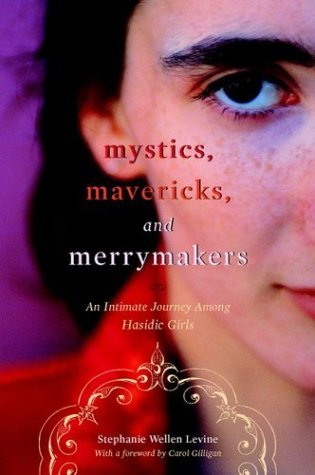
Mystics, Mavericks, and Merrymakers: An Intimate Journey Among Hasidic Girls. Stephanie Wellen Levine
I read this book as a non-Jew who was interested in Hasidism. This particular book attracted me because I am the parent of two teen-age daughters. Having close contact with the problems my daughters face in the modern world I felt would help me understand the issues of Hasidic young women. Although the book is not designed to give a rigorous introduction to Hasidism, I am quite delighted by Stephanie Levine's work and the chance it has given me to have a glimpse into the spiritual and mundane issues of modern Lubavitch Hasidism.
Far from being a broad review of young Hasidic women, Levine focuses on the Lubaticher sect of Hasidism and its community in the Crown Heights section of Brooklyn, New York. She spent over a year living with and interviewing the students, teachers, and parents associated with the Bais Rivka Lubavitch high school, a girls-only school.
Hasidic girls have very little contact with males outside their immediate families. Their religious beliefs allow them only the slightest contacts with the world outside their community. Popular videos and music are not allowed and dietary restrictions only allow eating in the most kosher of restaurants. The "mavericks" part of the title has to do with the rebellious response that the young women sometimes bring to these severe restraints.
The "mystics" aspect of the title has to do with the deeply spiritual aspects of Hasidism where every thought and action of an individual's life has cosmic implications as the community does all it can to bring about the coming of the messiah. The last chaper of this book, "Into The Future," begins with a wonderfully clear and concise description of Lubavitch mystical beliefs.
The irrepressible joy and exhuberance of the young women, that the spiritual practice of Hasidism seems to promote, leads to the author's use of the term "merrymakers" to describe the subjects of this book.
Levine starts off the book with a general introduction to the Crown Heights Lubavitch community and the background to her study. She talks about the Bais Rivka school and its students.
Then in a series of seven chapters she takes in depth looks at seven of the young women she was able to get the closest to in her year of research. We meet their families and see their day to day life. We hear them describe their current life and aspirations. As the most important duty of a Lubavitch woman is to marry and have children, their mate selection and preparations for married life are part of these chapters.
The last chapter contains a look at the future for both the young women and the Hasidic movement. This is a wonderful book for anyone like me who is interested in Hasidism or the lives of young women in the modern world. Levine is a wonderful writer and she treats her subjects with fondness and respect. Yet she is honest and direct. So this study has both objectivity and admiration, a delightful combination in such a work.
Castle Rouge. Carole Nelson Douglas
Irene Adler is a character created by Arthur Conan Doyle and the only woman who ever outsmarted his famous detective, Sherlock Holmes. Carole Nelson Douglas has taken Irene and turned her into a detective with her own series of mystery novels. In this book, Castle Rouge, the action picks up from the previous volume Chapel Noir, with Irene seeking out the person or people who have perpetrated Jack the Ripper like murders in Paris a year after the Whitechapel murders in London. She is in desperate pursuit because it appears that her colleague Nell Huxleigh and her husband have been taken by the same culprits. But who are they? In this second volume Irene leaves Paris first for Prague and then a castle in Romania. Who is responsible for this international crime spree? Don't read the Selected Bibliography at the end of the book until you have finished it. You may find a spoiler of a clue there,
A long tale that stretches across two large volumes, but the excitement never flags. Highly recommended - a feminist point of view on the Victorian era.

Chapel Noir. Carole Nelson Douglas
Irene Adler is the only female adversary to outwit Sherlock Holmes and she may have stolen his heart as well. Carol Nelson Douglas has taken the brief outline of Irene Adler in the Sherlock Holmes adventure A Scandal In Bohemia and fleshed it out into a marvelous sleuth of her own design. She has created her own series of books with Irene Adler as a 19th century detective with a feminist flair.
Adler's latest two-part adventure, Chapel Noir and Castle Rouge, is told through a series of journal entries by her female companion Penelope Huxleigh. Additional chapters are supposedly taken from notes written by a prostitute called Pink and sections of a mysterious yellow book of anonymous authorship. This multiple "authorship" allows Douglas to present her story from different perspectives.
And what a story! In Chapel Noir Adler is called on by Baron de Alphonse Rothschild to investigate a particularly bloody murder in a Parisian bordello. Before long Jack the Ripper is the suspect and Sherlock Holmes (sans Watson) has come to Paris to investigate. As the plot moves on, more famous historical figures are drawn in either as suspects or allies. 470 pages later I found, instead of the end, that this is the first of a two part story.
A rollicking adventure that continues for another 470 pages in Castle Rouge. Lots of fun if you can stand the gruesome aspects of the crimes.
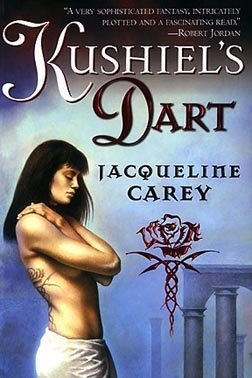
Kushiel's Dart. Jacqueline Carey
What an epic adventure! This book starts out slow and I was tempted to stop reading it often during the first 300 pages.
It is a hard book to read. There is a six page Dramatis Personae that lists the major characters and it can be very confusing at times. The second half is easier as less characters are introduced and the action kicks in big time.
The author sets up an alternative historical France that she calls Terre D'Ange, the Land of Angels, at around the time 800CE. There is a whole alternate theology based on the son of Jesus (Yeshua in the book) and the Magdalene.
The book reminds me of The Hobbit in the sense of it being an epic adventure through many lands and past many challenges, but the hero is a woman and a masochistic prostitute at that. The book is more sensual than explicit with a free love theology as a theme. However, the emphasis is on the machinations of courtly politics and war.
Once the action starts, it is hard to put down.
Folly. Laurie R. King
Laurie King's Folly is a very sympathetic portrayal of the effects of psychosis and madness on the individual. In this case it is Rae Newborn who is literally reborn from her last bout of suicidal mental illness through the solitude of an uninhabited island and the project of rebuilding a burned-out house. We join her as she leaves therapy to live on an isolated island off the coast of Washington state. Her only human contact is a weekly visit by a tatooed man called Ed who drops off her supplies and picks up her laundry and shopping list. She starts off by dumping her medications into the Sound (pharmaceutical pollution!) to live drug free with her imaginary Watchers and her suicidal depression.
The mystery aspect of the novel is based on the old adage: "just because you're paranoid doesn't mean the world isn't out to get you." She is a famous artist with her own and inherited wealth. Her son-in-law is involved in shady dealings and always seeking money from Rae. Her geat uncle Desmond originally built the house and disappeared when a mysterious fire destroyed it just before completion. Is someone out to get her or is she just psychotic? As the work on the house proceeds and her health improves this question keeps up the suspense.
The structure of the novel is broad sections named after the progress of the house reconstruction (Clearing the Ground, Laying the Foundations Building Walls, Raising the Roof Beam, and House Warming). Each of these is introduced by some brief statement by an anonymous Victim who seeks vengeance against The Thief. Who these two are the ultimate mystery of the novel. Each section is divided into chapters that are told from the point of view of Rae Newborn. To break up this a bit, the author introduces chapters throughout the text that are selections from Rae's journal, Desmond's journal, Rae's letters to her granddaughter Petra, and letters from Petra.
Laurie King is a master of character development and locale. Her depiction of Rae and the people with whom she interacts brings these people to rich and complex life. Even when the readers know they are minor characters, we are still treated to people who bring a complexity to their roles. This is also true of the setting in the San Juan islands. The pace and ecology of this community is lovingly portrayed. Add to these the technical details of house carpentry and woodworking, and you have a very rich and satisfying novel.
Folly is an excellent mystery. Without the known anchors of Ms. King's mystery series (Mary Russell and Kate Martinelli), this book may lack some of the success of books in those series. I found it difficult at the start because Rae has been suicidally depressed and I have a natural reluctance to make friends with people like that. Yet it is by confronting our discomfort that this book is ultimately successful in providing a deep insight into the stigma of mental illness.
Wednesday, August 16, 2006

Harding's Luck. Edith Nesbit
Are Edith Nesbit's novels where J. K. Rowling got the idea for her Harry Potter series in which magical witches and wizards live secretly among normal humdrum people (muggles)? It was Nesbit, who wrote 60 children's novels, that first started writing about everyday English children discovering magical people, charms, and spells in their midst. One of the founding members of the Fabian Society, Nesbit was famous in her time for her Socialist beliefs and friends. However, presently it is her children's books that are her enduring legacy.
Harding's Luck is the second of a pair of novels about Dickie Harding a young orphan in 1906 London who uses a crutch because his left leg doesn't work. When his father died he left Dickie an old toy that was to bring him luck, but as the story opens there is little luck or joy in the child's life.
Nesbit's Socialist beliefs are strongly represented in her portrayal of Dickie's poverty. She describes life for the poor of the time as follows. "...All the green trees are gone, and good work is gone, and people do bad work for just so much as will keep together their worn bodies and desolate souls. And sometimes they starve to death." She also portrays a society strictly divided by class in which Dickie is poor but has noble blood which elevates him above those around him.
The magic of the story is a spell involving the toy his father gave him that puts him in contact with a trio of magical moles called Mouldiwarps and a nursemaid witch. This group transport him back 300 years to the time of King James I where he is Richard Arden, a young boy of noble family who has two healthy legs. He travels back and forth between his London and that of James I with the help of the Mouldiwarps. In the process he saves the Arden family's fortune and has to decide between his present-day London and that of 300 years ago.
Nesbit is a wonderful storyteller and the plot is full of detail and adventure that make it a delight to read. Her use of the street language of the time makes this a difficult book for young readers of today, but adults who like children's literature will find it a delightful glimpse of English life. H. R. Millar's 16 original drawings help bring the tale to life. This Books of Wonder edition suffers from bad proofreading. I found over a dozen misspellings that should have been caught in the editing process. Although this is one of a two volume series, it can be read alone with no problem.
Saturday, August 12, 2006

To Play the Fool. Laurie R. King
To Play the Fool is the second of a series of mystery novels by Laurie King that feature the San Francisco homicide detective Kate Martinelli. The first book, A Grave Talent, was an Edgar Award winner.
This book picks up about a year after the first, and finds Martinelli and her partner Al Hawken investigating the death of a homeless man in Golden Gate Park. There are no witnesses or evidence, but an enigmatic old man called Brother Erasmus who speaks only in quotations becomes a prime suspect. Quickly the story changes from a homicide investigation to an attempt to find out about the mysterious Erasmus, who is either a saintly fool or mentally ill.
Laurie King is in her element as the scholarly street person quotes from the Bible and Shakespeare to answer all questions, leaving the two worldly detectives to puzzle over his meaning. Either he killed the man, or he knows who did. They must find a way to make him talk in a way that will make sense to the legal system to solve the crime.
As with A Grave Talent, King creates wonderfully complex characters that draw the reader into the story. Also her plot is sufficiently complex to keep you guessing. I fell in love with the kindly Brother Erasmus and the people who were drawn to him. A delightful story that is well told.
Tuesday, August 08, 2006

The Amorous Busboy of Decatur Avenue. Robert Klein
The Amorous Busboy of Decatur Avenue is Robert Klein's memoirs of growing up in the Bronx in the 1950s. Born in 1942, Klein writes affectionately of the basic influences of his youth during the years 1951 to 1966. Each chapter begins with a picture of Klein during the period discussed.
His parents were children of immigrant Jews who were "careful, cautious, wary people" and passed on their concerns to Klein and his sister. His bedroom was a Castro convertable ottoman in the living room of their small 6th floor apartment.
The first four chapters cover his life in junior high and high school in the Bronx. Having grown up in the Bronx myself during this time, I found these very well written and full of delightful details.
The next five chapters are about his life at Alfred University in rural upstate New York. Here he confronts anti-Semitism and develops a love of acting and comedy. He also works summers in the Catskill Mountain resorts made famous in the movie Dirty Dancing. He is no Patrick Swayze, and his amorous nature is mostly unfulfilled.
The last six chapters tell the story of his breaking into show business. His first success in Chicago's Second City and his friendship with Rodney Dangerfield are highlights of this section.
One of the recurring themes of the work is his sexual relations over time. Beginning with his losing his virginity to a 112th Street prostitute, Klein reminisces about the women in his life and the sexual and sometimes loving relations he had with them. Although he is not very graphic in his descriptions, this male oriented portrayal of sex in the 50s and early 60s may seem insensitive by modern standards. Yet it is his very honesty at representing the male attitudes of the time that makes this aspect of the book especially interesting. He says he writes "not to titillate but to communicate the excitement that sex held for me and its importance in my life." This was a time of great changes in sexual attitudes and his depictions of his and his friends' sexual interests over these 16 years shows how radical the change was.
All in all this is a wonderful memoir of New York life in the 1950s. It is also an insightful portrayal of college life at the time, especially in an era when Jews were still being discriminated against in fraternities and other aspects of academia. Lastly, Klein does a great job of describing his beginning career as an actor. How he learned his craft, the problems he faced, and the people he knew are all well represented.
Sunday, July 30, 2006
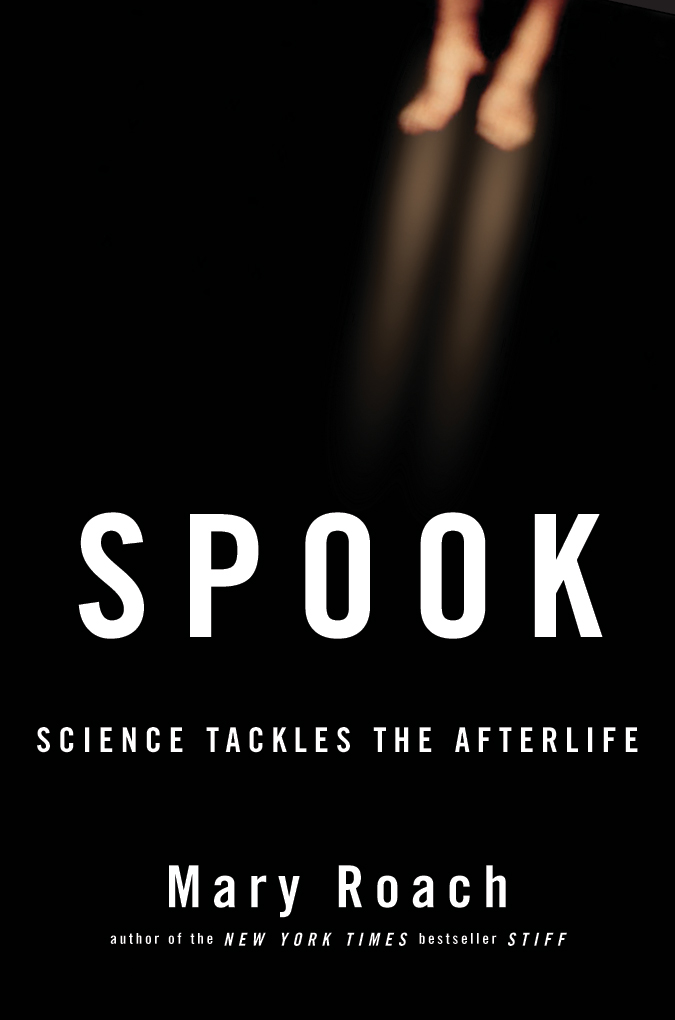
Spook: Science Tackles the Afterlife. Mary RoachSpook provides a light-hearted look at the current status of research into the existence and survivability of the soul. Mary Roach calls it "a book for people who would like very much to believe in a soul and in an afterlife for it to hang around in, but who have trouble accepting these things on faith." At the end of the book, she admits that she began this project "from a state of near absolute ignorance." This is one of the book's most endearing features, since the reader gets a glimpse of how Ms. Roach goes about researching a topic.
The book does not end up with a definitive answer. If science had proof for or against the afterlife, it would have been big news. So this is an exploration of the current state of the research. The author claims that she does not approach the topic as a debunking skeptic, but she does throw in a lot of humorous asides in an attempt to amuse as well as explore.
Chapter One, "You Again," is about reincarnation. Ms. Roach goes to India for a week to visit Kirti S. Rawat, director of the International Center for Survival. Her purpose is to accompany him as he examines a claimed case of reincarnation. She meets the child, his family, and the family of the deceased man that the child claims to be. She also runs into cultural differences in a society where many people believe in reincarnation and don't need scientific proof.
The second chapter is a historic discussion on past research by people who believed there was a soul. Questions such as whether the soul came from the sperm or the ovum, or whether it entered the fetus at some point in its development are reviewed. Also looked at are those who searched for the exact bodily organ that contained soul.
"How to Weigh a Soul" is the third chapter. It explores the research done to see if the soul has weight. If so, can a drop in weight at death be proof of the existence of the soul leaving? The famous experiment by Duncan Macdougall that determined the soul weighs 21 grams is reviewed as well as other more recent attempts. The fourth chapter goes on to look at the attempts to photograph or capture an image of the soul as it leaves the body.
The next couple of chapters delve into the claims of mediums who say they can establish communication with departed spirits. Chapter 5 is a history of the attempts by mediums to produce ectoplasm, a physical manifestation of spirit energy. Chapter 6 then goes on to look at current research with gifted mediums at the VERITAS Research Program of the University of Arizona conducted by Gary Schwartz. This is followed by the author taking a Fundamentals of Mediumship course at Arthur Findlay College in England.
Chapter 8 "Can You Hear Me Now?" looks into attempts to use technology to establish communication with dead souls. EVP (Electronic Voice Phenomena) on tape recorders and radio static is the current trend, but Ms. Roach also looks into the history of this field.
Chapter 9 begins a section where Ms. Roach looks to see if physical phenomena, rather than spirits, may cause the feelings of contact with the beyond. First she visits Dr. Michael Persinger at the Consciousness Research Lab at Laurentian University in Sudbury Ontario. He is studying the ability of complex electromagnetic fields to produce hallucinations that might resemble contact with the dead. Chapter 10 looks into whether low frequency sound waves (10 - 20 hertz) could do the same thing. Ms. Roach visits Vic Tandy who teaches at Coventry University whose research is in this area.
Chapter 11 is my personal favorite. It deals with a 1925 North Carolina ghost who appeared to his son to tell him where to find the most recent version of his will. The case went to court and the new will was accepted by the family. Both the old and new wills were on file in the courthouse, and Ms. Roach brings in the president of the American Society of Questioned Document Examiners. Although the family decided to accept the new will, it turns out to be a poor quality forgery. Yet the story of family intrigue is so interesting that the chapter left me wanting someone to write more about this case.
The last chapter looks into what Mary Roach feels is the most promising of the current research to prove the existence of the soul. Based on the reports of people who have had Near Death Experiences (NDEs) who claim they felt themselves rising out of their bodies and looking down on the room they are in, this research places an object that can only be seen from the ceiling in rooms where people might possibly experience an NDE. Interviews are then conducted to see if they experienced an NDE and saw the object. This research is being conducted by Bruce Greyson at the University of Virginia.
The books ends with a 13 page bibliography that goes chapter by chapter through the resources Mary Roach used for the book. Some may criticize her for attempting to write such a book without being an expert in the field. I find that her newness to the topic gives her a fresh unbiased perspective. However, I feel that she attempts to cover her inexperience with humor that sometimes detracts from the work. If you can endure the jokes, the information provided is well presented.
Saturday, July 22, 2006

The Living House of Oz. Edward Einhorn with illustrations by Eric Shanower
The Living House of Oz is Edward Einhorn's second collaboration with Eric Shanower on an Oz novel. The first, Paradox in Oz, was critically aclaimed, and took Ozma, the fairy ruler of Oz, on a rollercoaster ride through time into an alternative Oz where good and evil characters were reversed.
The Living House of Oz has the classic structure of an Oz novel: a young child coming of age visits Oz and, through his adventures and interactions with the good people of Oz, he matures and overcomes a crisis. In this case Buddy and his sorceress mom have fled to Oz to find safety, but have to hide because his mother uses illegal magic to protect him from danger. When she is discovered and brought to Ozma, all Oz is threatened by her enemies.
Although the structure is traditional, Einhorn brings it new life with his examination of the two themes of Nature vs. Nurture and the Role of Law in a Just Society. Einhorn's delightfully eccentric characters, like the living hat stand called the Earl of Haberdashery and the tuneful flying piccolo Flutefly, lend the work a joyful and humorous presence that is brought to life by Shanower's beautiful illustrations. His color cover and endpapers and the black and white drawings throughout the book show that he is still the best living artist of Oz themes. Einhorn has shown himself to be a master of the genre by skillfully weaving in, not only themes from his previous novel, but also from two of L. Frank Baum's original series: The Emerald City of Oz and Glinda of Oz. Together Einhorn and Shanower are the best Oz Historians since the original team of Baum and Neill. They capture the essence of Oz as Baum and Neill imagined it and keep its timeless character, while presenting a sensibility that can be understood by a modern audience.
Friday, July 21, 2006

The Red Tent. Anita Diamant
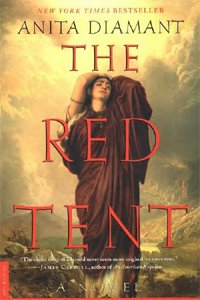
Based on the second half of Genesis in the Old Testament Bible, The Red Tent tells the story of Jacob, his four wives, 12 sons, and one daughter from the women's point of view. It is a fictional life story of Jacob's daughter Dinah, whose name only appears in the Bible 9 times, with 7 of those in chapter 34 of Genesis.
Told in the first person, Dinah starts with how Jacob came to her family and married her mother Leah and her aunt Rachel. The red tent of the title is the place to which the adult women retreat during the new moon when they are menstruating, and is the place where the women's traditions and stories are passed on. Month after month Dinah, and we the readers, slowly learn the structure of this early tribal culture that will eventually become the Jewish people.
Unlike the Genesis version, this is a strongly matriarchal story, and the activities and visions of Jacob and his 12 sons are just background to the childrearing, farming, cooking, spirituality, and crafts traditions of the women of this time. Especially strong are the birthing traditions because Dinah is portrayed as a midwife.
Anita Diamant does a wonderful job of revealing the culture and setting through the words of someone of the time. Dinah is telling the story and it is not until the very end that we discover her intended audience. This is a well-crafted glimpse into the struggles and joys of ancient tribal women of the Middle East.