Wednesday, August 16, 2006


Harding's Luck. Edith Nesbit

Are Edith Nesbit's novels where J. K. Rowling got the idea for her Harry Potter series in which magical witches and wizards live secretly among normal humdrum people (muggles)? It was Nesbit, who wrote 60 children's novels, that first started writing about everyday English children discovering magical people, charms, and spells in their midst. One of the founding members of the Fabian Society, Nesbit was famous in her time for her Socialist beliefs and friends. However, presently it is her children's books that are her enduring legacy.

Harding's Luck is the second of a pair of novels about Dickie Harding a young orphan in 1906 London who uses a crutch because his left leg doesn't work. When his father died he left Dickie an old toy that was to bring him luck, but as the story opens there is little luck or joy in the child's life.

Nesbit's Socialist beliefs are strongly represented in her portrayal of Dickie's poverty. She describes life for the poor of the time as follows. "...All the green trees are gone, and good work is gone, and people do bad work for just so much as will keep together their worn bodies and desolate souls. And sometimes they starve to death." She also portrays a society strictly divided by class in which Dickie is poor but has noble blood which elevates him above those around him.

The magic of the story is a spell involving the toy his father gave him that puts him in contact with a trio of magical moles called Mouldiwarps and a nursemaid witch. This group transport him back 300 years to the time of King James I where he is Richard Arden, a young boy of noble family who has two healthy legs. He travels back and forth between his London and that of James I with the help of the Mouldiwarps. In the process he saves the Arden family's fortune and has to decide between his present-day London and that of 300 years ago.

Nesbit is a wonderful storyteller and the plot is full of detail and adventure that make it a delight to read. Her use of the street language of the time makes this a difficult book for young readers of today, but adults who like children's literature will find it a delightful glimpse of English life. H. R. Millar's 16 original drawings help bring the tale to life. This Books of Wonder edition suffers from bad proofreading. I found over a dozen misspellings that should have been caught in the editing process. Although this is one of a two volume series, it can be read alone with no problem.

Saturday, August 12, 2006


To Play the Fool. Laurie R. King

To Play the Fool is the second of a series of mystery novels by Laurie King that feature the San Francisco homicide detective Kate Martinelli. The first book, A Grave Talent, was an Edgar Award winner.

This book picks up about a year after the first, and finds Martinelli and her partner Al Hawken investigating the death of a homeless man in Golden Gate Park. There are no witnesses or evidence, but an enigmatic old man called Brother Erasmus who speaks only in quotations becomes a prime suspect. Quickly the story changes from a homicide investigation to an attempt to find out about the mysterious Erasmus, who is either a saintly fool or mentally ill.

Laurie King is in her element as the scholarly street person quotes from the Bible and Shakespeare to answer all questions, leaving the two worldly detectives to puzzle over his meaning. Either he killed the man, or he knows who did. They must find a way to make him talk in a way that will make sense to the legal system to solve the crime.

As with A Grave Talent, King creates wonderfully complex characters that draw the reader into the story. Also her plot is sufficiently complex to keep you guessing. I fell in love with the kindly Brother Erasmus and the people who were drawn to him. A delightful story that is well told.

Tuesday, August 08, 2006


The Amorous Busboy of Decatur Avenue. Robert Klein

The Amorous Busboy of Decatur Avenue is Robert Klein's memoirs of growing up in the Bronx in the 1950s. Born in 1942, Klein writes affectionately of the basic influences of his youth during the years 1951 to 1966. Each chapter begins with a picture of Klein during the period discussed.

His parents were children of immigrant Jews who were "careful, cautious, wary people" and passed on their concerns to Klein and his sister. His bedroom was a Castro convertable ottoman in the living room of their small 6th floor apartment.

The first four chapters cover his life in junior high and high school in the Bronx. Having grown up in the Bronx myself during this time, I found these very well written and full of delightful details.

The next five chapters are about his life at Alfred University in rural upstate New York. Here he confronts anti-Semitism and develops a love of acting and comedy. He also works summers in the Catskill Mountain resorts made famous in the movie Dirty Dancing. He is no Patrick Swayze, and his amorous nature is mostly unfulfilled.

The last six chapters tell the story of his breaking into show business. His first success in Chicago's Second City and his friendship with Rodney Dangerfield are highlights of this section.

One of the recurring themes of the work is his sexual relations over time. Beginning with his losing his virginity to a 112th Street prostitute, Klein reminisces about the women in his life and the sexual and sometimes loving relations he had with them. Although he is not very graphic in his descriptions, this male oriented portrayal of sex in the 50s and early 60s may seem insensitive by modern standards. Yet it is his very honesty at representing the male attitudes of the time that makes this aspect of the book especially interesting. He says he writes "not to titillate but to communicate the excitement that sex held for me and its importance in my life." This was a time of great changes in sexual attitudes and his depictions of his and his friends' sexual interests over these 16 years shows how radical the change was.

All in all this is a wonderful memoir of New York life in the 1950s. It is also an insightful portrayal of college life at the time, especially in an era when Jews were still being discriminated against in fraternities and other aspects of academia. Lastly, Klein does a great job of describing his beginning career as an actor. How he learned his craft, the problems he faced, and the people he knew are all well represented.

Sunday, July 30, 2006

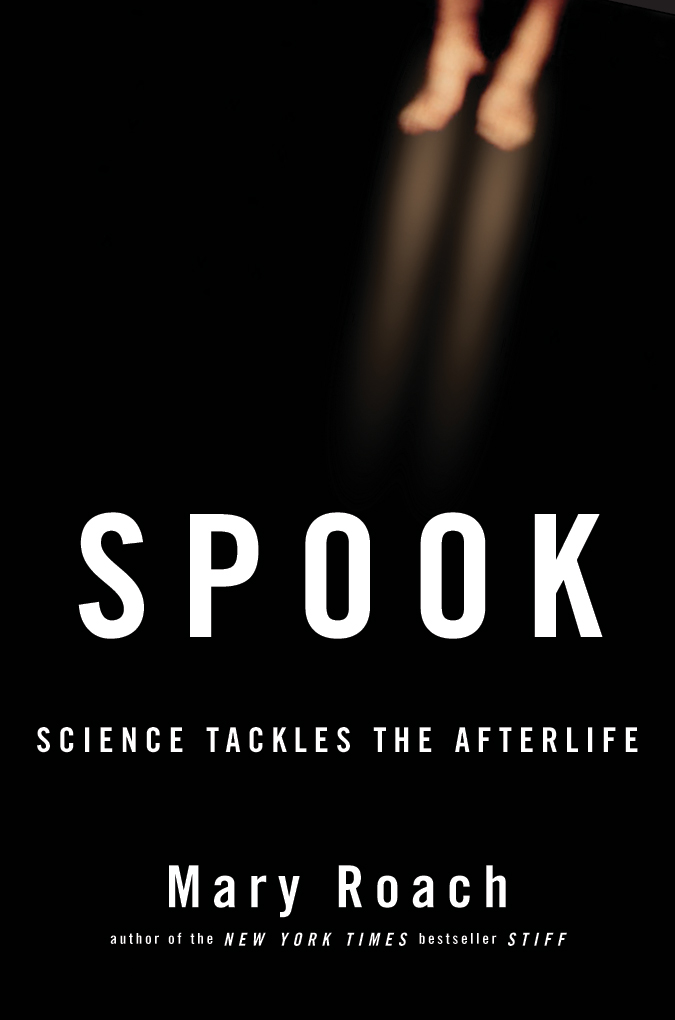
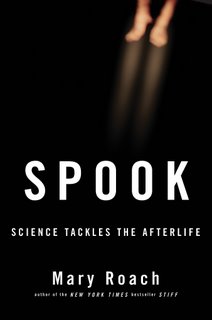
Spook: Science Tackles the Afterlife. Mary Roach

Spook provides a light-hearted look at the current status of research into the existence and survivability of the soul. Mary Roach calls it "a book for people who would like very much to believe in a soul and in an afterlife for it to hang around in, but who have trouble accepting these things on faith." At the end of the book, she admits that she began this project "from a state of near absolute ignorance." This is one of the book's most endearing features, since the reader gets a glimpse of how Ms. Roach goes about researching a topic.

The book does not end up with a definitive answer. If science had proof for or against the afterlife, it would have been big news. So this is an exploration of the current state of the research. The author claims that she does not approach the topic as a debunking skeptic, but she does throw in a lot of humorous asides in an attempt to amuse as well as explore.

Chapter One, "You Again," is about reincarnation. Ms. Roach goes to India for a week to visit Kirti S. Rawat, director of the International Center for Survival. Her purpose is to accompany him as he examines a claimed case of reincarnation. She meets the child, his family, and the family of the deceased man that the child claims to be. She also runs into cultural differences in a society where many people believe in reincarnation and don't need scientific proof.

The second chapter is a historic discussion on past research by people who believed there was a soul. Questions such as whether the soul came from the sperm or the ovum, or whether it entered the fetus at some point in its development are reviewed. Also looked at are those who searched for the exact bodily organ that contained soul.

"How to Weigh a Soul" is the third chapter. It explores the research done to see if the soul has weight. If so, can a drop in weight at death be proof of the existence of the soul leaving? The famous experiment by Duncan Macdougall that determined the soul weighs 21 grams is reviewed as well as other more recent attempts. The fourth chapter goes on to look at the attempts to photograph or capture an image of the soul as it leaves the body.

The next couple of chapters delve into the claims of mediums who say they can establish communication with departed spirits. Chapter 5 is a history of the attempts by mediums to produce ectoplasm, a physical manifestation of spirit energy. Chapter 6 then goes on to look at current research with gifted mediums at the VERITAS Research Program of the University of Arizona conducted by Gary Schwartz. This is followed by the author taking a Fundamentals of Mediumship course at Arthur Findlay College in England.

Chapter 8 "Can You Hear Me Now?" looks into attempts to use technology to establish communication with dead souls. EVP (Electronic Voice Phenomena) on tape recorders and radio static is the current trend, but Ms. Roach also looks into the history of this field.

Chapter 9 begins a section where Ms. Roach looks to see if physical phenomena, rather than spirits, may cause the feelings of contact with the beyond. First she visits Dr. Michael Persinger at the Consciousness Research Lab at Laurentian University in Sudbury Ontario. He is studying the ability of complex electromagnetic fields to produce hallucinations that might resemble contact with the dead. Chapter 10 looks into whether low frequency sound waves (10 - 20 hertz) could do the same thing. Ms. Roach visits Vic Tandy who teaches at Coventry University whose research is in this area.

Chapter 11 is my personal favorite. It deals with a 1925 North Carolina ghost who appeared to his son to tell him where to find the most recent version of his will. The case went to court and the new will was accepted by the family. Both the old and new wills were on file in the courthouse, and Ms. Roach brings in the president of the American Society of Questioned Document Examiners. Although the family decided to accept the new will, it turns out to be a poor quality forgery. Yet the story of family intrigue is so interesting that the chapter left me wanting someone to write more about this case.

The last chapter looks into what Mary Roach feels is the most promising of the current research to prove the existence of the soul. Based on the reports of people who have had Near Death Experiences (NDEs) who claim they felt themselves rising out of their bodies and looking down on the room they are in, this research places an object that can only be seen from the ceiling in rooms where people might possibly experience an NDE. Interviews are then conducted to see if they experienced an NDE and saw the object. This research is being conducted by Bruce Greyson at the University of Virginia.

The books ends with a 13 page bibliography that goes chapter by chapter through the resources Mary Roach used for the book. Some may criticize her for attempting to write such a book without being an expert in the field. I find that her newness to the topic gives her a fresh unbiased perspective. However, I feel that she attempts to cover her inexperience with humor that sometimes detracts from the work. If you can endure the jokes, the information provided is well presented.

Saturday, July 22, 2006


The Living House of Oz. Edward Einhorn with illustrations by Eric Shanower

The Living House of Oz is Edward Einhorn's second collaboration with Eric Shanower on an Oz novel. The first, Paradox in Oz, was critically aclaimed, and took Ozma, the fairy ruler of Oz, on a rollercoaster ride through time into an alternative Oz where good and evil characters were reversed.

The Living House of Oz has the classic structure of an Oz novel: a young child coming of age visits Oz and, through his adventures and interactions with the good people of Oz, he matures and overcomes a crisis. In this case Buddy and his sorceress mom have fled to Oz to find safety, but have to hide because his mother uses illegal magic to protect him from danger. When she is discovered and brought to Ozma, all Oz is threatened by her enemies.

Although the structure is traditional, Einhorn brings it new life with his examination of the two themes of Nature vs. Nurture and the Role of Law in a Just Society. Einhorn's delightfully eccentric characters, like the living hat stand called the Earl of Haberdashery and the tuneful flying piccolo Flutefly, lend the work a joyful and humorous presence that is brought to life by Shanower's beautiful illustrations. His color cover and endpapers and the black and white drawings throughout the book show that he is still the best living artist of Oz themes. Einhorn has shown himself to be a master of the genre by skillfully weaving in, not only themes from his previous novel, but also from two of L. Frank Baum's original series: The Emerald City of Oz and Glinda of Oz. Together Einhorn and Shanower are the best Oz Historians since the original team of Baum and Neill. They capture the essence of Oz as Baum and Neill imagined it and keep its timeless character, while presenting a sensibility that can be understood by a modern audience.

Friday, July 21, 2006


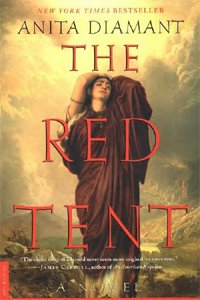
The Red Tent. Anita Diamant

Based on the second half of Genesis in the Old Testament Bible, The Red Tent tells the story of Jacob, his four wives, 12 sons, and one daughter from the women's point of view. It is a fictional life story of Jacob's daughter Dinah, whose name only appears in the Bible 9 times, with 7 of those in chapter 34 of Genesis.

Told in the first person, Dinah starts with how Jacob came to her family and married her mother Leah and her aunt Rachel. The red tent of the title is the place to which the adult women retreat during the new moon when they are menstruating, and is the place where the women's traditions and stories are passed on. Month after month Dinah, and we the readers, slowly learn the structure of this early tribal culture that will eventually become the Jewish people.

Unlike the Genesis version, this is a strongly matriarchal story, and the activities and visions of Jacob and his 12 sons are just background to the childrearing, farming, cooking, spirituality, and crafts traditions of the women of this time. Especially strong are the birthing traditions because Dinah is portrayed as a midwife.

Anita Diamant does a wonderful job of revealing the culture and setting through the words of someone of the time. Dinah is telling the story and it is not until the very end that we discover her intended audience. This is a well-crafted glimpse into the struggles and joys of ancient tribal women of the Middle East.

Wednesday, July 19, 2006


Vox. Nicholson Baker

Back in 1993, before Internet erotic chatrooms, Jim and Abby meet through an erotic phone chat service and begin a conversation that becomes the text of this novel. Devoting a whole novel to one erotic phone call allows the author to develop his characters better than your average pay-by-the-minute erotic service would normally allow. Cost becomes no object to these two people a continent apart as they explore their fantasies with each other. While the conversation doesn't maintain a high level of stimulation throughout, there are exciting moments. Overall, a good light work with exciting episodes and a climactic ending.

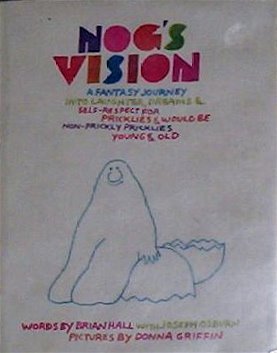
Nog's Vision. Brian P. Hall

Nog's Vision is subtitled A Fantasy Journey into Laughter, Dreams & Self-Respect for Pricklies & Would Be Non-Pricklies Young & Old. It is a parable illustrated with line drawings by Donna Griffin that is suitable for all ages.

Into a world called Prickle City, where everyone is defined by their function, a laughing visionary dreamer named Nog is born. The people don't know what to do with this misfit until Nog shares his dreams with them. The dream transforms the people of Prickle City.

It is the author's hope that it will transform you too, Gentle Reader. So if you are seeking a positive vision of self esteem and inner worth, this may be the book for you. Make Nog's Vision your own.

Monday, July 03, 2006


In Cold Blood. Truman Capote

On November 15, 1959 Perry Smith and Dick Hickock broke into a rural Kansas farmhouse where they bound and gagged the four people they found there: Herb and Bonnie Clutter, and their teenage children Kenyon and Nancy. They took about $40, a small radio and a pair of binoculars. When they left, the Clutters were all dead of shotgun blasts to their heads.

In Cold Blood tells the story of the events leading up to the murder and those following it in a straightforward chronological manner. The Clutters were highly respected members of the small town of Holcombe and their deaths came as a big shock. The murderer's thought they left no clues and had committed a perfect crime. The book treats murdered and murderers with a similar respect for their basic humanity. Although a terrible crime was committed the author is able to present all sides of the story.

Truman Capote truly immersed himself in the community and in the lives of the criminals to provide as much detail as could be found. This is a classic work that is well crafted and thought provoking. Sadly, it also was the last major work of the author.

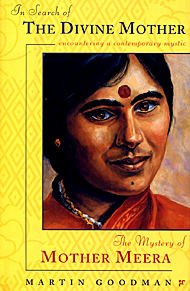
In Search of the Divine Mother: The Mystery of Mother Meera - Encountering a Contemporary Mystic. Martin Goodman

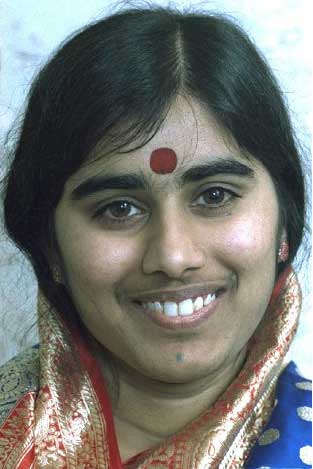
In Search of the Divine Mother by Martin Goodman is a very human attempt to understand the mystery of the incarnation of the Divine. Christians claim this mystery to explain how Jesus, a man born of woman, was also the Christ: God come to Earth to redeem humans of sin. The gospels of the New Testament are the Christian story of how this happened 2,000 years ago. Mr. Goodman took as his starting point Mother Meera, a woman born in 1960 in the Andhra Pradesh region of India who claims to be an avatar (or incarnation) of the Hindu goddess the Divine Mother.

The book is in three parts. In the first part, "A Journey into Devotion" we learn how Goodman and others receive "darshan" (being in the presence of God) from Mother Meera in her home in the small German village of Thalheim where she has lived since 1985. "Her darshan consists of a ritual, where she will touch a person's head, and then look into his eyes. During this process, she reportedly 'unties knots' in the person's subtle system and permeates him with light. She doesn't charge any money for doing so and she will not give lectures." -- WIKIPEDIA.

The second and main part of the book is called "The Life Story." Goodman was encouraged by Mother Meera and her followers to go to India and to write a book about her life. They gave him a list of contacts and he went. He interviewed these people and others who knew Mother Meera, Venkat Reddy, the uncle who discovered her, and Adilakshmi, her devoted friend and follower. Among those he interviewed were Mr. Reddy's family, whom he left to pursue his devotion to the child-god he had found among them. Here Goodman explores the question of how the Divine manifests itelf in the human. Does the human know of their divinity from birth? How does their divinity manifest itself on the material plane? How does a very human creature respond to their divine nature? How do others, who have no knowledge of the Divine, interpret the divine spark in someone they know? These are difficult questions that are not easily answered in the limited vocabulary of human discourse. Goodman makes a valiant attempt yet, as with all writing, we see more of the author than what he is trying to describe.

The third part "A Journey into Life" tells of his attempts to get his words published. Mother Meera and Adilakshmi ask him to delete his first draft and he complies. He struggles with his decision and, in anger, writes a second draft which is also never published. The book we have is a later draft and this last chapter is his attempt to come to terms with his contact with the Divine. He sums up by saying: "Mother Meera gives powerful spiritual transmission that helps people bud into the fullness of life.... I have met a power that comes from Mother Meera, and it has transformed my life. It did not come from her words but from within the silence of her public meetings. ... It is wonderful to know her through her silence alone." He sees her as "a superb channel" of the Divine, that the Divine energy flows through her human form to those who approach her. Yet he seems to be saying that she maintains human form and does not transcend it.

Goodman's devotion to Mother Meera helped him to come to terms with his own homosexuality, something that was also stated by her first biographer Andrew Harvey in his book Hidden Journey. Her unconditional love and silent acceptance were very healing to both men. When her 1997 book Answers Part 2 states that "Homosexuality is against the law of nature," both men are shaken from their devotion. Goodman states: "...since I know with certainty that Mother Meera is wrong in her condemnation of homosexuality, I cannot accept her word on anything else."

This is a wonderfully honest attempt to write about the human experience of the Divine. It will be insightful reading for any who are interested in spiritual growth.

Wednesday, June 28, 2006


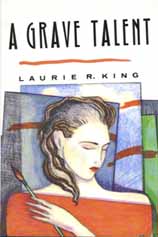
A Grave Talent. Laurie R. King

A Grave Talent is the first novel written by Laurie R. King. it is also the first in a series of mysteries that features the detective Kate Martinelli, A lesbian detective in the San Francisco Police Department. It won the 1993 Edgar Award for Best First Novel.

In this book Kate has just been promoted to detective and is assigned to work with a seasoned male detective who has recently transferred from Los Angeles. The case involves young girls who are strangled, but not molested, and left on the grounds of a rural gated community which is a home to various unconventional folks. When a famous female artist, who is living in the community under another name, turns out to be an ex-con who was convicted of murdering a child, it appears they have their culprit. Yet after meeting her, they start to have their doubts.

At first the young inexperienced woman and the hardened male detecive seem an odd couple that will not get along. Yet the novel is as much about their finding commonalities, and finally friendship, as it is about solving the high-profile case. This turns out to be a strong start to a mystery series that will deal with character development as well as criminal activity.

Laurie King has also written the Mary Russell series of historical mysteries involving a young woman and an older detective, the fictional Sherlock Holmes. She seems at home with the older man/young woman dynamics of both these series and brings a very human side to her characters while writing convincing mysteries.

Sunday, June 11, 2006

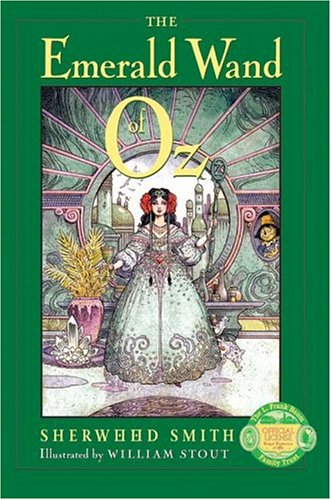
The Emerald Wand of Oz. Sherwood Smith

The Emerald Wand of Oz is an Oz story in the classic form created by L. Frank Baum over 100 years ago. Yet it has a modern flavor that may make it acceptable to a young audience.

It has a seal on the front cover proclaiming that Smith has an Official License to be Royal Historian of Oz that comes from The L. Frank Baum Family Trust. Before the Baum Oz books came into the public domain this was very important because the family trust controlled the use and depiction of the characters created by Baum. Lately this has been less relevant, and many authors have taken their hand to writing non-official Oz books with varying degrees of success.

In this book two sisters, from Lawrence Kansas, who believe they are related to Dorothy Gale get transported to Oz by a tornado. They get adopted into a community of children who groom a herd of wild unicorns, and pick up a strange friend who, like them, wants to escape from the possessive and vain unicorns. Their goal is to find Glinda and ask to be returned home to Kansas. Yet, as in so many Oz stories, there is a threat to the fairy land of Oz. This time it is the niece of the Wicked Witch of the West, who has taken up residence in her aunt's old castle, and has cast a spell on the fairy ruler Ozma, the good witch Glinda, and the Wizard. As in the classic Oz stories, a group of Ozzy characters who seem silly and helpless join together to defeat the villain and restore order. Once things are returned to normal, there is a banquet in the Emerald City, and the children are returned to their normal life much more mature and aware of the importance of group action and compassion.

This is planned to be the first of a three volume series by Smith, and so there are parts of the plot that do not get resolved. This gives the plot a loose feeling that Baum would never have tolerated. Sadly, Byron Preiss who was funding this project tragically died last July, and his publishing company declared bankrupcy this February. So the future of the project is deeply in question. Hopefully, someone will pick it up and see it to completion. Smith feels that the other two books are even better than this one, and it would be a shame if they never see print.
The Emerald Wand of Oz. Sherwood Smith

The Emerald Wand of Oz is an Oz story in the classic form created by L. Frank Baum over 100 years ago. Yet it has a modern flavor that may make it acceptable to a young audience.

It has a seal on the front cover proclaiming that Smith has an Official License to be Royal Historian of Oz that comes from The L. Frank Baum Family Trust. Before the Baum Oz books came into the public domain this was very important because the family trust controlled the use and depiction of the characters created by Baum. Lately this has been less relevant, and many authors have taken their hand to writing non-official Oz books with varying degrees of success.

In this book two sisters, from Lawrence Kansas, who believe they are related to Dorothy Gale get transported to Oz by a tornado. They get adopted into a community of children who groom a herd of wild unicorns, and pick up a strange friend who, like them, wants to escape from the possessive and vain unicorns. Their goal is to find Glinda and ask to be returned home to Kansas. Yet, as in so many Oz stories, there is a threat to the fairy land of Oz. This time it is the niece of the Wicked Witch of the West, who has taken up residence in her aunt's old castle, and has cast a spell on the fairy ruler Ozma, the good witch Glinda, and the Wizard. As in the classic Oz stories, a group of Ozzy characters who seem silly and helpless join together to defeat the villain and restore order. Once things are returned to normal, there is a banquet in the Emerald City, and the children are returned to their normal life much more mature and aware of the importance of group action and compassion.

This is planned to be the first of a three volume series by Smith, and so there are parts of the plot that do not get resolved. This gives the plot a loose feeling that Baum would never have tolerated. Sadly, Byron Preiss who was funding this project tragically died last July, and his publishing company declared bankrupcy this February. So the future of the project is deeply in question. Hopefully, someone will pick it up and see it to completion. Smith feels that the other two books are even better than this one, and it would be a shame if they never see print.

Friday, June 09, 2006

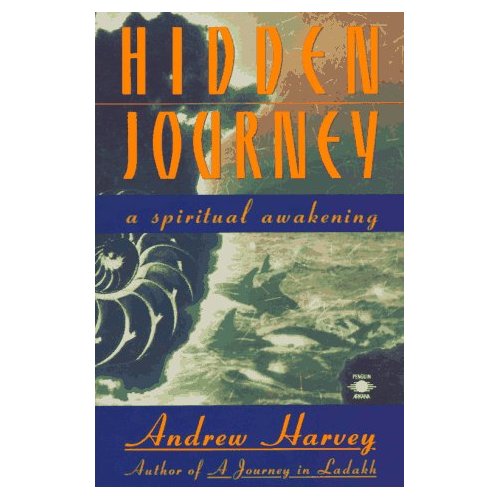
Hidden Journey: A Spiritual Awakening. Andrew Harvey

Hidden Journey reminds me of the Joan Osborne song "If God Were One Of Us." It tells the story of Andrew Harvey's nine years of spiritual growth while a pupil of Mother Meera, an woman who claims to be an incarnation of God on Earth. He meets Meera at the Aurobindo ashram in Pondicherry at the end of 1978 when he is 27 and she is 18. She has been brought there by Mr. Reddy, an Indian who had been seeking the Mother Goddess his whole life and discovered Meera when she was an 11 year old servant in his in-laws' home.

The book is more about Harvey's mystical journey, but people interested in Mother Meera will also find the book useful. He describes her silent meetings with followers (darshan) where she first holds the devotee's head in her hands and then looks into their eyes, supposedly imparting her grace in this process. Also her early life in India and Thalheim Germany are presented, but in a very subjective way through the practice of Mr. Harvey.

Since Mother Meera is silent during her public appearances, much of what we learn of her is from question and answer periods that Harvey held with her in private. However, even these are presented basically as leading questions by Harvey to which Meera agrees. The other method that Harvey uses to reveal her thoughts is through Mother Meera's voice in Harvey's head. He presents Meera as being able to communicate with him telepathically and many discussions in the book, presented in italics, are of this nature.

Another large portion of the book is devoted to the mystical gifts of visions and dreams that Harvey gets from Meera during his spiritual progress. Many of them are of glowing radiances, golden glows, and other lights. While these and other unusual occurences present a very lively and dramatic view of the mystical path, I found them repetative and skipped over a lot of them.

The book does present how an average human being with a fair share of personal problems can make spiritual progress through mystical practice. However, although Harvey made lots of progress, one gets the idea that he still has a way to go.

Monday, June 05, 2006

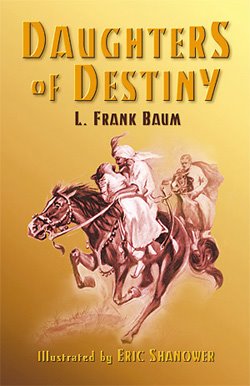
Daughters of Destiny. L. Frank Baum

Daughters of Destiny was originally published 100 years ago under the pseudonym Schuyler Staunton. This was the name Baum used for 2 of his novels written for an adult audience. It takes place in London and Baluchistan, on the Arabian Sea, which is now part of the countries of Pakistan and Iran. Famous for his children's books about the land of Oz, Baum was excellent at creating uncomplicated and strong characters and developing plots based on their interactions.

This book is no exception. A group of six Americans hires a Baluchi prince in exile to guide them to Baluchistan to negotiate the rights for a railroad. The prince is hoping to gain the throne when the current monarch dies. Their business plans get sidetracked by local intrigue over succession to the throne of the dying king.

Three of the Americans are women: the daughters of the two businessmen, and an aunt. They get swept up in the local affairs and romantic interests blossom. It is their destinies that drive the plot forward.

Baum's characters are either devious and plotting or noble and altruistic, and good wins out over evil in the end. Sadly, his ethnic portrayals are racist and stereotypical which makes this novel an interesting glimpse into the racial bias prevalent at the beginning of the 20th century. A good read for Baum fans and people interested in the portrayal of the Middle East in literature, but this will never be more than fringe literature in our modern culture.

The illustrations by Eric Shanower are well done and capture the essence of Baum's characters. While there is a hardbound edition limited to 250 copies, the complete work is also available in Oz-Story #4, both from Hungry Tiger Press.

Monday, May 29, 2006


Made in the Middle Ages. Christine Price

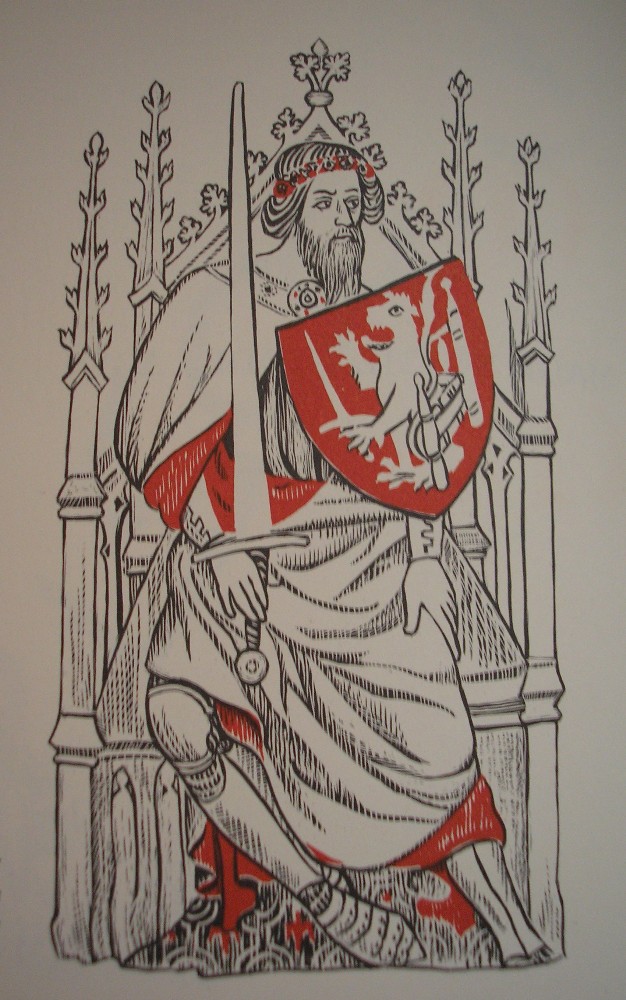
Made in the Middle Ages is a 45 year old work for teens and general audiences about Medieval craftsmen and their work. At a time when seeing the artifacts of this era meant going to a few widely-scattered and specialized museums, Christine Price used her artistic abilities and historic knowledge to create a wonderful illustrated introduction to this topic.

The book is divided into two sections: "Things Made for the Castle," and "Things Made for the Church." These are subdivided into sixteen chapers on Armor and Weapons, Cloth and Clothing, Jewels and Enamels, Sports and Pastimes, Tapestries, Tableware, Books for the Castle, Diptychs and Reliquaries, Books for the Church, Embroidery, Wood Carving, Paintings, Carvings in Alabaster, Carvings in Ivory, and Treasures of the Church. Each page is amply illustrated with pen and ink drawings of artifacts of the time that now reside in The Metropolitan Museum of Art, the Morgan Library, the British Museum, the Victoria and Albert Museum, the Bodelian Library, and other places. The end papers are outline maps of Europe that show the places mentioned in the book.

Well-organized and well-presented, this little book provides much detail about life and crafts in Europe between the years 1000 and 1500. Today photographs of many of these items are on the Internet, but Price's presentation gives them an order and logic unique to this work.

Sunday, May 21, 2006


Forever Amber. Kathleen Winsor

Forever Amber covers 10 years in the life of Amber St. Clare in Restoration England beginning in 1660 when she was 16 and ran away from the farm to go to London. The monarchy had just been restored, and the Royalists were returning to England.

Bruce Carlton is a returning lord whose family had lost everything during the Cromwell period. He is on his way to London when he stops in Amber's village for the night. For Amber, it is love at first sight and she begs him to take her with him. However, to Bruce, Amber is "a woman any man would like to have for a mistress, but not for a wife." She is beautiful, desirable, and sensual. Yet she is also vain, unscrupulous, wanton, and ambitious.

Sleeping her way to fame and fortune, Amber is not a likable heroine. As a character, her devotion to Bruce is her saving grace. Yet she is a woman who loves too much an unattainable man. So even her undying love doesn't redeem her.

What finally makes this novel work is the history. Kathleen Winsor does an excellent job of portraying the turbulence of Restoration England. She superbly portrays the intrigues of King Charles II and his court, the upheaval of British life caused by reformation and restoration, and London consumed first by plague and then by the Great Fire.

The prior Puritanical period was swept aside by a royal court of relaxed sexual morals into which Amber fit particularly well. Forever Amber, while banned in Boston when it was published in the 1940s for its portrayal of the loose morals of the court, actually contains no descriptions of sexual intimacy. Dozens of times the author makes it clear that something happened without ever describing it. Depending on the reader this can be a strength or a weakness of the book.

The Wandering Jew. Eugene Sue

Written in 1845, just 3 years before revolutions swept Europe, this 887 page five volume novel is a classic piece of French socialist writing that has been swept under the rug of history. It was originally serialized in a French newspaper and created quite a stir with its strong positions on women's rights, worker communes, and anticlericalism.

I originally started to read this book because I was interested in the legend of the wandering Jew. This is a mythical person cursed to live forever and wander without rest because he refused Jesus a place to rest as he carried his cross to Calvary. Although the wandering Jew and his equally long-lived sister Herodias, who gained her longevity because of her involvement in the death of John the Baptist, make occasional appearances in the book, the story is really about the heirs of Herodias, seven members of the Rennepont family. So if you are seeking a work on the legend of the wandering Jew, I recommend you do not read this book.

The Rennepont family lost their position and most of their wealth during the French persecution of the Protestants. What was left of the Rennepont fortune was entrusted for 150 years to a Jewish banker and his heirs who were loyal to the family. Over the course of time through wise investments, the small inheritance was carefully nurtured into a fortune.

Any surviving members of the Rennepont family were directed to meet at a certain address in Paris in 1832 by bronze medallions cast in 1682 that have been passed down from generation to generation. Those present on the given date will divide the inheritance. This book is the story of the seven members of the family left at this time. They are Jacques Rennepont, a Parisian workman who favors drinking and the wild life; Francis Hardy, an enlightened industrialist who has built communal living quarters for his happy workers; Rose and Blanche Simon, twin teens who travel with an old soldier to Paris from Siberia where their mother has just died; Adrienne de Cardoville, a beautiful and independent-minded woman of means; Abbe Gabriel, an orphan who has been raised by the Jesuits, and Djalma, an Indian prince.

Two Jesuits and a female accomplice have devised a plan to keep the Renneponts from their inheritance and to claim it for the The Society of Jesus. They hope to obtain the fortune to secure their futures and pay for the rehabilitation of the Order.

The story moves from one cliffhanger to another throughout the book as the struggle between the family and the two Jesuits unfolds. The Perils of Pauline and A Series of Unfortunate Events come to mind as contemporary stories with similar plot devices. This structure is a byproduct of the newspaper serialization. However, Eugene Sue is a master of his craft and he develops the various subplots with great skill. Characters are well-developed and scenes are vividly described. It is sad that this book has been out of print for so long. A new edition with a modern translation would be a great literary treat.

Scarlet Women. J. D. Christilian

This book has the format of a historical detective novel, complete with a Marlowesque detective and a double murder to be solved. The detail of 19th century New York life and personalities makes this a delightful work for lovers of this period.

Yet within this framework, this fictional mystery novel also takes a probing look at the status of women in 1870s New York. The title Scarlet Women refers to the depiction that women had few choices other than prostitution to earn a living at the time.

One of the reasons I read and liked the novel is that it gives an accurate and sensitive portayal of the famous 19th century feminist, spiritualist and free-thinker Victoria Woodhull. Even 130 years later, some of her ideas are still too liberal for mainstream America!

So if you like your detective novels with a strong feminist flavour and historical accuracy I recommend this book. It succeeds as a mystery, a social commentary, and a historic novel.
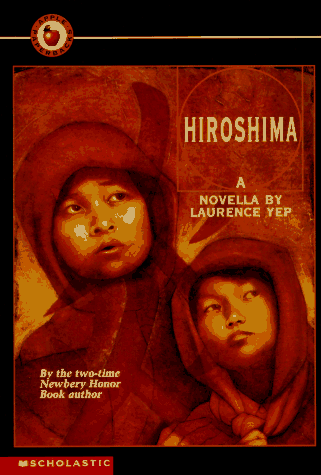
Hiroshima. Laurence Yep

This is a wonderful children's book about the atomic bombing of Hiroshima. It tells the story in simple yet thoughtful and elegant language. Starting with the bomber crew, the book explains the bombing in context of World War II and its effects on the city and people of Hiroshima. The author takes you into the lives of two sisters and shows how the bomb changed everything. Then the book goes on to explain the aftermath with people dying of radiation sickness even years after the bomb was used. Lastly, it describes the current state of the world's nuclear powers and the threat of nuclear winter. Older children and teens might prefer the manga or anime Barefoot Gen, but this is a better introduction for young children to a difficult subject.