
Friday, February 15, 2019
We Have No Idea: A Guide to the Unknown Universe
We Have No Idea: A Guide to the Unknown Universe, by Jorge Cham and Daniel Whiteson
 Written by a UC Irvine Physics Professor and illustrated by the creator of the online comic Piled Higher And Deeper, this is a entry level account of the frontiers of modern physics that is easy to understand (very few formulas) and yet richly fulfilling for the non-initiated. With chapters on Dark Matter, Dark Energy, the Basic Elements of Matter, Mass, Gravity, Space, Time, the Number of Dimensions, Faster Than Light Travel, Antimatter, the Big Bang, the Size of the Universe, the Theory of Everything, and Life on Other Planets, this book covers most, if not all, of the puzzling questions modern physicists are working on. Cham's illustrations bring the topics to life in a light-hearted way that entertains as well as enlightens. I have not read other physics books written for the masses, but I surely did enjoy the approach this book takes and learned a lot in the process.


Sunday, February 10, 2019
The Blue Flower
The Blue Flower by Penelope Fitzgerald
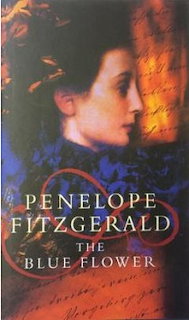 The Blue Flower is a fictional recreation of the young adult life of Friedrich von Hardenberg before he became famous as the 18th Century German Romanticist poet Novalis. Starting with his college years, the novel gives a detailed glimpse of life in late 18th century Germany, and the development of the complex character of this Romantic mystic full of magical idealism who also develops a successful career in the salt mines of Germany. Central to the novel though is his idealized love for 12 year old Sophie von Kühn, who he hopes to marry when she turns 16. While most of his contemporaries describe her as plain and simple-minded, he sees beyond to her inner beauty.
The book opens with the young Friedrich bringing a friend home from college on Washday, the one day a year when the household washes all their linens and clothing. They have a year's worth of clothing and linens and wash them all once a year! The whole family is knee deep in dirty linens.
Families are big, and often mixed, as death comes frequently to the people of the time. Friedrich, being the eldest son and attending university, is the pride of the family and deeply involved in the philosophical ideas of the times. So it comes as a shock to his upper class family when he falls in love with a plain looking, simple-minded girl of 12 years from a large unruly working class background.
Fitzgerald mixes authentic details from letters and journals with wonderfully developed personalities of the family members to blur the distinction between biography and historical fiction and creates a world in which readers can immerse themselves. It is a small book with short chapters that is amazing and worthy of its accolades. It won the 1997 National Book Critics Circle Award, and William Skidelsky named it one of the ten best historical novels in a 2012 Observer article.
Saturday, January 26, 2019
Hey, Kiddo
Hey, Kiddo by Jarrett J. Krosoczka
 Hey, Kiddo is an intensely personal coming of age autobiography in graphic novel format. Jarret is the son of a single mom heroin addict, who ends up being raised by his mother's parents while she is in jail. This is all revealed succinctly in the subtitle: How I Lost My Mother, Found My Father, and Dealt with Family Addiction. While the book deals with the pain of growing up in a broken, dysfunctional family, it also shows how love grows even in such inhospitable conditions. Ultimately, it is a book about healing hurts through coming to deal with them honestly and expressing them through, in Jarrett's case, his art.

300
300 by Frank Miller
 300 tells in graphic form the story of the Battle of Thermopylae from the point of view of King Leonidas of Sparta who, with a small group of 300 elite Spartan warriors, held off for three days the invading Persian army of thousands at a narrow pass. Intensely drawn by Frank Miller and brilliantly colored by Lynn Varley, 300 is a a remarkable image of battle waged with with spears and arrows, which is not for the weak hearted. With chapters called Honor, Duty, Glory, Combat, and Victory, the book is a glorification of the call to battle, even against overwhelming odds and sure defeat.

Red Mandarin Dress
Red Mandarin Dress by Qiu Xiaolong
 I am a fan of Qiu Xiaolong's Inspector Chen Cao and have loved the previous books in the series. This one started off slow for me with a confusing collection of new characters, and the inspector taking time off from his work to write a paper in Chinese literature just at the time a serial killer is stalking young women in the city. However, I persisted and was rewarded in the end with wonderful comparisons between the romantic love stories he is studying, the cruel food options of Shanghai, and the motivations of a serial killer.

Sunday, January 13, 2019
Kalki by Gore Vidal
Kalki by Gore Vidal
 In Kalki Gore Vidal explores the end of the Age of Kali (the Kali Yuga), the last of the four stages the world goes through according to Hindu mythology. In the late 1970s an avatar named Kalki, the tenth and final Avatar of Lord Vishnu, appears in the person of an American ex-soldier and drug smuggler to announce the end of the world.
As Kalki begins to attract a huge following, Teddy Ottinger, a female American test pilot, is hired by a magazine to fly to India to interview him. Teddy is the narrator of this book, written in the White House a year after she took the job to interview Kalki. She has been asked to explain what happened since taking the interview assignment.
What happens is a riotous romp through the foibles of late-20th century America, while still providing a deep understanding of the Hindu principles involved, as only the wit of Gore Vidal could imagine it. Is Kalki a con man, a true avatar come to save humanity, a delusional psychopath set on a path of lunatic dreams? We see the tale unfold through the pages of Teddy's story.
The Mysteries of Paris
The Mysteries of Paris by Eugène Sue
 I started reading the first 49 pages of this book on my iPhone in its original 19th Century English translation that is in the Public Domain. It is free online in a six volume downloadable edition, but switched to this new paperback translation by Carolyn Betensky and Jonathan Loesberg. This modern translation is much better and I highly recommend it. Reading a paper book with over 1300 pages can at times be physically challenging, but it is also available in a digital eBook edition.
The Mysteries of Paris first appeared in a serialized version in the Journal des Débats, a conservative French weekly newspaper, for 17 months during 1842 and 1843. It is a massive work of 1,366 pages that contains 167 chapters in 10 books and an Epilogue. The story follows the exploits of Rodolphe, a rich man who uses various disguises to help various people of Paris in trouble. He is a 19th century Batman without the costume saving good people facing problems and punishing evil doers, all while being pursued by his ex-wife.
Since Eugène Sue was writing the book as it was being published in weekly installments, he occasionally interrupts the story to answer criticisms of his Socialist views. These direct appeals to the readers provide an interesting perspective on the justice system and social problems of the times. The book is immense, but Sue's pacing and characterization keeps the plot exciting from beginning to end. The book paints a picture of the fabulous city of Paris as it is revealed through the eyes of characters ranging from common thieves, homeless children, teenage prostitutes, the working poor, the merchant class, and the rich nobility. I truly enjoyed this book as much as I enjoyed his other major novel The Wandering Jew and the long out of print series The Mysteries of the People.
Monday, October 15, 2018
The End of Oz
The End of Oz by Danielle Paige
 This is the fourth and final volume of the Dorothy Must Die series. It picks up where the third volume, Yellow Brick War, ends with Dorothy back in Oz, now with her high school friend Madison. They and her Oz boyfriend Nox are in Ev to defeat the Nome King.
As with the previous three novels in the series Danielle Paige shows a good grasp of the Baumian characters of Oz, and has a clever way of modernizing them to make them of interest to a modern Young Adult audience. Each book introduces more of Baum's characters, and in this volume they meet the Wheelers, and Princess Langwidere.
In this final book both Amy and Dorothy narrate alternating chapters so we finally get to see Dorothy as something other than the evil enemy. She has been taken captive by the Nome King who plans to marry her to steal her magic.
Like the first three, Yellow Brick War is best read as part of the series, as the story picks up and ends abruptly. Could the author be planning to continue the series? I gave the book four stars instead of five because I feel the author is, at times, too free in her adaptation of Baum's characters, revisioning them for a modern audience in a way that is jarring and discordant to people who know them well from reading Baum's books.
Sunday, September 16, 2018
Yellow Brick War
Yellow Brick War by Danielle Paige
 This is the third volume of the four volume Dorothy Must Die series. It picks up where the second volume, The Wicked Will Rise, left off, with both Dorothy Gale and the Alliance of the Wicked, along with Amy Gumm, back in Amy's home town in Kansas. While Dorothy escapes back to Oz, the Wicked are marooned. Their only hope to get back to Oz is for Amy to find the silver slippers that Dorothy originally used to return to Kansas. Amy has no magic in Kansas, and has been presumed dead since the tornado blew her to Oz. While the witches hide, Amy returns to her mother's home and her high school. She searches for the shoes that will allow them to return to Oz and defeat Dorothy.
As with the previous two novels in the series Danielle Paige shows a good grasp of the Baumian characters of Oz, and has a clever way of modernizing them to make them of interest to a modern Young Adult audience. Each book introduces more of Baum's characters, and brutally murders others. Like the first two, Yellow Brick War is best read as part of the series, as the story picks up and ends abruptly. I gave the book four stars instead of five because I feel the author is, at times, too free in her adaptation of Baum's characters, revisioning them for a modern audience in a way that is jarring and discordant to people who know them well from reading Baum's books. Also the violent treatment of the battle scenes is not to my taste.

As with the previous two novels in the series Danielle Paige shows a good grasp of the Baumian characters of Oz, and has a clever way of modernizing them to make them of interest to a modern Young Adult audience. Each book introduces more of Baum's characters, and brutally murders others. Like the first two, Yellow Brick War is best read as part of the series, as the story picks up and ends abruptly. I gave the book four stars instead of five because I feel the author is, at times, too free in her adaptation of Baum's characters, revisioning them for a modern audience in a way that is jarring and discordant to people who know them well from reading Baum's books. Also the violent treatment of the battle scenes is not to my taste.
Sunday, September 09, 2018
The Wicked Will Rise
The Wicked Will Rise by Danielle Paige
 This is the second volume of the four volume Dorothy Must Die series. It picks up where the first volume, Dorothy Must Die, left off, right after an epic battle in the war of the wicked witches against Dorothy Gale and her followers, the Scarecrow, Cowardly Lion, Tin Woodman and Glinda the Good. The Emerald City is in shambles, and the forces of the Wicked have been scattered. Our heroine, Amy Gumm, is being rescued, along with Ozma, by a pair of flying monkeys, who plan to take them to Lulu, the Queen of the Flying Monkeys.
In the first book Amy Gumm was taken by a tornado to Oz. Only the fairyland of L. Frank Baum's imagination is turned upside down, with a tyrannical Dorothy draining all the magic in Oz to increase her despotic rule. Amy was recruited by The Revolutionary Order of the Wicked and trained to be the person to assassinate Dorothy. Their coup ends up being the first battle in a war, and The Wicked Will Rise tells the tale of Amy's continuing adventures, trying to reunite with the rest of the Wicked and complete her mission. First a visit to the Flying Monkeys and then a search for Polychrome, the Rainbow's daughter, leads up to her next confrontation with Dorothy. Amy is with Ozma through this whole book and learns much more about Ozma's past and watches as Ozma starts to regain her fairy powers.
Danielle Paige has a good grasp of the Baumian characters of Oz, and has a clever way of modernizing them to make them of interest to a modern Young Adult audience. This book is best read as part of the series as it picks up and ends abruptly. I give the book four stars instead of five because I feel the author is at times too free in her adaptation of Baum's characters, revisioning them for a modern audience in a way that is jarring and discordant to people who know them well from reading Baum's books.
Monday, September 03, 2018
Dorothy Must Die
Dorothy Must Die by Danielle Paige
 Danielle Paige has written a four volume series of books based on the characters of L. Frank Baum's Wizard of Oz series. The first volume Dorothy Must Die tells the story of how a misfit high school student named Amy Gumm, who lives in a trailer in Kansas with her alcoholic mother, gets swept away by a tornado and lands on the Yellow Brick Road in Oz. While this is Baum's Oz, it is a dystopian version of the magical land where Dorothy Gail, the Good Witch Glinda, the Scarecrow, Lion, and Tin Woodman terrorize the land. They are opposed by the evil witches who call themselves the Revolutionary Order of the Wicked. As Amy tries to understand and make her way in this very different Oz than the one in Baum's books, everyone's advice to her is to not trust anyone. This first volume introduces the major factions of this world in conflict, as the Wickeds develop a plan to kill Dorothy.
Unlike Baum's Oz, Dorothy Must Die has a fair amount of violence and cruelty. The action is fast paced and I found the books compelling reading. Paige has done her homework and knows Oz very well. So although this is a very different time in Oz, there is a great depth of characters and locations that will appeal to loyal fans of Oz.
There are three more books in the series as well as a set of three volumes of Oz Stories that accompany the four volume series so this book is the bait designed to pique your interest enough to continue on through the rest of the series. This it does admirably well, with the expected ending that leaves matters unresolved and provides the opening 15 pages of the next title The Wicked Will Rise attached to the end. I know I will be reading it soon.
Monday, August 20, 2018
The Great Cosmic Mother: Rediscovering the Religion of the Earth
The Great Cosmic Mother: Rediscovering the Religion of the Earth by Monica Sjöö and Barbara Mor
 Reading the first editions of this book when first published back in 1981 and 1987 transformed my thinking, making me a lifelong Goddess worshipping feminist. So I looked forward to re-reading this 1991 second edition from the perspective of thirty years later.
Swedish artist Monica Sjöö and American poet Barbara Mor met after Sjöö published a 1975 short pamphlet The Ancient Religion of the Great Cosmic Mother of All in the UK. This was edited and extended by Mor and republished as an 80 page small book in Norway in 1981, which is when I became aware of it through its distribution in the USA by the feminist press WomanSpirit. It was very influential to members of the Feminist Goddess movement. Barbara Mor completely rewrote and updated the book to its present size of 500 pages for publication by Harper & Row in 1987 with a second edition in 1991 that included color plates and a new Introduction by Monica Sjöö. She wanted this book to be called The First God, but was over-ruled by publisher Harper & Row. It has never been out of print and is one of the classics of Second Wave Feminist thought.
The book is divided into four sections:
1. Women's Early Culture: Beginnings
2. Women's Early Religion
3. Women's Culture and Religion in Neolithic Times
4. Patriarchal Culture and Religion
The first three sections cover the first 400,000 years of human development in Matriarchal Goddess worshipping cultures, while the last section examines the last 4,000 years of male-god societies and religions with their endless war, female oppression, and profiteering use of Nature and people. Reading the first three sections again did wonders towards breaking my mind free of society's Patriarchal assumptions, both in the 1980s and on rereading it this year. The last 200 page section on "Patriarchal Culture and Religion" was difficult to read as the immense harm to people and the planet that Mor claims comes from male cultural assumptions and power gets hammered home by her extensive analysis. I would read a couple pages and have to put the book down, depressed and unable to continue for a while, before I could push on. The book is worth the effort it takes to read as it is truly mind expanding and transformative.
Monica Sjöö died in 2005 and Barbara Mor in 2015. Their spirits will live on in this classic work on Goddess Feminist thinking.
Thursday, July 26, 2018
El Deafo
El Deafo by Cece Bell
 Author/illustrator Cece Bell chronicles her hearing loss at a young age and her subsequent experiences with a very powerful, but very awkward, hearing aid. Delightful illustrations colored by David Lasky illustrate a sensitive and revealing story of growing up with hearing loss.

Wednesday, July 25, 2018
A Case of Two Cities
A Case of Two Cities by Qui Xiaolong
 I don't often read mysteries or what are called Police Procedurals but I have become fond of Qui Xiaolong's series about Inspector Chen Cao of the Shanghai Police Department. The Inspector is a poet who has become a cop, and he navigates the complex political and social milieu of modern Shanghai while solving difficult cases with a poet's mind. With a lot of emphasis on the local foods, I have fallen in love with this author's depiction of life in the city he grew up in as seen through the eyes of a poet detective.
In the fourth volume of the series, A Case of Two Cities, he is given a case dealing with corruption that may lead to the highest levels of Chinese government, but the culprit has fled to Los Angeles. Filled with food, poetry and politics, this is a detective story with a unique perspective that I find irresistible.

In the fourth volume of the series, A Case of Two Cities, he is given a case dealing with corruption that may lead to the highest levels of Chinese government, but the culprit has fled to Los Angeles. Filled with food, poetry and politics, this is a detective story with a unique perspective that I find irresistible.
Sunday, July 01, 2018
Christmas on Record
Christmas on Record: Best Selling Xmas Singles and Albums of the Past 40 Years by Craig W. Pattillo
 Craig Pattillo has gathered together an amazing set of lists about the most popular Christmas songs and albums of the 42 year period beginning in 1940 and ending in 1982.
His first list is 20 pages long and contains Charted Xmas Singles alphabetical by recording artist.
The next list is a one page list of the Number One Christmas Songs for each year from 1940 through 1982.
The next two lists are the Top Christmas Songs By Artists of the Past 42 Years and the Top Christmas Songs of the Past 42 Years.
Then there are two lists of Million Selling Songs, first by number of copies sold, and then by Year.
The 20 Top Christmas Single Artists are listed next, with Bing Crosby as number 1.
Following these, is a 50 page list of Notable Xmas Singles & Artist Index which lists artists alphabetically with their holiday singles.
Next is a 25 page Xmas Song Index by song title, listing the artists who sang each.
This is followed by a series of lists of Extended Play (EP) records.
A 25 page listing of Charted Xmas Albums from 1945-1982 is arranged alphabetically by artist and lists the serial numbers for various releases.
This is followed by a one-page list of the Number One Christmas Album of each year from 1942 to 1982.
The next list is a ranked listing of the 254 Top Christmas Albums of the Past 37 Years.
Another 25 page list contains an Artist Index of Notable Christmas Albums, going from Abbott & Costello to Loretta Young.
There are also lists of Albums related to Television shows or that are compilations of various artists.
I used this book to create a YouTube playlist of the Top Christmas Songs from 1940 to 1982.
Sunday, June 10, 2018
Ronia, the Robber's Daughter
Ronia, the Robber's Daughter, by Astrid Lindgren
 Swedish author Astrid Lindgren is the fourth most translated children's author, primarily for her popular Pippy Longstocking books, published in the 1940s. I was intrigued when I found Ronia, the Robber's Daughter, which was written over thirty years later when Lindgren was in her seventies. The English translation by Patricia Crampton won the 1984 Mildred L. Batchelder Award for Children's Literature in Translation and is an ALA Notable Book.
This is a wonderful story of a young headstrong girl named Ronia raised by the robber chief Matt and his understanding wife Lovis, who live with the twelve robbers of his band of thieves in an abandoned castle on top of a mountain deep in a Swedish forest populated by wild animals, harpies, gray dwarfs, and rumphogs. Being the only child in the robber castle, she is everyone's darling and loved most dearly by her father Matt. She is left to find her own adventures in the vast forest that surrounds them as the men are busy robbing and Lovia has a castle's full of work to handle.
All goes well until the day she meets and becomes friends with Birk the son of Matt's rival robber chief Borka. Then their inseparable friendship cause great disruption between the hostile robber camps. The book is the story of this disruption and how it is settled. The magical Swedish forest and the strong Swedish robbers provide a wonderful setting for this story of two children developing their relationship and its effect on the lives of those around them.
Outrageous
Outrageous: The Victoria Woodhull Saga, Volume One: Rise to Riches by Neal Katz
 Neal Katz has written and published a partial biographic novel covering the early years of the life of Victoria Woodhull, a 19th century American woman of great notoriety in her time, who was a pioneering voice in Women's Rights and Sexual Freedom. He promises to complete the story in a second novel due out later this year called Scandalous, the Victoria Woodhull Saga, Volume Two: Fame, Infamy, and Paradise Lost. Winning several awards, including the Independent Book Publishers Association Benjamin Franklin, the Independent Publisher Book Awards IPPY, the Next Generation Indie, and the IndieReader Discovery Award.
Starting in 1847 when Victoria was eight years old, Katz tells her story from the poverty and abuse of her childhood up to 1870 when she, with sister Tennessee Claflin, opened a brokerage firm and became the first female stockbrokers on Wall Street. He portrays a rags to riches rise that is an amazing story of women successfully living outside the defined social limits of the time.
Woodhull, long overlooked by history, has become recognized in recent years for her major role in American thought. In 2001, she was inducted into the National Women's Hall of Fame. A 1980 Broadway musical entitled Onward Victoria and a 2012 opera "Mrs. President" have been written. Scholarly biographies include:
2014 - The Scarlet Sisters: Sex, Suffrage, and Scandal in the Gilded Age, by Myra MacPherson
2004 - Victoria Woodhull's Sexual Revolution: Political Theater and the Popular Press in Nineteenth-Century America, by Amanda Frisken
1998 - Notorious Victoria: The Life of Victoria Woodhull, Uncensored, by Mary Gabriel
1998 - Other Powers: The Age of Suffrage, Spiritualism and the Scandalous Victoria Woodhull, by Barbara Goldsmith
1995 - The Woman Who Ran for President: The Many Lives of Victoria Woodhull, by Lois Beachy Underhill
1980 - The Vixens: A Biography of Victoria and Tennessee Claflin, by James Brough
1976 - Free woman: The life and times of Victoria Woodhull, by Marion Meade
1967 - Vicky: A biography of Victoria C. Woodhull, by M. Marion Marberry
1928 - The Terrible Siren Victoria Woodull 1838-1927, by Emanie Sachs
Saturday, April 21, 2018
Cultural Slag
Cultural Slag by Felicia Lamport
 Published in 1966, this collection of poems and short essays reflects the time in which it was written. Portions of the book previously were published in publications like The Atlantic, Harper's, Life, McCall's, The New York Herald Tribune, and The Saturday Evening Post. In addition to being a freelance author Felicia Lamport wrote the "Muse of the Week in Review" column for The Boston Globe. Cultural Slag is the third collection of her work all of which were illustrated by Edward Gorey.
For this collection Gorey created a series of full page drawings featuring striped insects and piles of stones that appear on the title page and introduce each chapter. In addition each poem or essay has its own pen and ink drawing. The combination of short poems and Gorey illustrations makes this book a quick and enjoyable read. Lamport had a sophisticated command of the English language and was often creative in her use of puns.
The short pieces of the book are clustered into chapters based on broad categories. Most are one page poems with a facing illustration, but there are also several essays as well.
THE NEW YORK PEDESTAL SET pays poetic homage to the statues and busts that grace public spaces in this city. These monuments are meant to pay homage to famous people, but what if the famous people of the past are no longer household names? That is the subject of one of the poems in this chapter called "Who He?" that begins:
One expects the mind to trigger
When one contemplates a figure
Cast for sempiternral fame,
But the brainpan starts to joggle
If the viewer starts to boggle
At the name.
This is followed by verses that remind the reader of some of the not-so-famous people who have commemorative statues in New York.
ALARUMS AND DIVERSIONS is a series of satirical poems on various performing arts and literature. My favorite is a poetic review of Edward Albee's 1964 play Tiny Alice called "DAS IST ALICE". I have never read a drama review written as a poem before. In one verse of this poem Lamport asks:
Was it turgid dramaturgy meant to vent on law and clergy
All the author's rage against the world today,
Psychopathia sexuAlice, or an allegoric chalice
He was raising in a reverential way?
This chapter also contains the first of Lamport's essays, a six page piece on non- and anti-book-reviews entitled "The Hypocritics". Anyone who writes book reviews will find much food for thought here.
POLITICAL CLINKERS is a collection of political poetry which has mostly aged badly as yesterday's politicians are largely forgotten quickly and with good reason. However her Viet Nam War era poem 'EMBATTLED OXYMORON" has some universal appeal even today. Here is a sample verse:
One grows strangely apprehensive
When one contemplates the sense of
Peace offensive,
Which, aggressively commanding
That which passeth understanding
Turns the sentiment it rouses
To: A pax on both your houses."
JOTS AND TITTLES is a collection of poems and an essay on travel and social interactions. The poem "SOUTHERN COMFORT' addresses that time in spring when the north is covered in snow while the south is in bloom:
No meter can measure
The infinite pleasure
Of people in tropic resorts
who squirm with delight
Through the sweltering night
At their home town weather reports.
ANIMAL SPIRITS is a short chapter of four poems about the Animal Kingdom. "ICHTHYOLOGIC" asks the question:
Why do fish, who get no pleasure out of mating,
Top all mammals in the rate of propagating?
PARTY LINES is another short chapter of five poems describing the urban party-going scene. The poem "DENSITY PROPENSITY" starts:
From five to seven every night
The party-goers coalesce
Participating in the rite
That equalizes social debts
In all the best sub-bourbon sets.
SWEET AND SOUR SERENADE TO CAMBRIDGE is a set of poems dedicated to Cambridge Massachusetts. The poem "EDUCATION INFLATION" ends with the verse:
Corporations vie to buy queues of the higher bracket I.Q.s
That were lately held in rather low esteem:
All of Cambridge now is reeling with such wheeling Ph.Dealing
As has never graced the grooves of academe.
SOCIAL SPINOFF is a chapter on social issues of the day. The preference for plastic cards over paper money is the subject of "YON CASH HAS GOT A LEAN AND HUNGRY LOOK". It opens with the verse:
It's funny what's happening to money:
It seems to have gone out of fashion.
The flashing of cash is considered so brash
That it turns any headwaiter ashen.
While the book is 52 years old, it can still provide some amusement, and the drawings of Edward Gorey fill the pages with art worth seeing.
Murdering Mr. Monti
Murdering Mr. Monti: A Merry Little Tale of Sex and Violence by Judith Viorst
 While the title brings thoughts of a murder mystery to mind, the phrase A Merry Little Tale in the subtitle reveals this novel as a Comedy of Manners where the humorous situations, and some suspense, drive the plot.
Set in the suburbs of Washington DC, the book is about Brenda Kovner, a successful 46 year old syndicated advice columnist who is married to Jake a pediatric surgeon. They have two grown sons Jeff and Wally. Wally has fallen in love with Jo Monti the youngest daughter of Joseph Monti, a narcissistic bully of a man. Mr. Monti has dominated his wife and three daughters, and Jo has shown budding signs of rebellion by falling in love with a Jewish man. Mr. Monti stands in the way of Wally and Jo's plans. Not only does he intend to drive off Wally, but he has taken steps to ruin Jake and Jeff's lives.
Brenda has reached middle age having slept with only Jake her husband, and her attempts to micro-manage their life has created tensions in their marriage. She had decided before the story begins to sleep with other men before her 46th birthday in order to have a variety of sexual experience and ended up sleeping with three men in 24 hours. One of them was Mr. Monti.
Once she decides that the only way out of her problems is to murder Mr. Monti, the readers' fun begins.
Judith Viorst is an established author of poetry and children's books. This delightful novel shows her skills at character development and humor. Filled with her own advice from her syndicated column, well-developed characters, outlandish situations, and a complex plot full of surprises, this is a delightful fun read.
Wednesday, April 11, 2018
My Horizontal Life
My Horizontal Life: A Collection of One Night Stands by Chelsea Handler
 My Horizontal Life is a set of 18 stories depicting short-term sexual relationships that Chelsea Handler claims to have had between the ages of 18 and 28. Actually the first story "Guess Who's Having Sex with Mommy" tells about the time seven year old Chelsea walked in on her parents having sex. All the actual details of these stories must not be taken as factually true because Chelsea Handler claims to drink and lie an awful lot. So the possibility that she can't remember details or that she makes them up makes this book probably more fiction than memoir. What she does remember or lie about is more often humorous rather than lascivious. I get the feeling that even Chelsea was too drunk to actually remember the sexual part of the relationship. So these stories consist of a lot of amusing situations leading up to and following the sexual act, without any actual salacious sexual details.

Subscribe to:
Posts (Atom)