Wim Delvoye: Art Farming by Wim Delvoye
Wim Delvoye is a Belgian artist. One of his projects has been tattooing pigs and exhibiting them in various places around the world. Originating in Belgium, he now has a farm in China called the Art Farm where he raises these pigs. This book, published in 2008, is a photographic album of this project. Each chapter contains color photos from different places arranged in chronological order from 1997 to 2007. Some are collections of photos from exhibits which, since his art is displayed on the skins of live pigs, have the strange mix of an art exhibit and an agricultural show. Some chapters are of his production facilities, first in Belgium and later in China, where he has tattooed and raised the pigs. The cover and fly leafs are pictures of tattoos on the skins of two of his pigs. There are no captions to the photos, just an introductory chapter title giving the location and date of the photos in the set. At the end of the book is a page giving a full Exhibition List showing all the places the pigs have been.
If you want to know more about this project you will have to look elsewhere. This book could have used some additional text to describe the photos, the project, the lives of the pigs, or reactions to the work. It stands as a visual display. The pictures show pigs at the farm, at exhibits, being tattooed, and being seen by audiences and staff. The tattoos are beautiful as are the pigs. While the pigs seem to have a better life than the typical factory farmed pigs raised for food, the book raises questions in my mind on the relationship between humans and animals. This is certainly an unusual aspect of the relationship, but totally in keeping with the power dynamics of humans and farm animals.
Monday, February 02, 2015
Sunday, January 25, 2015
Femen
Femen by Galia Ackerman
Femen tells the story of the Femen radical feminist group that originated in Ukraine and has become an international movement based in Paris. Told by French historian Galia Ackerman this brief history also includes many sections written by the four major founders of the movement Anna Hutso, Oksana Shachko, Alexandra Shevchenko, and Inna Shevchenko. The result is both an objective look and a personal statement.
Femen is a nonviolent radical group opposed to women's oppression that uses the tactic of appearing at public meetings of major sexist patriarchal political figures with flower crowns on their heads and bare chests covered in brief feminist slogans like "Ukraine is Not a Brothel." They are radical in that their purpose is to disrupts events, so as to be arrested and removed forcibly by police, creating publicity for their cause.
The book tells the story of how these women met, became radical feminists, and built a movement in five years that drew world-wide attention. It explains how they developed their ideology and their methodology. There is an Afterword entitled One Year Later that tells of events in 2013 after the completion of the book. The book is one-sided telling Femen's history from the perspective of its leaders. While conflicts and criticisms are mentioned, the leaders are portrayed as they see themselves.
Femen tells the story of the Femen radical feminist group that originated in Ukraine and has become an international movement based in Paris. Told by French historian Galia Ackerman this brief history also includes many sections written by the four major founders of the movement Anna Hutso, Oksana Shachko, Alexandra Shevchenko, and Inna Shevchenko. The result is both an objective look and a personal statement.
Femen is a nonviolent radical group opposed to women's oppression that uses the tactic of appearing at public meetings of major sexist patriarchal political figures with flower crowns on their heads and bare chests covered in brief feminist slogans like "Ukraine is Not a Brothel." They are radical in that their purpose is to disrupts events, so as to be arrested and removed forcibly by police, creating publicity for their cause.
The book tells the story of how these women met, became radical feminists, and built a movement in five years that drew world-wide attention. It explains how they developed their ideology and their methodology. There is an Afterword entitled One Year Later that tells of events in 2013 after the completion of the book. The book is one-sided telling Femen's history from the perspective of its leaders. While conflicts and criticisms are mentioned, the leaders are portrayed as they see themselves.
Thursday, January 08, 2015
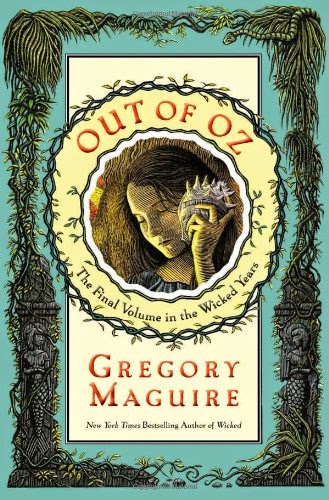
Out of Oz
Out of Oz, by Gregory Maguire
I wanted to like this book more because there are a lot of really good plot elements. However, for a final book of a series, it feels like Maguire was just trying to tie up loose ends rather than making some grand closing statement.
His first book Wicked inverted the L. Frank Baum's Oz story making it about Glinda the Good Witch and Elphaba the Wicked Witch of the West, and telling the story from Elphaba's point of view. He presents an Oz troubled by civil war and social injustice that is much different than the benevolent fairyland of L. Frank Baum. Dorothy is now only a minor character who succeeds in killing both wicked witches but does little else. The second book of The Wicked Years series, Son of a Witch, tells the story of Liir, a boy Elphaba raised who may be her son. The third book, A Lion Among Men, tells the story of Brrr, the Cowardly Lion.
Out of Oz claims to be the final volume in the Wicked Years, but its ending leads me to believe that a new era may follow the Wicked era of these four books. It tells the story of Liir's daughter Rain who is born green like her grandmother Elphaba as she and Liir struggle to stay alive being hunted by both sides in the ongoing war. Some of Baum's most famous characters like the Scarecrow and Tin Woodman are only mentioned in passing, and others like Jack Pumpkinhead, Tiktok and General Jinjur make the briefest of cameo appearances. Dorothy, Tip and Mombi have roles to play but they seem to be inserted into Maguire's world as an afterthought rather than integral parts of the story. Only Brrr the Lion has made the transition naturally from Baum's Oz to Maguire's.
While some elements of the plot seem contrived, the basic story of Rain and her parents negotiating their own familial relationships while trying to find peace in a troubled country at war is a strong and fitting end to the series.
I wanted to like this book more because there are a lot of really good plot elements. However, for a final book of a series, it feels like Maguire was just trying to tie up loose ends rather than making some grand closing statement.
His first book Wicked inverted the L. Frank Baum's Oz story making it about Glinda the Good Witch and Elphaba the Wicked Witch of the West, and telling the story from Elphaba's point of view. He presents an Oz troubled by civil war and social injustice that is much different than the benevolent fairyland of L. Frank Baum. Dorothy is now only a minor character who succeeds in killing both wicked witches but does little else. The second book of The Wicked Years series, Son of a Witch, tells the story of Liir, a boy Elphaba raised who may be her son. The third book, A Lion Among Men, tells the story of Brrr, the Cowardly Lion.
Out of Oz claims to be the final volume in the Wicked Years, but its ending leads me to believe that a new era may follow the Wicked era of these four books. It tells the story of Liir's daughter Rain who is born green like her grandmother Elphaba as she and Liir struggle to stay alive being hunted by both sides in the ongoing war. Some of Baum's most famous characters like the Scarecrow and Tin Woodman are only mentioned in passing, and others like Jack Pumpkinhead, Tiktok and General Jinjur make the briefest of cameo appearances. Dorothy, Tip and Mombi have roles to play but they seem to be inserted into Maguire's world as an afterthought rather than integral parts of the story. Only Brrr the Lion has made the transition naturally from Baum's Oz to Maguire's.
While some elements of the plot seem contrived, the basic story of Rain and her parents negotiating their own familial relationships while trying to find peace in a troubled country at war is a strong and fitting end to the series.
Monday, December 29, 2014
It Rhymes with Lust
It Rhymes with Lust by Arnold Drake & Leslie Waller with Illustrations by Matt Baker
It Rhymes with Lust, written in 1949, lays claim to being the first graphic novel, combining a novel-length story with comic book art and speech balloon dialog. At the time the authors called it a picture novel as the term graphic novel didn't come into use until the 1970s. Reprinted in 2006 by Black Horse Books, this early graphic novel while primarily of interest for its historic significance, remains a beautifully drawn work that is filled with panels that create lasting impressions.
The book is about a power struggle in Copper City, a mining town run by mine owner Buck Masson until his death. In his absence, Buck's scheming second wife Rust Masson and political boss Marcus Jeffers are fighting for control. Rust asks her old lover Hal Weber, a disillusioned newspaperman who still has a powerful longing for her, to be editor of the local paper and help her fight Jeffers. While Hal still longs for Rust, he finds himself smitten with Audrey Masson, Buck's virtuous and beautiful daughter from his first wife. Can she convince him of Rust's treachery, win his heart, and save the town?
While the story is well-written, it suffers from age, and plot elements that were fresh 65 years ago can seem corny or formulaic. What makes this book a joy to read is the artwork of Matt Baker that has held up well over the years. Baker was one of the few African-American artists in the field at the time, and his female characters are not only well-drawn, but their stylish clothing is amazing.
The 2006 edition contains a 5-page Afterword by Arnold Drake that provides the historic setting for this groundbreaking novel. Also included are brief biographies of Matt Baker and the two authors.
It Rhymes with Lust, written in 1949, lays claim to being the first graphic novel, combining a novel-length story with comic book art and speech balloon dialog. At the time the authors called it a picture novel as the term graphic novel didn't come into use until the 1970s. Reprinted in 2006 by Black Horse Books, this early graphic novel while primarily of interest for its historic significance, remains a beautifully drawn work that is filled with panels that create lasting impressions.
The book is about a power struggle in Copper City, a mining town run by mine owner Buck Masson until his death. In his absence, Buck's scheming second wife Rust Masson and political boss Marcus Jeffers are fighting for control. Rust asks her old lover Hal Weber, a disillusioned newspaperman who still has a powerful longing for her, to be editor of the local paper and help her fight Jeffers. While Hal still longs for Rust, he finds himself smitten with Audrey Masson, Buck's virtuous and beautiful daughter from his first wife. Can she convince him of Rust's treachery, win his heart, and save the town?
While the story is well-written, it suffers from age, and plot elements that were fresh 65 years ago can seem corny or formulaic. What makes this book a joy to read is the artwork of Matt Baker that has held up well over the years. Baker was one of the few African-American artists in the field at the time, and his female characters are not only well-drawn, but their stylish clothing is amazing.
The 2006 edition contains a 5-page Afterword by Arnold Drake that provides the historic setting for this groundbreaking novel. Also included are brief biographies of Matt Baker and the two authors.
Tuesday, December 16, 2014
Safe Area Gorazde: The War in Eastern Bosnia 1992-1995
Safe Area Gorazde: The War in Eastern Bosnia 1992-1995, by Joe Sacco
A friend of mine loaned Safe Area Goražde to me. When I started reading it, I discovered that it has to do with the same region of Bosnia as Ivo Andric's Nobel Prize winning 1945 novel Bridge on the Drina. In fact, on page 110 of Safe Area Goražde, Sacco tells how on June 17, 1992 Serbian Chetniks killed 300 Bosnian Muslims on this bridge and threw the corpses into the Drina River. Andric used the historic Mehmed Paša Sokolović Bridge in Višegrad (the next town down the river from Goražde) as the principle "character" in his novel that covers 400 years of life in this small area of Bosnia, telling the history of the Serb and Muslim people in a series of episodes over time.
In his graphic novel Joe Sacco tells of his visits to Goražde in 1995 and 1996, his interviews with the people of the city, and their memories of the war in eastern Bosnia that started in 1992. His work reminds me of Martha Gellhorn's reporting of the turmoil in Europe in the 1930s in the personal touch he brings by telling the story through the people he met. Gelhorn was no artist and relied on her prose, while Sacco brings his story to life with his great black and white drawings.
Sacco's story is of the Muslim residents of Goražde and the assault on their UN designated "safe zone" by Serbian forces. It is one-sided as is most war reporting, but his attention to detail and his closeness to the people he writes about makes this a compelling and powerful story. His being "embedded" with the people of the city allows him to get details and personalities that escape most war reporting. What he doesn't do well is explain why the Serbs suddenly turn on their neighbors in such a violent and deadly fashion.
I recommend reading Andric's Bridge on the Drina for people who wonder why the Serbs suddenly turned to armed conflict and ethnic cleansing after living together in peace with the other nationalities in Yugoslavia.
A friend of mine loaned Safe Area Goražde to me. When I started reading it, I discovered that it has to do with the same region of Bosnia as Ivo Andric's Nobel Prize winning 1945 novel Bridge on the Drina. In fact, on page 110 of Safe Area Goražde, Sacco tells how on June 17, 1992 Serbian Chetniks killed 300 Bosnian Muslims on this bridge and threw the corpses into the Drina River. Andric used the historic Mehmed Paša Sokolović Bridge in Višegrad (the next town down the river from Goražde) as the principle "character" in his novel that covers 400 years of life in this small area of Bosnia, telling the history of the Serb and Muslim people in a series of episodes over time.
In his graphic novel Joe Sacco tells of his visits to Goražde in 1995 and 1996, his interviews with the people of the city, and their memories of the war in eastern Bosnia that started in 1992. His work reminds me of Martha Gellhorn's reporting of the turmoil in Europe in the 1930s in the personal touch he brings by telling the story through the people he met. Gelhorn was no artist and relied on her prose, while Sacco brings his story to life with his great black and white drawings.
Sacco's story is of the Muslim residents of Goražde and the assault on their UN designated "safe zone" by Serbian forces. It is one-sided as is most war reporting, but his attention to detail and his closeness to the people he writes about makes this a compelling and powerful story. His being "embedded" with the people of the city allows him to get details and personalities that escape most war reporting. What he doesn't do well is explain why the Serbs suddenly turn on their neighbors in such a violent and deadly fashion.
I recommend reading Andric's Bridge on the Drina for people who wonder why the Serbs suddenly turned to armed conflict and ethnic cleansing after living together in peace with the other nationalities in Yugoslavia.
Wednesday, November 26, 2014
John Dough and the Cherub
John Dough and the Cherub by L. Frank Baum

Published in 2008 by Hungry Tiger, a press that publishes quality editions of the works of L. Frank Baum, this book brings together L. Frank Baum's original 1906 text and all of John R. Neill's original illustrations with a new 13 page foreword by J. L. Bell, editor of the International Wizard of Oz Club's magazine Oziana. Also included is a one page note on the making of this new edition by David Maxine of Hungry Tiger Press. This is a loving recreation of a book that, while in the Public Domain, has been out of print for a long time.
J. L. Bell tells us in the foreword that the book was originally commissioned for serialization by Ladies' Home Journal, the largest subscription magazine in the world at the time. However, when Baum submitted his first four chapters based on a children's story "The Gingerbread Boy" about a pastry that comes to life and runs away rather than be eaten by everyone he meets, the editor decided to reject the story. The story published in St. Nicholas Magazine in 1875 comes to an abrupt end when the pastry is eaten by a fox.
While the original story does not explain how the gingerbread comes to life, Baum has an Arab named Ali Dubh who is being pursued by three other Arabs, visit an American bake shop in his neighborhood and ask the baker's wife to hide a golden flask that contains The Great Elixir, the Water of Life, that his pursuers seek. In return he offers her a silver flask that will cure her rheumatism. The woman mixes up the two flasks and pours the Water of Life into a large bowl of water which her husband, unaware of its significance, uses to fashion a life-sized gingerbread man. Infused with The Great Elixir, the baker's creation that he named John Dough comes to life and begins to stroll through the town.
While all who meet him think of him as food, John Dough sees himself as a living being with a life of his own. This creates even more existential conflict when it becomes obvious to him and others that anyone who does eat him will not only fill their stomach but gain the benefits of the Water of Life and become stronger and more vibrant. Ali Dubh pays the baker for the gingerbread man and starts off in pursuit of his property. To escape capture John Dough catches a ride on a 4th of July rocket and lands days later on the Isle of Phreex in what Baum will in a a later book call the Nonestic Ocean. It is the body of water that surrounds the land that contains his fairyland of Oz.
When John Dough lands on the Isle of Phreex, a place inhabited by unusual people, it appears he has found a home where he can be accepted and makes friends with Chick the Cherub, an Incubator Baby who has grown up on the isle without parents. No one seems to know Chick's gender making the Cherub gender queer in today's terminology, a character that does not conform to either male or female gender identification. J. L. Bell in the foreword tells of a contest where the publisher would reward the reader who submitted the best reason Chick was a boy or a girl.
However, John and Chick are not safe and Ali Dubh is in hot pursuit. Does John Dough get eaten or allow himself to be eaten? Can you guess Chick's gender? All the while Baum has his characters on an island hopping adventure as they seek safety and a home. This book has many features of his American fairytale series of stories, where he tries to bring the magic of fairytales to everyday American settings, and it has the features of a minor Oz story in that it also takes place in the magical lands surrounding Oz, but without any of the main Ozian characters. I like it because it raises ethical questions about owning and eating living creatures and takes a refreshing look at gender identity. The book will appeal to Baum's fans and deserves reading because of the issues it addresses.

Published in 2008 by Hungry Tiger, a press that publishes quality editions of the works of L. Frank Baum, this book brings together L. Frank Baum's original 1906 text and all of John R. Neill's original illustrations with a new 13 page foreword by J. L. Bell, editor of the International Wizard of Oz Club's magazine Oziana. Also included is a one page note on the making of this new edition by David Maxine of Hungry Tiger Press. This is a loving recreation of a book that, while in the Public Domain, has been out of print for a long time.
J. L. Bell tells us in the foreword that the book was originally commissioned for serialization by Ladies' Home Journal, the largest subscription magazine in the world at the time. However, when Baum submitted his first four chapters based on a children's story "The Gingerbread Boy" about a pastry that comes to life and runs away rather than be eaten by everyone he meets, the editor decided to reject the story. The story published in St. Nicholas Magazine in 1875 comes to an abrupt end when the pastry is eaten by a fox.
While the original story does not explain how the gingerbread comes to life, Baum has an Arab named Ali Dubh who is being pursued by three other Arabs, visit an American bake shop in his neighborhood and ask the baker's wife to hide a golden flask that contains The Great Elixir, the Water of Life, that his pursuers seek. In return he offers her a silver flask that will cure her rheumatism. The woman mixes up the two flasks and pours the Water of Life into a large bowl of water which her husband, unaware of its significance, uses to fashion a life-sized gingerbread man. Infused with The Great Elixir, the baker's creation that he named John Dough comes to life and begins to stroll through the town.
While all who meet him think of him as food, John Dough sees himself as a living being with a life of his own. This creates even more existential conflict when it becomes obvious to him and others that anyone who does eat him will not only fill their stomach but gain the benefits of the Water of Life and become stronger and more vibrant. Ali Dubh pays the baker for the gingerbread man and starts off in pursuit of his property. To escape capture John Dough catches a ride on a 4th of July rocket and lands days later on the Isle of Phreex in what Baum will in a a later book call the Nonestic Ocean. It is the body of water that surrounds the land that contains his fairyland of Oz.
When John Dough lands on the Isle of Phreex, a place inhabited by unusual people, it appears he has found a home where he can be accepted and makes friends with Chick the Cherub, an Incubator Baby who has grown up on the isle without parents. No one seems to know Chick's gender making the Cherub gender queer in today's terminology, a character that does not conform to either male or female gender identification. J. L. Bell in the foreword tells of a contest where the publisher would reward the reader who submitted the best reason Chick was a boy or a girl.
However, John and Chick are not safe and Ali Dubh is in hot pursuit. Does John Dough get eaten or allow himself to be eaten? Can you guess Chick's gender? All the while Baum has his characters on an island hopping adventure as they seek safety and a home. This book has many features of his American fairytale series of stories, where he tries to bring the magic of fairytales to everyday American settings, and it has the features of a minor Oz story in that it also takes place in the magical lands surrounding Oz, but without any of the main Ozian characters. I like it because it raises ethical questions about owning and eating living creatures and takes a refreshing look at gender identity. The book will appeal to Baum's fans and deserves reading because of the issues it addresses.
Sunday, November 23, 2014
Auschwitz
Auschwitz by Pascal Croci
Auschwitz is a graphic novel depicting a typical Jewish family's experience of the Nazi death camp written by Italian artist Pascal Croci. The author portrays Kazik and Cessia looking back 50 years to their time at Auschwitz from their current life in Yugoslavia. He portrays the transport by train, the initial selection process where they are separated from each other and their daughter Ann, Kazik's day to day life, his work in the gas chambers and crematoria, the whole horror of the death camp is portrayed through the lives of these two composite personalities.
The book concludes with 13 pages of information about the project of creating the book. There are four pages of questions and answers, information on the sources he used for the characters and imagery, a glossary, and a bibliography of sources.
Not for the squeamish, this is a good introduction to what the realities of Auschwitz were.
Auschwitz is a graphic novel depicting a typical Jewish family's experience of the Nazi death camp written by Italian artist Pascal Croci. The author portrays Kazik and Cessia looking back 50 years to their time at Auschwitz from their current life in Yugoslavia. He portrays the transport by train, the initial selection process where they are separated from each other and their daughter Ann, Kazik's day to day life, his work in the gas chambers and crematoria, the whole horror of the death camp is portrayed through the lives of these two composite personalities.
The book concludes with 13 pages of information about the project of creating the book. There are four pages of questions and answers, information on the sources he used for the characters and imagery, a glossary, and a bibliography of sources.
Not for the squeamish, this is a good introduction to what the realities of Auschwitz were.
Can't We Talk about Something More Pleasant?
Can't We Talk about Something More Pleasant? by Roz Chast
George and Elizabeth Chast were born of immigrant Jewish parents 10 days apart in 1912 in the same neighborhood of New York City. when they married they lived together in the same Brooklyn apartment their whole lives and had one child, a daughter named Roz. George was a teacher and Elizabeth an assistant principle in the city schools. When Roz grew up she became a book illustrator and cartoonist for the New Yorker and other magazines. She had two children and moved to Connecticut.
Roz Chast uses drawings and text to explore her complex and conflicted relationship with her elderly parents from 2001 until their deaths in 2007 and 2009 as she is called on to care for them through their declining years. It is a memoir in graphic novel format with occasional photographs.
She is best at depicting her own insecurities and feelings as she is drawn deeper and deeper into the care of her parents. From occasional visits to Brooklyn to moving them to a facility nearby in Connecticut we see how she resists and accepts her evolving role as caretaker. Through memories and photos we learn of their early lives together.
I recommend this book for anyone who wants to get an in depth and personal look at the process of caring for elderly parents. My mother is 95, and she and I are on Chapter 11 of this book as she marks her first anniversary in an assisted living facility. I read this book twice and plan to read it again. Even if you don't have aging parents, but are getting old yourself, this is an eye-opener for what is in store.
George and Elizabeth Chast were born of immigrant Jewish parents 10 days apart in 1912 in the same neighborhood of New York City. when they married they lived together in the same Brooklyn apartment their whole lives and had one child, a daughter named Roz. George was a teacher and Elizabeth an assistant principle in the city schools. When Roz grew up she became a book illustrator and cartoonist for the New Yorker and other magazines. She had two children and moved to Connecticut.
Roz Chast uses drawings and text to explore her complex and conflicted relationship with her elderly parents from 2001 until their deaths in 2007 and 2009 as she is called on to care for them through their declining years. It is a memoir in graphic novel format with occasional photographs.
She is best at depicting her own insecurities and feelings as she is drawn deeper and deeper into the care of her parents. From occasional visits to Brooklyn to moving them to a facility nearby in Connecticut we see how she resists and accepts her evolving role as caretaker. Through memories and photos we learn of their early lives together.
I recommend this book for anyone who wants to get an in depth and personal look at the process of caring for elderly parents. My mother is 95, and she and I are on Chapter 11 of this book as she marks her first anniversary in an assisted living facility. I read this book twice and plan to read it again. Even if you don't have aging parents, but are getting old yourself, this is an eye-opener for what is in store.
Friday, September 26, 2014
The Sands of Time: A History of Hilton Head Island
The Sands of Time: A History of Hilton Head Island by Margaret Greer
Margaret Greer, who lived on Hilton Head Island, wrote this 11 chapter illustrated popular history of the island from its geological formations to the mid-1980s. In 70 pages she covers the island's history and still finds room for both color and black and white pictures on at least every other page.
Chapter I, The Land Made Ready, is a one page geological history of the formation of the island. Chapter II, The Indians, covers in three pages the native American Yemasee tribe's presence on the island and the legacy of names left by them. In Chapter III, The First Europeans, the 16th century Spanish landings and attempts at settlements are discussed in three pages. The French landing in 1562 gets four pages in Chapter IV. This is followed by the three pages of Chapter V on the Spanish return to the area in the late 16th century. Chapter VI, The English Come to Stay, devotes seven pages to the 1663 explorations of Captain William Hilton, who gave the island its present name, and the English settlements that followed.
Chapter VII, The Planters, in four pages talks about the first plantations established on the island. Chapter VIII, The Golden Age, spends nine pages talking about the period from the Revolutionary War to the Civil War and the ante-bellum plantation system that developed then. Chapter IX, The Civil War, is the actual heart of the book with 18 pages devoted to the battle for Hilton Head and the Union presence on the island after their victory.
The 100 years between the Civil War and the post World War II developments into a resort, when the islands were home to "native islanders," descendants of freed slaves known as the Gullah (or Geechee), are covered in the eight pages of Chapter X, Sleeping Beauty, half of which are devoted to photos. The concluding Chapter XI, The Modern Age, covers in eight pages the development of the resort community from 1950 to 1988.
Painted in broad strokes, The Sands of Time is a brief and general historic introduction to Hilton Head Island. well-illustrated and short, it serves this purpose well. A Sources page listing eight items is a good place to start looking for more information.
Margaret Greer, who lived on Hilton Head Island, wrote this 11 chapter illustrated popular history of the island from its geological formations to the mid-1980s. In 70 pages she covers the island's history and still finds room for both color and black and white pictures on at least every other page.
Chapter I, The Land Made Ready, is a one page geological history of the formation of the island. Chapter II, The Indians, covers in three pages the native American Yemasee tribe's presence on the island and the legacy of names left by them. In Chapter III, The First Europeans, the 16th century Spanish landings and attempts at settlements are discussed in three pages. The French landing in 1562 gets four pages in Chapter IV. This is followed by the three pages of Chapter V on the Spanish return to the area in the late 16th century. Chapter VI, The English Come to Stay, devotes seven pages to the 1663 explorations of Captain William Hilton, who gave the island its present name, and the English settlements that followed.
Chapter VII, The Planters, in four pages talks about the first plantations established on the island. Chapter VIII, The Golden Age, spends nine pages talking about the period from the Revolutionary War to the Civil War and the ante-bellum plantation system that developed then. Chapter IX, The Civil War, is the actual heart of the book with 18 pages devoted to the battle for Hilton Head and the Union presence on the island after their victory.
The 100 years between the Civil War and the post World War II developments into a resort, when the islands were home to "native islanders," descendants of freed slaves known as the Gullah (or Geechee), are covered in the eight pages of Chapter X, Sleeping Beauty, half of which are devoted to photos. The concluding Chapter XI, The Modern Age, covers in eight pages the development of the resort community from 1950 to 1988.
Painted in broad strokes, The Sands of Time is a brief and general historic introduction to Hilton Head Island. well-illustrated and short, it serves this purpose well. A Sources page listing eight items is a good place to start looking for more information.
Tuesday, September 23, 2014
Nymphs of the Valley
Nymphs of the Valley by Kahlil Gibran
Kahlil Gibran is an early 20th Century Lebanese writer who is best known for his 1923 book The Prophet. The dust jacket flap says this small volume of three Arabic stories were found amongst his papers by his translator and made available in English in 1948. The original 1906 Arabic version was published in New York by Al-Mohajer with the title Ara'is al-Muruj. Wikipedia lists it as his 2nd published book. PoemHunter.com - The World's Poetry Archive's Classic Poetry Series 2008 article on Kahlil Gibran describes these stories as expressive of Gibran's "anti-feudal and anti-clerical convictions." The dust jacket to the British edition describes them as follows.
"The setting of all three is the Lebanon. The first [Martha] tells the story of a poor and innocent village girl who is seduced and stranded in the city. On her deathbed she is consoled by a youth from her native village. The second [Dust of the Ages and The Eternal Fire] is a story of reincarnation; two lovers parted by death in ancient Baal are joined together in life two thousand years afterwards. The third [Yuhanna the Mad] is the portrait of a true Christian in rebellion against the vested interests of the monasteries. And he who has real wisdom is said by the world to be mad."
All three describe a Lebanon that is part of the crumbling Turkish Empire where the powerful and the poor are widely separated. Gibran, like Tolstoy, sees the corrupt church in league with the government and the rich, robbing the poor of what little they have, to maintain their status and wealth. His heart is with the poor villagers and these stories tell a timeless message of love and humanity struggling against wealth and privilege.
Kahlil Gibran is an early 20th Century Lebanese writer who is best known for his 1923 book The Prophet. The dust jacket flap says this small volume of three Arabic stories were found amongst his papers by his translator and made available in English in 1948. The original 1906 Arabic version was published in New York by Al-Mohajer with the title Ara'is al-Muruj. Wikipedia lists it as his 2nd published book. PoemHunter.com - The World's Poetry Archive's Classic Poetry Series 2008 article on Kahlil Gibran describes these stories as expressive of Gibran's "anti-feudal and anti-clerical convictions." The dust jacket to the British edition describes them as follows.
"The setting of all three is the Lebanon. The first [Martha] tells the story of a poor and innocent village girl who is seduced and stranded in the city. On her deathbed she is consoled by a youth from her native village. The second [Dust of the Ages and The Eternal Fire] is a story of reincarnation; two lovers parted by death in ancient Baal are joined together in life two thousand years afterwards. The third [Yuhanna the Mad] is the portrait of a true Christian in rebellion against the vested interests of the monasteries. And he who has real wisdom is said by the world to be mad."
All three describe a Lebanon that is part of the crumbling Turkish Empire where the powerful and the poor are widely separated. Gibran, like Tolstoy, sees the corrupt church in league with the government and the rich, robbing the poor of what little they have, to maintain their status and wealth. His heart is with the poor villagers and these stories tell a timeless message of love and humanity struggling against wealth and privilege.
Sunday, September 14, 2014
Modesty Blaise
Modesty Blaise by Peter O'Donnell
Modesty Blaise started out as a comic strip character created by Peter O'Donnell in 1963. The comics were produced until 2001, and O'Donnell wrote a 13 book series of novels and collections of short stories that started with this book in 1965 and ended in 1996. There have even been two or three movies made featuring her character. I became intrigued with the series when I saw the 2004 movie My Name Is Modesty starring Alexandra Staden.
In this first novel, we meet Modesty after she has retired with a fortune from a life in the underworld. Her loyal sidekick Willie Garvin has gotten himself into trouble, and a couple of British agents let her know his situation hoping that in return she will help them with a situation that can use her particular talents. After saving Willie, she agrees to help the agents with a payoff to a Middle Eastern sheik of 10 million British Pounds worth of diamonds being transferred from South Africa. When two of their agents are killed, they fear that the jewels are being targeted for a heist along the way.
The story was written 50 years ago, and it may not appeal to a younger audience. O'Donnell pays great attention to detail, creates a strong female lead character, and has a skill at developing interesting secondary characters throughout the story. Similar in appeal to the early James Bond novels.
Modesty Blaise started out as a comic strip character created by Peter O'Donnell in 1963. The comics were produced until 2001, and O'Donnell wrote a 13 book series of novels and collections of short stories that started with this book in 1965 and ended in 1996. There have even been two or three movies made featuring her character. I became intrigued with the series when I saw the 2004 movie My Name Is Modesty starring Alexandra Staden.
In this first novel, we meet Modesty after she has retired with a fortune from a life in the underworld. Her loyal sidekick Willie Garvin has gotten himself into trouble, and a couple of British agents let her know his situation hoping that in return she will help them with a situation that can use her particular talents. After saving Willie, she agrees to help the agents with a payoff to a Middle Eastern sheik of 10 million British Pounds worth of diamonds being transferred from South Africa. When two of their agents are killed, they fear that the jewels are being targeted for a heist along the way.
The story was written 50 years ago, and it may not appeal to a younger audience. O'Donnell pays great attention to detail, creates a strong female lead character, and has a skill at developing interesting secondary characters throughout the story. Similar in appeal to the early James Bond novels.
Wednesday, September 03, 2014
Folk Medicine
Folk Medicine: A Vermont Doctor's Guide to Good Health by D. C. Jarvis
Dr. Jarvis spent his medical career serving the rural state of Vermont and studying the folk medicine practices he found there. The results of his lifetime work in this area are published in this 1958 book aptly titled Folk Medicine. To read it today is to go back in a time machine to visit a rural doctor of the first half of the 20th century who is studying the folk medicines of his time. He speaks of people growing up close to the land, small farmers eating their locally grown crops and the products of their animals. He never mentions a veterinarian, and he cares for the farmer's animals as much as he cares for the farmers and their families.
The Vermont soil is low in potassium. He personally added granite dust from the stone cutters in Barre to his garden soil because granite has potassium in it. People were shorter in Vermont because they ate foods grown in this potassium-deficient soil.
One of the things he discovered in his research into the folk medicine practices of rural Vermont was the many ways that the people compensated for the low potassium in their diet. The major one was a reliance on a drink made of apple cider vinegar, often mixed with an equal quantity of honey and diluted with water. Much of the book is devoted to this simple drink and the many beneficial effects he ascribes to it. He claims the benefits come from vinegar's acidifying effects on the body, the healthful sugars present in the natural honey, and the many minerals, particularly potassium, contained in both ingredients.
Vermont farmers of Dr. Jarvis' time didn't go down to a local grocery and buy a bottle of apple cider vinegar and a jar of honey. They got a barrel of fresh-pressed apple cider, most likely from their own trees or a neighbors, and let it ferment in the barn, past the hard cider stage, until it turned to vinegar. They got their honey from local bees. Today you would have to look far and wide to find anyone with a vinegar barrel somewhere around their property; today vinegar is made in a factory in 2-3 days rather than the back yard in 6-12 months.
Dr. Jarvis was writing for a time and place that do not exist anymore, but our need for potassium still remains essential, and food is its primary source. The kind of vinegar the farmers brewed in their barns is made by a few health food companies, and fortunately almost everywhere in America you can find local sources of honey. The modern diet is built around supermarkets instead of gardens and livestock. Much of our food is manufactured, where efficiency and shelf life are industrial concerns. We take multivitamins and supplements, often added to our manufactured foods, to meet our nutritional needs. A vital connection is lost in all of this with the life of the soil and the plants grown in it. Could a drink made from raw, organic, unfiltered apple cider vinegar and honey make a difference to our lives? I would like to think so. Is this magical thinking? At this time you could it is, since I haven't found research to back it up, but as a librarian I know how to look for information.
Dr. Jarvis spent his medical career serving the rural state of Vermont and studying the folk medicine practices he found there. The results of his lifetime work in this area are published in this 1958 book aptly titled Folk Medicine. To read it today is to go back in a time machine to visit a rural doctor of the first half of the 20th century who is studying the folk medicines of his time. He speaks of people growing up close to the land, small farmers eating their locally grown crops and the products of their animals. He never mentions a veterinarian, and he cares for the farmer's animals as much as he cares for the farmers and their families.
The Vermont soil is low in potassium. He personally added granite dust from the stone cutters in Barre to his garden soil because granite has potassium in it. People were shorter in Vermont because they ate foods grown in this potassium-deficient soil.
One of the things he discovered in his research into the folk medicine practices of rural Vermont was the many ways that the people compensated for the low potassium in their diet. The major one was a reliance on a drink made of apple cider vinegar, often mixed with an equal quantity of honey and diluted with water. Much of the book is devoted to this simple drink and the many beneficial effects he ascribes to it. He claims the benefits come from vinegar's acidifying effects on the body, the healthful sugars present in the natural honey, and the many minerals, particularly potassium, contained in both ingredients.
Vermont farmers of Dr. Jarvis' time didn't go down to a local grocery and buy a bottle of apple cider vinegar and a jar of honey. They got a barrel of fresh-pressed apple cider, most likely from their own trees or a neighbors, and let it ferment in the barn, past the hard cider stage, until it turned to vinegar. They got their honey from local bees. Today you would have to look far and wide to find anyone with a vinegar barrel somewhere around their property; today vinegar is made in a factory in 2-3 days rather than the back yard in 6-12 months.
Dr. Jarvis was writing for a time and place that do not exist anymore, but our need for potassium still remains essential, and food is its primary source. The kind of vinegar the farmers brewed in their barns is made by a few health food companies, and fortunately almost everywhere in America you can find local sources of honey. The modern diet is built around supermarkets instead of gardens and livestock. Much of our food is manufactured, where efficiency and shelf life are industrial concerns. We take multivitamins and supplements, often added to our manufactured foods, to meet our nutritional needs. A vital connection is lost in all of this with the life of the soil and the plants grown in it. Could a drink made from raw, organic, unfiltered apple cider vinegar and honey make a difference to our lives? I would like to think so. Is this magical thinking? At this time you could it is, since I haven't found research to back it up, but as a librarian I know how to look for information.
Monday, September 01, 2014
Tomatoland
Tomatoland: How Modern Industrial Agriculture Destroyed Our Most Alluring Fruit by Barry Estabrook
Tomatoland is an investigative report on the Florida agricultural businesses that supply winter tomatoes to the supermarkets. Most of the book focuses on a city most people don't know which is a drained swamp just 42 miles inland from Naples Florida called Immokalee.
The book looks at labor conditions and efforts that have been taken to improve them. It investigates the major growing firms and the agriculture techniques required to grow tomatoes in Florida, including the heavy use of fungicides, pesticides and herbicides, many of which are dangerous to humans.
The book also looks at an organic farmer in Florida who is proving that these methods can work there. A Pennsylvania farmer who grows Heirloom Tomatoes for New York City restaurants is also highlighted. The book begins and ends with a search for the tomato's earliest relatives in the dry mountainous soils of Mexico and South America.
If tomatoes are more than something red you add to your diet, if you love tomatoes for their taste and dread the winter products in the marketplace, if you care for social justice for farmworkers and their families, then this is a book to savor with a fresh garden tomato sandwich before the frosts of winter ends the season of local joy.
Tomatoland is an investigative report on the Florida agricultural businesses that supply winter tomatoes to the supermarkets. Most of the book focuses on a city most people don't know which is a drained swamp just 42 miles inland from Naples Florida called Immokalee.
The book looks at labor conditions and efforts that have been taken to improve them. It investigates the major growing firms and the agriculture techniques required to grow tomatoes in Florida, including the heavy use of fungicides, pesticides and herbicides, many of which are dangerous to humans.
The book also looks at an organic farmer in Florida who is proving that these methods can work there. A Pennsylvania farmer who grows Heirloom Tomatoes for New York City restaurants is also highlighted. The book begins and ends with a search for the tomato's earliest relatives in the dry mountainous soils of Mexico and South America.
If tomatoes are more than something red you add to your diet, if you love tomatoes for their taste and dread the winter products in the marketplace, if you care for social justice for farmworkers and their families, then this is a book to savor with a fresh garden tomato sandwich before the frosts of winter ends the season of local joy.
Saturday, August 30, 2014
Martin Luther King and the Montgomery Story
Martin Luther King and the Montgomery Story by Alfred Hassler and Benton Resnik
Created by Alfred Hassler and Benton Resnik this short 16 pager comic book was first published in December 1957 by the Fellowship of Reconciliation. Illustrating the Nonviolent Method using the case of the Montgomery Bus Boycott, the comic very simple and elegantly tells how nonviolent action works.
I read Stanford University's digitized copy.
Created by Alfred Hassler and Benton Resnik this short 16 pager comic book was first published in December 1957 by the Fellowship of Reconciliation. Illustrating the Nonviolent Method using the case of the Montgomery Bus Boycott, the comic very simple and elegantly tells how nonviolent action works.
I read Stanford University's digitized copy.
Sunday, August 24, 2014
Naked
Naked by David Sedaris
Naked is a series of 17 essays written by David Sedaris and published in 1997. Sedaris includes a note to say that the events depicted are real but names and identifying characteristics have been changed except for those of his family. The author grew up in Raleigh, and I met him in 1979 when I moved to Raleigh and he worked as a waiter at the Breakfast House restaurant on Hillsborough Street.
The essays in Naked focus on David's life growing up in Raleigh, his college years, early work experiences, and his relationship with his family members. The 40 page title essay Naked relates his week-long first visit to a nudist club and his adjustment to a clothes-free environment and the nudists he met.
As a 1990s retrospective look back on the 19760s and 70s, this book may not be for everyone. I enjoyed it as a tribute to a Raleigh that was much smaller and in many ways than the city we know today, as the gifted writings of a gay man growing up in a intolerant world, and as a long-lost letter from a person I met many years ago who made me feel welcome in a strange city.
Naked is a series of 17 essays written by David Sedaris and published in 1997. Sedaris includes a note to say that the events depicted are real but names and identifying characteristics have been changed except for those of his family. The author grew up in Raleigh, and I met him in 1979 when I moved to Raleigh and he worked as a waiter at the Breakfast House restaurant on Hillsborough Street.
The essays in Naked focus on David's life growing up in Raleigh, his college years, early work experiences, and his relationship with his family members. The 40 page title essay Naked relates his week-long first visit to a nudist club and his adjustment to a clothes-free environment and the nudists he met.
As a 1990s retrospective look back on the 19760s and 70s, this book may not be for everyone. I enjoyed it as a tribute to a Raleigh that was much smaller and in many ways than the city we know today, as the gifted writings of a gay man growing up in a intolerant world, and as a long-lost letter from a person I met many years ago who made me feel welcome in a strange city.
Saturday, August 16, 2014
Manon Lescaut
Manon Lescaut by Antoine François Prévost
Manon Lescaut is a story of a young man, the Chevalier des Grieux, and his lover, Manon Lescaut. Set in the year 1721 and first published in 1731, this story of uninhibited love and its dire consequences was both quickly banned and widely read. The novel begins when a narrator, spending the night in a small town, who sees the townspeople gathered around two large wagons loaded with women criminals who are being banished to the colony of New Orleans. Amongst this "frail sisterhood" sits Manon "whose whole air and figure seemed so ill-suited to her present condition, that under other circumstances I should not have hesitated to pronounce her a person of high birth. Her excessive grief, and even the wretchedness of her attire, detracted so little from her surpassing beauty... " Asking one of the guards about this rare beauty, the guard points to a man who has followed them from Paris, crying all the way and says that he knows her. Asked about Manon, the despondent stranger replies that he is completely in love with her and having failed at all attempts to free her, he plans to follow her to the ends of the Earth. Seeing that the stranger has no money and is in desperate need, the narrator gives him 4 gold louis-d'ors and 2 more to the lead guard, and goes on his way.
Two years later he again sees the young man, poorly dressed and walking the street of Calais, having just returned from America. Greeting him and learning he is still destitute, the narrator offers him a room for the night at the inn where he is staying. That night the stranger, who is the Chevalier des Grieux, tells the story of his tragic three year love affair with the beautiful and charming Manon Lescaut.
Manon is poor but beautiful and the 17 year old Chevalier's love for her is instantaneous and intense. He must have her, and runs off with her to Paris in spite of the disapproval of his father and brother. Losing his savings through various circumstances, he relies on the generosity of friends and his skill at gambling to support their existence. Manon, while she professes love for the Chevalier, uses her beauty and charm to attract the generosity of other men. Instead of her loose virtue turning him away, their mutual love keeps him faithful to her. Eventually they run into trouble with the law and he follows her into exile.
Told completely from his point of view, Manon's life and motives are at best poorly understood. We see her through the filter of 300 years, a translation into another language, and the eyes of a deeply infatuated young man. It is believed that the story is in part based upon an early love affair of the author Prevost.
Manon's story and the Chevalier's love for her has inspired several operas, and, 100 years later, the novel and play Camille by Alexandre Dumas. Both Manon and Camille have been made into movies again and again. I am glad that I have read the original version of this classic love story.
Manon Lescaut is a story of a young man, the Chevalier des Grieux, and his lover, Manon Lescaut. Set in the year 1721 and first published in 1731, this story of uninhibited love and its dire consequences was both quickly banned and widely read. The novel begins when a narrator, spending the night in a small town, who sees the townspeople gathered around two large wagons loaded with women criminals who are being banished to the colony of New Orleans. Amongst this "frail sisterhood" sits Manon "whose whole air and figure seemed so ill-suited to her present condition, that under other circumstances I should not have hesitated to pronounce her a person of high birth. Her excessive grief, and even the wretchedness of her attire, detracted so little from her surpassing beauty... " Asking one of the guards about this rare beauty, the guard points to a man who has followed them from Paris, crying all the way and says that he knows her. Asked about Manon, the despondent stranger replies that he is completely in love with her and having failed at all attempts to free her, he plans to follow her to the ends of the Earth. Seeing that the stranger has no money and is in desperate need, the narrator gives him 4 gold louis-d'ors and 2 more to the lead guard, and goes on his way.
Two years later he again sees the young man, poorly dressed and walking the street of Calais, having just returned from America. Greeting him and learning he is still destitute, the narrator offers him a room for the night at the inn where he is staying. That night the stranger, who is the Chevalier des Grieux, tells the story of his tragic three year love affair with the beautiful and charming Manon Lescaut.
Manon is poor but beautiful and the 17 year old Chevalier's love for her is instantaneous and intense. He must have her, and runs off with her to Paris in spite of the disapproval of his father and brother. Losing his savings through various circumstances, he relies on the generosity of friends and his skill at gambling to support their existence. Manon, while she professes love for the Chevalier, uses her beauty and charm to attract the generosity of other men. Instead of her loose virtue turning him away, their mutual love keeps him faithful to her. Eventually they run into trouble with the law and he follows her into exile.
Told completely from his point of view, Manon's life and motives are at best poorly understood. We see her through the filter of 300 years, a translation into another language, and the eyes of a deeply infatuated young man. It is believed that the story is in part based upon an early love affair of the author Prevost.
Manon's story and the Chevalier's love for her has inspired several operas, and, 100 years later, the novel and play Camille by Alexandre Dumas. Both Manon and Camille have been made into movies again and again. I am glad that I have read the original version of this classic love story.
Saturday, August 09, 2014
The Anansi Boys
The Anansi Boys by Neil Gaiman
Neil Gaiman takes the legend of Anansi the Spider and updates it. This is about Anansi's two sons Fat Charlie and Spider who grew up in south Florida only to be parted by an angry neighbor that sends Spider away. If you didn't grow up with Anansi tales or read them to your children, you should read about him.
This story is about separated brothers reunited in modern London. But is it also a giant Anansi story with Animal totems living in the cliffs at The Beginning of the World. It is a well crafted story that I couldn't put down and enjoyed to the end. It illustrates how Life is just the tale we tell, and a gifted storyteller can make that tale so much more meaningful. It also shows how the world of our mind is meshed so closely with the world of our perceptions, how Spirit and Flesh, Sacred and Profane dance together to the sound of Song.
Neil Gaiman takes the legend of Anansi the Spider and updates it. This is about Anansi's two sons Fat Charlie and Spider who grew up in south Florida only to be parted by an angry neighbor that sends Spider away. If you didn't grow up with Anansi tales or read them to your children, you should read about him.
This story is about separated brothers reunited in modern London. But is it also a giant Anansi story with Animal totems living in the cliffs at The Beginning of the World. It is a well crafted story that I couldn't put down and enjoyed to the end. It illustrates how Life is just the tale we tell, and a gifted storyteller can make that tale so much more meaningful. It also shows how the world of our mind is meshed so closely with the world of our perceptions, how Spirit and Flesh, Sacred and Profane dance together to the sound of Song.
Sunday, August 03, 2014
The Executioner's Knife; or, Joan of Arc
The Executioner's Knife; or, Joan of Arc by Eugene Sue
The Executioner's Knife; or, Joan of Arc is the 15th book of Eugene Sue's 21 volume series The Mysteries of the People; or History of a Proletarian Family Across the Age. The series was created to depict the struggle between the ruling and the ruled classes in European history. One family, the descendants of a Gallic chief named Joel, represent the oppressed and the descendants of a Frankish chief Neroweg, typifies the oppressors. Down through the ages the successive struggles between oppressors and oppressed are depicted as each generation of Joel's family writes the story of their lives and adds it to the collective story gathered so far.
The Executioner's Knife is set in the early 15th Century and tells the famous story of Joan of Arc, the Maid of Orleans. Written in the mid-19th Century and translated into English in 1910, the book portrays Joan as guided by inner voices and an ancient legend to save France. The author depicts her as an inspirational figure to the downtrodden French who are caught in the conflict between an invading British army and a divided France. She herself is drawn as a heroine of the people who is betrayed by the ruling classes.
The book only tangentially fits into the series as neither Joan nor her major accusers are related to Eugene Sue's fictional families. He has one of the series' family members present at Joan's execution to tell the story of her death. One drawback for me, a modern reader in the USA, is that the author tells his French readers who each of Joan's enemies were and what they said against her. I found myself wanting to skip over pages in the last section of the book that deals with her capture, trial and execution as each person in her trial is identified by name, position and home city and quoted. As a result this book has over 100 footnotes, most to the transcript of the trial or other historic documents. Each book in the English translation series has a Preface written by the translator Daniel De Leon.
TRANSLATOR'S PREFACE. Whether one will be satisfied with nothing but a scientific diagnosis in psychology, or a less ponderous and infinitely more lyric presentation of certain mental phenomena will do for him; whether the student of history insist on strict chronology, or whether he prize at its true value the meat and coloring of history; whether a reader prefer in matters canonical the rigid presentation of dogma, or whether the tragic fruits of theocracy offer a more attractive starting point for his contemplation;—whichever the case might be, The Executioner's Knife; or, Joan of Arc will gratify his intellectual cravings on all the three heads. This, the fifteenth story of the series of Eugene Sue's matchless historic novels entitled The Mysteries of the People; or, History of a Proletarian Family Across the Ages, presents the picture of the Fifteenth Century—a historic elevation climbed up to from the hills of the era sketched in the preceding story, The Iron Trevet; or Jocelyn the Champion, and from which, in turn, the outlines become vaguely visible of the critically historic era that forms the subject of the next story, The Pocket Bible; or, Christian the Printer. As in all the stories of this stupendous series bestowed by the genius of Sue upon posterity, the leading characters are historic, the leading events are historic, and the coloring is true to history. How true to the facts are the historic revelations made by the author in this series, and how historically true are the conclusions he draws, as they rise in relief on the canvas of these novels, appears with peculiar conspicuousness in The Executioner's Knife; or, Joan of Arc, above all in this century, when the science of history has remodeled its theory, and, instead of, as in former days, basing man's acts upon impulse, has learned to plant impulse upon material facts. In the pages of this story the central figure is the charming one generally known to history as the Maid of Orleans. If ever there was in the annals of man a figure that superstitious mysticism combined with grovelling interests to annihilate, it was the figure of the pure-minded, self-sacrificing, intrepid shepherdess of Domremy. Even the genius of a Voltaire succumbed. In righteous revolt against man-degrading superstition, his satire "La Pucelle" in fact contributed, by the slur it placed upon Joan, to vindicate the very lay and prelatical interests he fought, and whose predecessors dragged her name through the ditch and had consigned her body to the flames. Harried by the political interests whom her integrity of purpose menaced and actually thwarted; insulted and put to death by the allies of these, ambushed behind religion; the successors of both elements perpetuating the wrong with false history; and even the enlightened contributing their sneers out of just repugnance for supernaturalism;—all this notwithstanding, the figure of Joan triumphed. Even the head of the prelatic political machine, which had presumed to speak in the name of the Deity with Anathema over Joan's head, has felt constrained to fall in line with the awakened popular knowledge. The Papal beatification of Joan of Arc in this century is a public retraction and apology to the heroine born from the lowly. Of the many works of art—poetic, dramatic, pictorial—that have contributed to this conspicuous "reversal of judgment" Sue's The Executioner's Knife; or, Joan of Arc has been the most powerful. The pathetic story cleanses Joan of the miraculous, uncovers the grovelling influences she had to contend against, exposes the sordid ambitions she had to overcome and that finally slaked their vengeance in her blood. The master's hand weaves together and draws, in the garb of fiction, a picture that is monumental—at once as a work of science, of history and of art. DANIEL DE LEON. Milford, Conn., October, 1909.
The Executioner's Knife; or, Joan of Arc is the 15th book of Eugene Sue's 21 volume series The Mysteries of the People; or History of a Proletarian Family Across the Age. The series was created to depict the struggle between the ruling and the ruled classes in European history. One family, the descendants of a Gallic chief named Joel, represent the oppressed and the descendants of a Frankish chief Neroweg, typifies the oppressors. Down through the ages the successive struggles between oppressors and oppressed are depicted as each generation of Joel's family writes the story of their lives and adds it to the collective story gathered so far.
The Executioner's Knife is set in the early 15th Century and tells the famous story of Joan of Arc, the Maid of Orleans. Written in the mid-19th Century and translated into English in 1910, the book portrays Joan as guided by inner voices and an ancient legend to save France. The author depicts her as an inspirational figure to the downtrodden French who are caught in the conflict between an invading British army and a divided France. She herself is drawn as a heroine of the people who is betrayed by the ruling classes.
The book only tangentially fits into the series as neither Joan nor her major accusers are related to Eugene Sue's fictional families. He has one of the series' family members present at Joan's execution to tell the story of her death. One drawback for me, a modern reader in the USA, is that the author tells his French readers who each of Joan's enemies were and what they said against her. I found myself wanting to skip over pages in the last section of the book that deals with her capture, trial and execution as each person in her trial is identified by name, position and home city and quoted. As a result this book has over 100 footnotes, most to the transcript of the trial or other historic documents. Each book in the English translation series has a Preface written by the translator Daniel De Leon.
TRANSLATOR'S PREFACE. Whether one will be satisfied with nothing but a scientific diagnosis in psychology, or a less ponderous and infinitely more lyric presentation of certain mental phenomena will do for him; whether the student of history insist on strict chronology, or whether he prize at its true value the meat and coloring of history; whether a reader prefer in matters canonical the rigid presentation of dogma, or whether the tragic fruits of theocracy offer a more attractive starting point for his contemplation;—whichever the case might be, The Executioner's Knife; or, Joan of Arc will gratify his intellectual cravings on all the three heads. This, the fifteenth story of the series of Eugene Sue's matchless historic novels entitled The Mysteries of the People; or, History of a Proletarian Family Across the Ages, presents the picture of the Fifteenth Century—a historic elevation climbed up to from the hills of the era sketched in the preceding story, The Iron Trevet; or Jocelyn the Champion, and from which, in turn, the outlines become vaguely visible of the critically historic era that forms the subject of the next story, The Pocket Bible; or, Christian the Printer. As in all the stories of this stupendous series bestowed by the genius of Sue upon posterity, the leading characters are historic, the leading events are historic, and the coloring is true to history. How true to the facts are the historic revelations made by the author in this series, and how historically true are the conclusions he draws, as they rise in relief on the canvas of these novels, appears with peculiar conspicuousness in The Executioner's Knife; or, Joan of Arc, above all in this century, when the science of history has remodeled its theory, and, instead of, as in former days, basing man's acts upon impulse, has learned to plant impulse upon material facts. In the pages of this story the central figure is the charming one generally known to history as the Maid of Orleans. If ever there was in the annals of man a figure that superstitious mysticism combined with grovelling interests to annihilate, it was the figure of the pure-minded, self-sacrificing, intrepid shepherdess of Domremy. Even the genius of a Voltaire succumbed. In righteous revolt against man-degrading superstition, his satire "La Pucelle" in fact contributed, by the slur it placed upon Joan, to vindicate the very lay and prelatical interests he fought, and whose predecessors dragged her name through the ditch and had consigned her body to the flames. Harried by the political interests whom her integrity of purpose menaced and actually thwarted; insulted and put to death by the allies of these, ambushed behind religion; the successors of both elements perpetuating the wrong with false history; and even the enlightened contributing their sneers out of just repugnance for supernaturalism;—all this notwithstanding, the figure of Joan triumphed. Even the head of the prelatic political machine, which had presumed to speak in the name of the Deity with Anathema over Joan's head, has felt constrained to fall in line with the awakened popular knowledge. The Papal beatification of Joan of Arc in this century is a public retraction and apology to the heroine born from the lowly. Of the many works of art—poetic, dramatic, pictorial—that have contributed to this conspicuous "reversal of judgment" Sue's The Executioner's Knife; or, Joan of Arc has been the most powerful. The pathetic story cleanses Joan of the miraculous, uncovers the grovelling influences she had to contend against, exposes the sordid ambitions she had to overcome and that finally slaked their vengeance in her blood. The master's hand weaves together and draws, in the garb of fiction, a picture that is monumental—at once as a work of science, of history and of art. DANIEL DE LEON. Milford, Conn., October, 1909.
Saturday, July 19, 2014
Utterly Gross Jokes Volume III
Utterly Gross Jokes Volume III by Julius Alvin
This book is one in a series of collections of off-color and ethnically offensive jokes written under the name Julius Alvin, "America's favorite gross-out king." It was marketed as "These jokes are so sick... they're UTTERLY GROSS!" As such it appeals to a certain audience who will not be offended, in fact, who want to read offensive material. For that select group these jokes will please.
The others books in the series are all also written by "Julius Alvin". Here is a list compiled from WorldCat and Amazon:
Gross Gifts (1983)
Gross Limericks (1983)
Gross Jokes (1983)
Totally Gross Jokes, Volume II (1983)
Gross Jokers Box set (1983)
Utterly Gross Jokes, Volume III (1984)
Extremely Gross Jokes, Volume IV (1985)
Gross Limericks, Volume II (1985)
Doubly Gross Jokes, Volume V (1986)
Awesomely Gross Joke, Volume VI (1988)
Extremely Gross Jokes (1989)
Fresh Gross Jokes, Volume VII (1989)
Painfully Gross Jokes, Volume VIII (1989)
Agonizingly Gross Jokes, Volume IX (1990)
Excruciatingly Gross Jokes, Volume X (1990)
Astonishingly Gross Jokes (1990)
Painfully Gross Jokes, Volume VIII 2d ed. (1991)
Rude Gross Jokes, Volume XI (1991)
Totally Gross Jokes (1991)
Extremely Gross Jokes Volume IV 2nd ed (1991)
Relentlessly Gross Jokes, Volume XII (1992)
Disgustingly Gross Jokes, Volume XIV (1993)
Incredibly Gross Jokes, Volume XV (1993)
Intensely Gross Jokes (1993)
Repulsively Gross Jokes, Volume XVI (1994)
Hopelessly Gross Jokes, Volume XVII (1994)
Infinitely Gross Jokes, Volume XVIII (1994)
Terribly Gross Jokes, Volume XIX (1995)
Unspeakably Gross Jokes, Volume XX (1995)
Savagely Gross Jokes, Volume XXI (1995)
Unbearably Gross Jokes, Volume XXII (1996)
Wildly Gross Jokes, Volume XXIII (1996)
The Best Of Gross Jokes, Volume I (1996)
The Big Book Of Gross Jokes (1997)
Best Of Gross Jokes, Volume II (1997)
Insanely Gross Jokes, Volume XXV (1997)
Outrageously Gross Jokes Volume XXVI (1997)
Brutally Gross Jokes, Volume XXVI (1998)
Unbelievably Gross Jokes, Volume XXVII (1998)
Obnoxiously Gross Jokes, Volume XXVIII (1998)
The Bigger Book Of Gross Jokes (1998)
Hilariously Gross Jokes, Volume XXIX (1999)
Frightfully Gross Jokes, Volume XXX (1999)
Grossest Jokes of the Century (1999)
Fiendishly Gross Jokes, Volume XXXI (2000)
Offensively Gross Jokes, Volume XXXII (2000)
The Even Bigger Book Of Gross Jokes (2000)
Gross Baseball Jokes (2001)
Gross Football Jokes (2001)
Grossly Gross Jokes, Volume XXXIII (2001)
Twistedly Gross Jokes, Volume XXXIV (2001)
Ruthlessly Gross Jokes, Volume XXXV (2002)
A Treasury Of Gross Jokes (2003)
The New Treasury Of Gross Jokes (2004)
Lest one think these are a just the quirky output of a self-publishing eccentric, the series was published by Kensington Publishers under their Zebra Books imprint. Kensington's current website describes Zebra Books as their "flagship imprint [that] publishes nationally bestselling women's fiction, romantic suspense and bestselling historical, paranormal and contemporary romances." While no longer in print, the publisher characterized the jokes in this series as politically incorrect, raunchy jokes about ethnic groups, homosexuals, women, animals, politicians, celebrities and other unwitting targets."
The author has painstakingly collected thousands of such jokes and preserved them in print. While out of print, most are available used from Amazon resellers as $0.01 books. A valuable resource if one is studying such humor. I put the author's name in quotes because I believe it is a nom de plume for the person who holds the copyright for these books. Julius Alvin only appears on the Internet as the author of these works with no further biographical information.
This book is one in a series of collections of off-color and ethnically offensive jokes written under the name Julius Alvin, "America's favorite gross-out king." It was marketed as "These jokes are so sick... they're UTTERLY GROSS!" As such it appeals to a certain audience who will not be offended, in fact, who want to read offensive material. For that select group these jokes will please.
The others books in the series are all also written by "Julius Alvin". Here is a list compiled from WorldCat and Amazon:
Gross Gifts (1983)
Gross Limericks (1983)
Gross Jokes (1983)
Totally Gross Jokes, Volume II (1983)
Gross Jokers Box set (1983)
Utterly Gross Jokes, Volume III (1984)
Extremely Gross Jokes, Volume IV (1985)
Gross Limericks, Volume II (1985)
Doubly Gross Jokes, Volume V (1986)
Awesomely Gross Joke, Volume VI (1988)
Extremely Gross Jokes (1989)
Fresh Gross Jokes, Volume VII (1989)
Painfully Gross Jokes, Volume VIII (1989)
Agonizingly Gross Jokes, Volume IX (1990)
Excruciatingly Gross Jokes, Volume X (1990)
Astonishingly Gross Jokes (1990)
Painfully Gross Jokes, Volume VIII 2d ed. (1991)
Rude Gross Jokes, Volume XI (1991)
Totally Gross Jokes (1991)
Extremely Gross Jokes Volume IV 2nd ed (1991)
Relentlessly Gross Jokes, Volume XII (1992)
Disgustingly Gross Jokes, Volume XIV (1993)
Incredibly Gross Jokes, Volume XV (1993)
Intensely Gross Jokes (1993)
Repulsively Gross Jokes, Volume XVI (1994)
Hopelessly Gross Jokes, Volume XVII (1994)
Infinitely Gross Jokes, Volume XVIII (1994)
Terribly Gross Jokes, Volume XIX (1995)
Unspeakably Gross Jokes, Volume XX (1995)
Savagely Gross Jokes, Volume XXI (1995)
Unbearably Gross Jokes, Volume XXII (1996)
Wildly Gross Jokes, Volume XXIII (1996)
The Best Of Gross Jokes, Volume I (1996)
The Big Book Of Gross Jokes (1997)
Best Of Gross Jokes, Volume II (1997)
Insanely Gross Jokes, Volume XXV (1997)
Outrageously Gross Jokes Volume XXVI (1997)
Brutally Gross Jokes, Volume XXVI (1998)
Unbelievably Gross Jokes, Volume XXVII (1998)
Obnoxiously Gross Jokes, Volume XXVIII (1998)
The Bigger Book Of Gross Jokes (1998)
Hilariously Gross Jokes, Volume XXIX (1999)
Frightfully Gross Jokes, Volume XXX (1999)
Grossest Jokes of the Century (1999)
Fiendishly Gross Jokes, Volume XXXI (2000)
Offensively Gross Jokes, Volume XXXII (2000)
The Even Bigger Book Of Gross Jokes (2000)
Gross Baseball Jokes (2001)
Gross Football Jokes (2001)
Grossly Gross Jokes, Volume XXXIII (2001)
Twistedly Gross Jokes, Volume XXXIV (2001)
Ruthlessly Gross Jokes, Volume XXXV (2002)
A Treasury Of Gross Jokes (2003)
The New Treasury Of Gross Jokes (2004)
Lest one think these are a just the quirky output of a self-publishing eccentric, the series was published by Kensington Publishers under their Zebra Books imprint. Kensington's current website describes Zebra Books as their "flagship imprint [that] publishes nationally bestselling women's fiction, romantic suspense and bestselling historical, paranormal and contemporary romances." While no longer in print, the publisher characterized the jokes in this series as politically incorrect, raunchy jokes about ethnic groups, homosexuals, women, animals, politicians, celebrities and other unwitting targets."
The author has painstakingly collected thousands of such jokes and preserved them in print. While out of print, most are available used from Amazon resellers as $0.01 books. A valuable resource if one is studying such humor. I put the author's name in quotes because I believe it is a nom de plume for the person who holds the copyright for these books. Julius Alvin only appears on the Internet as the author of these works with no further biographical information.
Sunday, July 13, 2014
The Stone Diaries by Carol Shields
I first became interested and aware of Carol Shields' writing when I read and was enthralled with her last book Unless. Written while she was dying of breast cancer, Unless is a powerful novel that asks big questions and doesn't give easy answers. So I wanted to read Shields' earlier novel The Stone Diaries which was her most famous work, winning a Pulitzer Prize and numerous other honors.
I was not disappointed. This book is the life of a 20th century woman Daisy Goodwill Flett laid out chronologically in chapters named Birth 1905, Childhood 1916, Marriage 1927, Love 1936, Motherhood 1947, Work 1955-1964, Sorrow 1965, Ease 1977, Illness and Decline 1985, and Death. Shields brings each decade and location to life using a combination of Daisy's own perspective, that of those around her, bits of writing, and even photos. The characters are beautifully portrayed and complex, turning an ordinary life into rich reading.
I have become a fan and look forward to reading more from this talented author.
I first became interested and aware of Carol Shields' writing when I read and was enthralled with her last book Unless. Written while she was dying of breast cancer, Unless is a powerful novel that asks big questions and doesn't give easy answers. So I wanted to read Shields' earlier novel The Stone Diaries which was her most famous work, winning a Pulitzer Prize and numerous other honors.
I was not disappointed. This book is the life of a 20th century woman Daisy Goodwill Flett laid out chronologically in chapters named Birth 1905, Childhood 1916, Marriage 1927, Love 1936, Motherhood 1947, Work 1955-1964, Sorrow 1965, Ease 1977, Illness and Decline 1985, and Death. Shields brings each decade and location to life using a combination of Daisy's own perspective, that of those around her, bits of writing, and even photos. The characters are beautifully portrayed and complex, turning an ordinary life into rich reading.
I have become a fan and look forward to reading more from this talented author.
Subscribe to:
Posts (Atom)