
Thursday, August 13, 2020
Lucille
Lucille by Ludovic Debeurme
 Lucille is a French coming of age graphic novel about an anorexic girl and a suicidal boy who find love for each other in their uniqueness. The first part of the book is depressing in it's description of how these young people became so seriously troubled. This is followed by an uplifting middle as they find meaningful companionship despite their problems. Illustrated with black and white line drawings that are expressive despite their simplicity.


Sunday, June 14, 2020
Life On Board A Yacht
Life On Board A Yacht by Anonymous
 Life On Board A Yacht is an erotic novel with a publication date of 1908 whose authorship has been attributed to George Reginald Bacchus. It tells the story of a voyage on the yacht Water Lily owned by Sir Reginald Seacombe, the heir to a brewery fortune of several million pounds who has spared no expense on his ship. The Water Lily has fifty cabins and a crew of 40 men. It is outfitted in the finest style.
The novel is narrated by the male secretary to Count X..., who has been invited along with seven other male guests on a cruise starting from the port of Cannes with a destination of "Turkish waters". Eight lady guests are companions to Sir Reginald and his seven friends. Three belong to the "demi-monde" (what we would call escorts today), and two are Parisian actresses. The remaining three are a dressmaker's seamstress/model and two of her friends, the youngest of whom is 17.
Once the ship sets sail, and the men and women are paired up, a series of orgiastic evening events take place with the author describing scenes of rape and physical abuse. Reading this today, I can't help but thinking of descriptions of Jeffrey Epstein's yacht parties with underage sex slaves available for the use and entertainment of his guests.
The Introduction is written by C.J. Scheiner, the author of The Encyclopedia Of Erotic Literature, and contains some interesting history on the publication of this book. This edition is a photo reproduction of the original text which has terrible typesetting and numerous misspellings, supposedly because the book was printed in "France, Holland, or Belgium" to avoid censorship from the non-English local police. Not recommended reading, except for those interested in Victorian/Edwardian male sexual fantasies and erotica.
Sunday, May 10, 2020
Phoebe Daring
Phoebe Daring by L. Frank Baum
 This is the second of a two-volume series that started with The Daring Twins, a story of how the twins restore their family's lost inheritance with the help of Toby Clark, a teen-age orphan. Toby broke his foot helping the Darings and walks with a limp as we begin this second which features the twin Phoebe. Her brother has gone off to college after the twins graduated high school in the first book.
In this second volume Toby is falsely accused of stealing money and papers belonging to Mrs. Ritchie, a widow who doesn't trust banks and stores her money as well as her papers with her lawyer Judge Ferguson in a locked box that he keeps with other such boxes in a secure cupboard. The orphan Toby has been taken on by the lawyer as a clerk. When the Judge dies and the box goes missing Mrs. Ritchie accuses him of taking her box.
When evidence of the theft shows up at Toby's little shack by the river and he is arrested, Phoebe decides to try to find out who is the real thief in order to free her friend. While it looks like Toby is being framed, the true extent of the situation is much more complex and takes all of Phoebe's resources to uncover the truth.
The book starts slowly and it was almost the middle of the book before I became caught up in the mystery of the stolen box. Baum wrote several girl detective mystery series and if you liked the others you may find this one interesting.
Saturday, May 09, 2020
Saint Joan of Arc
Saint Joan of Arc by Vita Sackville-West
 Vita Sackville-West (March 9, 1892 – June 2, 1962) was a successful novelist, poet, and journalist, who is most remembered now for her close friendship and relationship with Virginia Wolff. She was the inspiration for Wolff's androgynous Orlando. She published this book 15 years after Joan of Arc was declared a saint in the Catholic Church. So it is probably the first major biography of Joan published after her sainthood. In her Foreword she says "that Joan of Arc presented fundamental problem of the deepest importance" and whose "strange career... remains a story whose conclusion is as yet unfound."
What the author attempts to do is to gather all the first hand accounts, and to arrange Joan's story in roughly chronological order. When contemporary narratives differ on a point, she speculates as to what might be the truth. What I found most difficult in reading the book is that she quotes many of the sources in the original French, assuming her readers have a more than passing knowledge of the language. She also relates the story of Joan's guiding voices in a straightforward manner, not giving them a Divine or medical explanation.
I found the author related Joan's life in a sympathetic way that a female author could better provide than some of the male efforts to tell her story.
Sunday, March 29, 2020
The Daring Twins
The Daring Twins by L. Frank Baum (1911) from The Reilly & Britton
 L. Frank Baum is best known for his series of books about Dorothy Gale and the magical land of Oz that portrayed a truly American fairy tale. He also wrote series of books, mostly under pseudonyms, for children based on growing up in America at the beginning of the 20th Century. The 1911 novel The Daring Twins is the first of two novels that he published under his own name featuring the adventures of Phoebe and Phil Daring the oldest of five children who, once wealthy, become orphaned and penniless when their father dies soon after his business fails.
Phoebe and Phil are seniors in high school when the story opens. They, their three younger siblings, and and their black mammy Aunt Hyacinth are living with their comatose grandfather, his maid Elaine Halliday, in the grandfather's house which is across the street from their own mansion that had to be sold to pay their father's debts. Their grandfather and their father had been successful well-off members of the community but both lost their wealth and the future seems bleak for the family. Reprinted in 2006 as The Secret of the Lost Fortune, the story revolves around the cleverness of the twins in unravelling the mystery of how the wealth disappeared.
The story opens with a classic representation of a mammy, a stereotype common in the U.S. South at the beginning of the 20th Century of a black woman who worked in a white family and nursed the family's children. Mammies were idealized figures of caregivers: amiable, loyal, maternal, non-threatening, obedient, and submissive, showing deference to white authority and devoted to her employers. The mammy figure is rooted in the history of slavery in the United States. Twenty two years after Baum wrote this book the United Daughters of the Confederacy proposed the erection of a mammy statue on the National Mall. The proposed statue would be dedicated to "The Black Mammy of the South".
https://en.wikipedia.org/wiki/Mammy_archetype_in_the_United_States
Such a woman is Aunt Hyacinth, spending her own savings to take care of the five orphans, caring for them when no one else would. She is contrasted by Grandpa Eliot's caretaker Miss Elaine Halliday, who is commanding, threatening, mean, selfish, and cruel. Yet both are working in the same household and neither is getting paid, loyal to those in their care.
This is a delightful mystery book for children, marred by the racial stereotypes of the time.
Saturday, March 28, 2020
Sherlock Holmes: The Adventure of the Dead Rabbits Society: The Lost Reminiscence of John H. Watson, M.D.
Sherlock Holmes: The Adventure of the Dead Rabbits Society: The Lost Reminiscence of John H. Watson, M.D. by Philip J. Carraher
 I have a fondness for Sherlock Holmes in all his manifestations from the original A. Conan Doyle stories through Holmesian novels and series by various writers, as well as movies and television series featuring Sherlock. So I enjoyed this "lost reminiscence" that relates a story set in 1893 New York City.
Holmes is living in a New York men's boarding house under an assumed name as he hides from Moriarty's gang when he agrees to help a man who seems to be pursued by a murderer intent on killing him. The man wants Holmes to discover if it is his brother who is responsible for the attacks, as he doesn't want to get the police involved if it is a family matter. What Holmes discovers is much more involved than a sibling rivalry.
The novel is presented to the readers by the author as a manuscript found in 1999 by the Watson family, purportedly written by Holmes' companion Dr.John Watson and never published, but rather hidden at the bottom of a steamer trunk. If you are a fan of Holmesiana like me, then you may enjoy this complicated mystery with a wonderfully Holmesian ending.
Wednesday, March 25, 2020
Unexpectedly Eighty: And Other Adaptations
Unexpectedly Eighty: And Other Adaptations by Judith Viorst
 I have grown old reading Judith Viorst's poetry on aging, one book every ten years (more or less) starting with When Did I Stop Being Twenty in 1987. Fortunately for me, Judith is two decades ahead of me so I can normally get her book relevant to my situation on the discount shelf of my local used book store. This is where I got Unexpectedly Eighty, published in 2010. While I am not eighty yet, I couldn't pass up the chance to see what Life has in store for me if I survive the COVID-19 Pandemic.
The book starts off with a quote from songwriter Gordon Jenkins: "Lingering sunsets, stay a little longer." In her eighties, Judith can see the end of life looming on the horizon, but is still enjoying the simple pleasures available to octogenarians. Always with a bit of humor and nostalgia, she looks at the situation in which she finds herself at this point in time. Of course, it is an upper middle class heteronormative life that she lives filled with grandchildren, an irritating but lovable husband, and middle-aged children who have little need of her.
I think her books appeal to me because they seem like guidance from an idealized American mother that I never had. My mother was an immigrant from what is now Ukraine and her guidance, while equally funny and insightful, was quite different and not always relevant to my life.
Tuesday, March 24, 2020
The Cartoon History of the Modern World Part 1: From Columbus to the U.S. Constitution
The Cartoon History of the Modern World Part 1: From Columbus to the U.S. Constitution by Larry Gonick
 For many years I have been a big fan of Larry Gonick's cartoon nonfiction history books and guides to scientific subjects, so it is with great pleasure that I read (re-read?) his Cartoon History of the Modern World Part 1. He has a great way of simplifying and finding humor in historic topics. While this book does suffer from being male-centric, it is a problem shared by many survey histories of this period. I did find his description of the European wars with all the changing leaders of states and shifting alliances somewhat confusing, but I think that is the nature of things rather than his fault. Not being a historian, I cannot verify the accuracy of his treatment, but it is good for quite a few laughs.

Wednesday, March 04, 2020
The Good Soldier Švejk
The Good Soldier Švejk by Jaroslav Hašek
 The Good Soldier Švejk is a satirical dark comedy of World War I that strongly reminded me of MASH and Catch 22 in their portrayal of the insanity and senselessness of war. Švejk is portrayed as a simple-minded but loyal Czech soldier who is always ready with a humorous anecdote, and the novel deals with his ineffectual attempts to get to the front without ever quite reaching it.
During World War I Austria-Hungary was a multi-ethnic, multi-lingual empire, and the novel is based on Hašek's service as a a Czech soldier in the Austro-Hungarian Army.
Originally planned as a six volume work, Hašek died while writing the fourth volume. It is the most translated novel of Czech literature. The translation by Cecil Parrott is into British English and reminds me of English language war movies with Germans all speaking with English accents. The work is dated and has a translation that sounds off to an American reader.
Thursday, November 14, 2019
A Time of Gifts: On Foot to Constantinople: From the Hook of Holland to the Middle Danube
A Time of Gifts: On Foot to Constantinople: From the Hook of Holland to the Middle Danube, by Patrick Leigh Fermor
 I just finished reading A Time Of Gifts by Patrick Fermor, a 1977 book about the author's travels on foot from coast of Holland to Eszetergom, Hungary over the winter of 1933-34 when he was 19. The book ends with the author standing on this bridge watching the people entering the basilica for Easter services. A second book continues his journey to Constantinople.
It is an amazing tale of a journey through Europe between the world wars, told by a man in his sixties about a journey he took over 40 years earlier. His memories of his travels through Holland, Germany, Austria, and Czechoslovakia as a young man, telling of the people he meets and the places he sees at the beginning of the Nazis rise to power and before the destruction of Europe by World War II, is tempered by his mature knowledge of these places and what has happened over the intervening 40 years.

Tuesday, November 05, 2019
The Vegetarian
The Vegetarian by Han Kang
 The Vegetarian by Han Kang is about a young Korean housewife, Kim Yeong-hye, who becomes a vegetarian after having a disturbing dream about walking through a place full of meat and blood. There are three chapters each told from a different point of view: her husband, her brother-in-law, and, finally, her sister. Each tells about their interactions with her, and their stories are sequential, rather than describing the same incidents from three points of view.
We watch the destructive effect on Yeong-hye as society and family fail to understand and reject her choice. As a person who has chosen to live with a plant-based diet I was attracted to this story when it was first published and am happy that I have gotten a chance to read it. It is not an upbeat, feel good novel about food choice and many will find it disturbing and even miss the point.

Saturday, November 02, 2019
Ghosts
Ghosts by Raina Telgemeier
 Really nice graphic novel about a girl whose younger sister has Cystic Fibrosis. They are of Mexican heritage and the novel revolves around the Day of the Dead holiday on November 1. Their family moves to a small town on the Northern California coast where people celebrate the holiday. The Ghosts of the title are the dead who are honored on this day. I am glad to have read this book on November 1 as it helped me to think about the spirits of my mother and father on this day to honor them.

Monday, September 23, 2019
Shanghai Redemption
Shanghai Redemption by Qiu Xiaolong
 What I like about Qiu Xiaolong's Inspector Chen novels is their ethical examination of modern Communist China as seen through the eyes of a poet whose Party-assigned job is police detective, but whose moral upbringing comes from the Confucian studies of his father. In this ninth and most recent book of the series Chen is removed from his job as Chief Inspector of Special Investigations for the Shanghai Police Department with a "promotion" to a new position with a substantial title but no power. At the same time someone is attempting to set him up for public disgrace or worse.
Isolated and without official resources, the feeling that someone in a high position is out to destroy him, creates an intense feeling of dread in the hero and the readers. The book can get confusing at times while he tries to figure out who is targeting him and why, but the concluding chapters are so compelling I couldn't put the book down.

Isolated and without official resources, the feeling that someone in a high position is out to destroy him, creates an intense feeling of dread in the hero and the readers. The book can get confusing at times while he tries to figure out who is targeting him and why, but the concluding chapters are so compelling I couldn't put the book down.
Saturday, August 31, 2019
Enigma of China
Enigma of China by Qiu Xiaolong
 What I like about Qiu Xiaolong's Inspector Chen novels is their ethical examination of modern Communist China as seen through the eyes of a poet whose Party-assigned job is police detective, but whose moral upbringing comes from the Confucian studies of his father. In this eighth book of the series Chen is called into the investigation of the death of Zhou Keng, the son of a major party member who was head of the Shanghai Housing Development Committee. It appears he committed suicide, hanging himself while under house arrest for his excessive life style. But like Jeffrey Epstein's death in a federal prison, the question arises: was it suicide, or an assassination made to look like suicide, to prevent him from bringing down even more powerful people with him? And how dangerous is it to investigate the cause of death in a case like this? I found towards the end I couldn't put this book down until reading the last words left me stunned and in awe. What a story! Written six years ago about China, yet so timely in the USA of 2019.

Friday, August 30, 2019
Don't Cry, Tai Lake
Don't Cry, Tai Lake by Qiu Xiaolong
 What I like about Qiu Xiaolong's Inspector Chen novels is their ethical examination of modern Communist China as seen through the eyes of a poet whose Party-assigned job is police detective, but whose moral upbringing comes from the Confucian studies of his father. This seventh book of the series takes place in the resort of Tai Lake, one of the largest freshwater lakes in China that in recent years has been plagued by pollution as the surrounding region experienced rapid industrial development. The challenge of balancing ecological concerns with the need for industrial growth in China is the background to an investigation into the murder of one of the leading polluters of the area.

Monday, July 08, 2019
The Mao Case
The Mao Case by Qiu Xiaolong
 This is the sixth of a nine book series of police procedural mysteries featuring Shanghai Inspector Chen Cao. He is a complicated man who studied to be a poet with an academic specialty in modern English poetry, but was assigned by the Communist state to be a policeman, where he has risen to the rank of Chief Inspector of Special Investigations for the Shanghai Police Department. This case is especially sensitive as it involves a granddaughter of one of Mao's mistresses who may have something from her grandmother that could compromise Mao's image.
Qiu Xiaolong having grown up in Shanghai brings a wealth of detail and nuance to his depiction of life, and death, in this modern metropolis. The subtleties of a poet-inspector handling politically sensitive cases in an authoritarian regime trying to embrace change make for fascinating reading, and The Mao Case finds the author in top form. Having read all the previous volumes, I recommend this series highly and plan to read the remaining three titles.

Qiu Xiaolong having grown up in Shanghai brings a wealth of detail and nuance to his depiction of life, and death, in this modern metropolis. The subtleties of a poet-inspector handling politically sensitive cases in an authoritarian regime trying to embrace change make for fascinating reading, and The Mao Case finds the author in top form. Having read all the previous volumes, I recommend this series highly and plan to read the remaining three titles.
Thursday, June 13, 2019
Irene's Last Waltz
Irene's Last Waltz by Carole Nelson Douglas
 Carole Nelson Douglas wrote 8 books in a series based on a minor character from the first Sherlock Holmes story by Arthur Conan Doyle, "A Scandal in Bohemia." This story contains the most memorable female character in Doyles Holmes' stories, Irene Adler, who outsmarts the famous detective and wins his admiration.
Irene's Last Waltz (later reissued as Another Scandal in Bohemia) is the fourth novel in Douglas' series featuring Irene Adler as a singer/actor who is also an amateur detective. Like Sherlock Holmes, Irene has a sidekick named Penelope Huxleigh who accompanies her and keeps a detailed journal of events. While Irene is very flamboyant and daring, Penelope is conservative and proper. It is from Penelope's long lost journals, supposedly discovered by a 20th century scholar Fiona Witherspoon, that the books of the series are drawn.
This book finds Irene and Penelope, as well as Irene's new husband Godfrey, returning to Bohemia at the request of the Rothschilds banking family to work undercover to get information on the political situation. Intrigue builds on intrigue as the threesome find themselves entangled in web of danger that is both entertaining and compelling reading.
This book and the entire series will amuse fans of books based on the Sherlock Holmes series who enjoy the introduction of a feminine and feminist point of view.
Saturday, June 01, 2019
The Third Reconstruction: How a Moral Movement Is Overcoming the Politics of Division and Fear
The Third Reconstruction: How a Moral Movement Is Overcoming the Politics of Division and Fear by Rev. Dr. William J. Barber II
 Reverent William Barber's memoir tells the story of how he started the Moral Monday movement in North Carolina and frames it as part of a much larger Third Reconstruction. Thus showing its roots in the original Reconstruction era following the Civil War and the Civil Rights Movement of the 1960s (which he calls the Second Reconstruction). He shows how those in power use Divide and Conquer strategies, and how Fusion Politics, the bringing together of many different Social Justice movements, is the key to forming a New Justice Movement that can speak Truth to Power. This is a very good book for people who want to know the story behind the Moral Mondays movement in North Carolina.

Monday, April 22, 2019
Charlie Chan in The Pawns of Death
Charlie Chan in The Pawns of Death by Bill Pronzini and Jeffrey M. Wallmann

 Charlie Chan is a fictional Chinese American detective based in Honolulu created by author Earl Derr Biggers, who wrote six novels featuring Chan between 1925 and 1932. Biggers loosely based Chan on Honolulu detective Chang Apana. The character was adopted by Hollywood which produced over 3 dozen Charlie Chan movies from 1926 through the 1940s. In the 1970s Charlie Chan Mystery Magazine came into existence to publish the Charlie Chan stories of Bill Pronzini and Jeffrey M. Wallmann who were writing them under the pseudonym Robert Hart Davis. This is one of the longer stories from issue #4 of this publication, issues in August 1974, and now available on its own in print since 2002.
In this story Charlie Chan is on vacation and visiting the Transcontinental Chess Tournament in Paris as the guest of his friend Paris police Prefect Claude DeBevre. The tournament is pitting the British chess champion Roger Mountbatten against a young American challenger Grant Powell. Tensions are high between the two opponents and their respective backers Clive Kettridge and Raymond Balfour, as they all settle into the same floor of the Hotel Frontenac. When Balfour is found murdered in his bed in a room locked from the inside, Debevre asks for Chan's help in solving the mystery before the tournament is ruined.
I don't recommend this book to anyone except hard core fans of Charlie Chan. If you are interested in the famous detective, I recommend starting with one of Biggers' six novels. This is typical mystery magazine fare, light detective fiction written to amuse, and in that it succeeds. The authors of this story rely on the reader having a familiarity with the character and do minimal character development in the text.
Monday, April 08, 2019
The Third Round
The Third Round by H. C. McNeile
 Originally published in 1924, this is the third of ten novels about the character Hugh "Bulldog" Drummond that were written by H. C. McNeile under the Pseudonym of Sapper. It is also the third of four of these novels that features his arch enemy Carl Peterson. The others being Bulldog Drummond (1920), The Black Gang (1922), and The Final Count (1926). While the characters make reference to their earlier encounters, there is no need to have read the previous two novels to enjoy or understand this one. After serving in World War I Bulldog Drummond finds that as a demobilised officer he finds peace incredibly tedious and would welcome diversion, as long as it is exciting.
In The Third Round the excitement starts when his wartime buddy Algernon Longworth comes to see Drummond because he is worried about his future father-in-law Professor Goodman, a chemist who has discovered an inexpensive method to make large diamonds that are indistinguishable from the mined gems. When the head of the international diamond syndicate hears about the discovery and that Dr. Goodman plans to present his findings to the Royal Society at their next meeting, he offers Goodman a quarter million pounds to suppress the information, which Goodman refuses to do. Hearing this, Drummond begins to worry for the Professor's life as the information could disrupt the entire diamond industry and fortunes would be lost. When the diamond syndicate fails to persuade Goodman, they agree to pay Peterson a half million pounds to prevent Goodman from making his discovery public. Peterson agrees to help, but sees the secret formula as something he could turn into a multi-million pound fortune if he possessed it. The excitement that Drummond needs is present throughout the rest of the story.
H. C. McNeile was a Captain in the Royal engineers or, as they were commonly known, The Sappers, who were combat engineers working on the front lines during World Was I. During the was he wrote war-themed stories under the pseudonym Sapper. After the was ended this once "unremittingly hearty man" suffered from delicate health, having been gassed and hospitalized several times during his 32 months on the front lines in France. He died at the age of 49 from terminal throat or lung cancer that could be traced back to his wartime service and the gas attacks he endured.
McNeile's Drummond is an Englishman that is typified by a "flamboyantly aggressive patriotism" towards England which is characterized by an opposition to those who challenge its stability or morality. Even his nickname, Bulldog, is symbolic of England. His English gentlemen friends, which McNeile calls "the Breed", fight a conspiracy of foreigners threatening England's stability. Most of the foreigners in the Bulldog Drummond series are villains or morally weak. While McNeile was very popular while he was alive and considered just an upstanding Tory who was proud of his country, after World War II critics start seeing signs of fascism in his writings as well as heavy handed xenophobia and anti-Semitism. In this novel this weak moral character is most obvious in the German chemist Professor Scheidstrun and his wife, who are bent to the will of Carl Peterson.
Sunday, April 07, 2019
When Red is Black
When Red is Black by Qiu Xiaolong
 When Red is Black uses the story of a murdered author of a book banned by the Communist government over 10 years earlier to describe the delicate balance and shifting forces in a Shanghai torn between its Maoist past and its commercialized future. In a city where state-run businesses find themselves having to compete with new Capitalist enterprises, and loyal Communist workers see their security and privilege stripped away by the new changes, the citizens must learn to balance their proletariat past with their open market future in the midst of rapid change.
The Red of the title refers to the state-approved behavior which in the past was tied to Communist social and economic goals. In the days of Mao, property owners and businessmen were considered Black and sent to re-education camps to learn communist values from the peasants in the fields and Red Guard educators. But in the new Shanghai, it is the businessmen who are reaping benefits of increased income and buying power, while the working class is stuck in low paying jobs in state-run industries and they cannot get the benefits of housing, retirement, and health care. Those who were once Red find they have become Black.
Inspector Chen is very adept at navigating between these different worlds and is a rising star of the Shanghai Police Bureau. However, he is taking a vacation to work for a new commercial development when Yin Lige, the author of a banned book, is found murdered in her Shanghai apartment. So his assistant detective Yu Guangming is given the case to solve but, because of the political nature of the case, he feels great pressure from Chief Inspector Chen Cao to find the killer quickly.
The story is rich in details and shows the many facets of modern Shanghai life. The police procedure almost takes a back seat to the city life of its people as we learn about housing problems, cuisine, Shanghai history, and many other aspects of modern Chinese life.
Saturday, March 30, 2019
The Man With The Dancing Eyes
The Man With The Dancing Eyes by Sophie Dahl
 Chef and cookbook author Sophie Dahl began her career as a model. Her first book, published in 2003 was an illustrated novella called "The Man With The Dancing Eyes", which was a Times bestselling book. It was illustrated by British artist Annie Morris. It is a "magical, bittersweet, and utterly charming" romance with end pages filled with Morris's colorful drawings of birds.

Thursday, March 21, 2019
Lockdown
Lockdown by Laurie R. King
 This is an unusual novel for Laurie King in format and in content. The book is mostly short chapters from a single day at Guadalupe Middle School on the Central Coast area of California. These chapter titles have a time of day and a character's name, starting with "12:13 a.m. Brendan." The book has a dozen characters who are tracked throughout the book in this manner. These include the school principal, her husband, the school janitor, the school coach, the local police sergeant, and six of the students. The combination of a chronological sequence and 12 points of view made getting engaged in the story slow for me. This chronological approach is broken up with longer chapters that provide background information for several of the main characters.
In the Acknowledgements section at the end of the story the author says that the novel is built out of short stories written as long as 20 years ago that originally had no apparent connecting theme. That theme seems to be how we can heal and grow from tragedy as a community.

In the Acknowledgements section at the end of the story the author says that the novel is built out of short stories written as long as 20 years ago that originally had no apparent connecting theme. That theme seems to be how we can heal and grow from tragedy as a community.
Friday, February 15, 2019
We Have No Idea: A Guide to the Unknown Universe
We Have No Idea: A Guide to the Unknown Universe, by Jorge Cham and Daniel Whiteson
 Written by a UC Irvine Physics Professor and illustrated by the creator of the online comic Piled Higher And Deeper, this is a entry level account of the frontiers of modern physics that is easy to understand (very few formulas) and yet richly fulfilling for the non-initiated. With chapters on Dark Matter, Dark Energy, the Basic Elements of Matter, Mass, Gravity, Space, Time, the Number of Dimensions, Faster Than Light Travel, Antimatter, the Big Bang, the Size of the Universe, the Theory of Everything, and Life on Other Planets, this book covers most, if not all, of the puzzling questions modern physicists are working on. Cham's illustrations bring the topics to life in a light-hearted way that entertains as well as enlightens. I have not read other physics books written for the masses, but I surely did enjoy the approach this book takes and learned a lot in the process.

Sunday, February 10, 2019
The Blue Flower
The Blue Flower by Penelope Fitzgerald
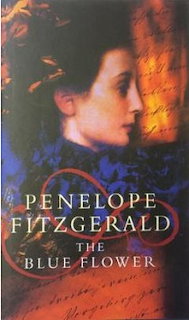 The Blue Flower is a fictional recreation of the young adult life of Friedrich von Hardenberg before he became famous as the 18th Century German Romanticist poet Novalis. Starting with his college years, the novel gives a detailed glimpse of life in late 18th century Germany, and the development of the complex character of this Romantic mystic full of magical idealism who also develops a successful career in the salt mines of Germany. Central to the novel though is his idealized love for 12 year old Sophie von Kühn, who he hopes to marry when she turns 16. While most of his contemporaries describe her as plain and simple-minded, he sees beyond to her inner beauty.
The book opens with the young Friedrich bringing a friend home from college on Washday, the one day a year when the household washes all their linens and clothing. They have a year's worth of clothing and linens and wash them all once a year! The whole family is knee deep in dirty linens.
Families are big, and often mixed, as death comes frequently to the people of the time. Friedrich, being the eldest son and attending university, is the pride of the family and deeply involved in the philosophical ideas of the times. So it comes as a shock to his upper class family when he falls in love with a plain looking, simple-minded girl of 12 years from a large unruly working class background.
Fitzgerald mixes authentic details from letters and journals with wonderfully developed personalities of the family members to blur the distinction between biography and historical fiction and creates a world in which readers can immerse themselves. It is a small book with short chapters that is amazing and worthy of its accolades. It won the 1997 National Book Critics Circle Award, and William Skidelsky named it one of the ten best historical novels in a 2012 Observer article.
Saturday, January 26, 2019
Hey, Kiddo
Hey, Kiddo by Jarrett J. Krosoczka
 Hey, Kiddo is an intensely personal coming of age autobiography in graphic novel format. Jarret is the son of a single mom heroin addict, who ends up being raised by his mother's parents while she is in jail. This is all revealed succinctly in the subtitle: How I Lost My Mother, Found My Father, and Dealt with Family Addiction. While the book deals with the pain of growing up in a broken, dysfunctional family, it also shows how love grows even in such inhospitable conditions. Ultimately, it is a book about healing hurts through coming to deal with them honestly and expressing them through, in Jarrett's case, his art.

300
300 by Frank Miller
 300 tells in graphic form the story of the Battle of Thermopylae from the point of view of King Leonidas of Sparta who, with a small group of 300 elite Spartan warriors, held off for three days the invading Persian army of thousands at a narrow pass. Intensely drawn by Frank Miller and brilliantly colored by Lynn Varley, 300 is a a remarkable image of battle waged with with spears and arrows, which is not for the weak hearted. With chapters called Honor, Duty, Glory, Combat, and Victory, the book is a glorification of the call to battle, even against overwhelming odds and sure defeat.

Red Mandarin Dress
Red Mandarin Dress by Qiu Xiaolong
 I am a fan of Qiu Xiaolong's Inspector Chen Cao and have loved the previous books in the series. This one started off slow for me with a confusing collection of new characters, and the inspector taking time off from his work to write a paper in Chinese literature just at the time a serial killer is stalking young women in the city. However, I persisted and was rewarded in the end with wonderful comparisons between the romantic love stories he is studying, the cruel food options of Shanghai, and the motivations of a serial killer.

Sunday, January 13, 2019
Kalki by Gore Vidal
Kalki by Gore Vidal
 In Kalki Gore Vidal explores the end of the Age of Kali (the Kali Yuga), the last of the four stages the world goes through according to Hindu mythology. In the late 1970s an avatar named Kalki, the tenth and final Avatar of Lord Vishnu, appears in the person of an American ex-soldier and drug smuggler to announce the end of the world.
As Kalki begins to attract a huge following, Teddy Ottinger, a female American test pilot, is hired by a magazine to fly to India to interview him. Teddy is the narrator of this book, written in the White House a year after she took the job to interview Kalki. She has been asked to explain what happened since taking the interview assignment.
What happens is a riotous romp through the foibles of late-20th century America, while still providing a deep understanding of the Hindu principles involved, as only the wit of Gore Vidal could imagine it. Is Kalki a con man, a true avatar come to save humanity, a delusional psychopath set on a path of lunatic dreams? We see the tale unfold through the pages of Teddy's story.
The Mysteries of Paris
The Mysteries of Paris by Eugène Sue
 I started reading the first 49 pages of this book on my iPhone in its original 19th Century English translation that is in the Public Domain. It is free online in a six volume downloadable edition, but switched to this new paperback translation by Carolyn Betensky and Jonathan Loesberg. This modern translation is much better and I highly recommend it. Reading a paper book with over 1300 pages can at times be physically challenging, but it is also available in a digital eBook edition.
The Mysteries of Paris first appeared in a serialized version in the Journal des Débats, a conservative French weekly newspaper, for 17 months during 1842 and 1843. It is a massive work of 1,366 pages that contains 167 chapters in 10 books and an Epilogue. The story follows the exploits of Rodolphe, a rich man who uses various disguises to help various people of Paris in trouble. He is a 19th century Batman without the costume saving good people facing problems and punishing evil doers, all while being pursued by his ex-wife.
Since Eugène Sue was writing the book as it was being published in weekly installments, he occasionally interrupts the story to answer criticisms of his Socialist views. These direct appeals to the readers provide an interesting perspective on the justice system and social problems of the times. The book is immense, but Sue's pacing and characterization keeps the plot exciting from beginning to end. The book paints a picture of the fabulous city of Paris as it is revealed through the eyes of characters ranging from common thieves, homeless children, teenage prostitutes, the working poor, the merchant class, and the rich nobility. I truly enjoyed this book as much as I enjoyed his other major novel The Wandering Jew and the long out of print series The Mysteries of the People.
Monday, October 15, 2018
The End of Oz
The End of Oz by Danielle Paige
 This is the fourth and final volume of the Dorothy Must Die series. It picks up where the third volume, Yellow Brick War, ends with Dorothy back in Oz, now with her high school friend Madison. They and her Oz boyfriend Nox are in Ev to defeat the Nome King.
As with the previous three novels in the series Danielle Paige shows a good grasp of the Baumian characters of Oz, and has a clever way of modernizing them to make them of interest to a modern Young Adult audience. Each book introduces more of Baum's characters, and in this volume they meet the Wheelers, and Princess Langwidere.
In this final book both Amy and Dorothy narrate alternating chapters so we finally get to see Dorothy as something other than the evil enemy. She has been taken captive by the Nome King who plans to marry her to steal her magic.
Like the first three, Yellow Brick War is best read as part of the series, as the story picks up and ends abruptly. Could the author be planning to continue the series? I gave the book four stars instead of five because I feel the author is, at times, too free in her adaptation of Baum's characters, revisioning them for a modern audience in a way that is jarring and discordant to people who know them well from reading Baum's books.
Sunday, September 16, 2018
Yellow Brick War
Yellow Brick War by Danielle Paige
 This is the third volume of the four volume Dorothy Must Die series. It picks up where the second volume, The Wicked Will Rise, left off, with both Dorothy Gale and the Alliance of the Wicked, along with Amy Gumm, back in Amy's home town in Kansas. While Dorothy escapes back to Oz, the Wicked are marooned. Their only hope to get back to Oz is for Amy to find the silver slippers that Dorothy originally used to return to Kansas. Amy has no magic in Kansas, and has been presumed dead since the tornado blew her to Oz. While the witches hide, Amy returns to her mother's home and her high school. She searches for the shoes that will allow them to return to Oz and defeat Dorothy.
As with the previous two novels in the series Danielle Paige shows a good grasp of the Baumian characters of Oz, and has a clever way of modernizing them to make them of interest to a modern Young Adult audience. Each book introduces more of Baum's characters, and brutally murders others. Like the first two, Yellow Brick War is best read as part of the series, as the story picks up and ends abruptly. I gave the book four stars instead of five because I feel the author is, at times, too free in her adaptation of Baum's characters, revisioning them for a modern audience in a way that is jarring and discordant to people who know them well from reading Baum's books. Also the violent treatment of the battle scenes is not to my taste.

As with the previous two novels in the series Danielle Paige shows a good grasp of the Baumian characters of Oz, and has a clever way of modernizing them to make them of interest to a modern Young Adult audience. Each book introduces more of Baum's characters, and brutally murders others. Like the first two, Yellow Brick War is best read as part of the series, as the story picks up and ends abruptly. I gave the book four stars instead of five because I feel the author is, at times, too free in her adaptation of Baum's characters, revisioning them for a modern audience in a way that is jarring and discordant to people who know them well from reading Baum's books. Also the violent treatment of the battle scenes is not to my taste.
Sunday, September 09, 2018
The Wicked Will Rise
The Wicked Will Rise by Danielle Paige
 This is the second volume of the four volume Dorothy Must Die series. It picks up where the first volume, Dorothy Must Die, left off, right after an epic battle in the war of the wicked witches against Dorothy Gale and her followers, the Scarecrow, Cowardly Lion, Tin Woodman and Glinda the Good. The Emerald City is in shambles, and the forces of the Wicked have been scattered. Our heroine, Amy Gumm, is being rescued, along with Ozma, by a pair of flying monkeys, who plan to take them to Lulu, the Queen of the Flying Monkeys.
In the first book Amy Gumm was taken by a tornado to Oz. Only the fairyland of L. Frank Baum's imagination is turned upside down, with a tyrannical Dorothy draining all the magic in Oz to increase her despotic rule. Amy was recruited by The Revolutionary Order of the Wicked and trained to be the person to assassinate Dorothy. Their coup ends up being the first battle in a war, and The Wicked Will Rise tells the tale of Amy's continuing adventures, trying to reunite with the rest of the Wicked and complete her mission. First a visit to the Flying Monkeys and then a search for Polychrome, the Rainbow's daughter, leads up to her next confrontation with Dorothy. Amy is with Ozma through this whole book and learns much more about Ozma's past and watches as Ozma starts to regain her fairy powers.
Danielle Paige has a good grasp of the Baumian characters of Oz, and has a clever way of modernizing them to make them of interest to a modern Young Adult audience. This book is best read as part of the series as it picks up and ends abruptly. I give the book four stars instead of five because I feel the author is at times too free in her adaptation of Baum's characters, revisioning them for a modern audience in a way that is jarring and discordant to people who know them well from reading Baum's books.
Monday, September 03, 2018
Dorothy Must Die
Dorothy Must Die by Danielle Paige
 Danielle Paige has written a four volume series of books based on the characters of L. Frank Baum's Wizard of Oz series. The first volume Dorothy Must Die tells the story of how a misfit high school student named Amy Gumm, who lives in a trailer in Kansas with her alcoholic mother, gets swept away by a tornado and lands on the Yellow Brick Road in Oz. While this is Baum's Oz, it is a dystopian version of the magical land where Dorothy Gail, the Good Witch Glinda, the Scarecrow, Lion, and Tin Woodman terrorize the land. They are opposed by the evil witches who call themselves the Revolutionary Order of the Wicked. As Amy tries to understand and make her way in this very different Oz than the one in Baum's books, everyone's advice to her is to not trust anyone. This first volume introduces the major factions of this world in conflict, as the Wickeds develop a plan to kill Dorothy.
Unlike Baum's Oz, Dorothy Must Die has a fair amount of violence and cruelty. The action is fast paced and I found the books compelling reading. Paige has done her homework and knows Oz very well. So although this is a very different time in Oz, there is a great depth of characters and locations that will appeal to loyal fans of Oz.
There are three more books in the series as well as a set of three volumes of Oz Stories that accompany the four volume series so this book is the bait designed to pique your interest enough to continue on through the rest of the series. This it does admirably well, with the expected ending that leaves matters unresolved and provides the opening 15 pages of the next title The Wicked Will Rise attached to the end. I know I will be reading it soon.
Monday, August 20, 2018
The Great Cosmic Mother: Rediscovering the Religion of the Earth
The Great Cosmic Mother: Rediscovering the Religion of the Earth by Monica Sjöö and Barbara Mor
 Reading the first editions of this book when first published back in 1981 and 1987 transformed my thinking, making me a lifelong Goddess worshipping feminist. So I looked forward to re-reading this 1991 second edition from the perspective of thirty years later.
Swedish artist Monica Sjöö and American poet Barbara Mor met after Sjöö published a 1975 short pamphlet The Ancient Religion of the Great Cosmic Mother of All in the UK. This was edited and extended by Mor and republished as an 80 page small book in Norway in 1981, which is when I became aware of it through its distribution in the USA by the feminist press WomanSpirit. It was very influential to members of the Feminist Goddess movement. Barbara Mor completely rewrote and updated the book to its present size of 500 pages for publication by Harper & Row in 1987 with a second edition in 1991 that included color plates and a new Introduction by Monica Sjöö. She wanted this book to be called The First God, but was over-ruled by publisher Harper & Row. It has never been out of print and is one of the classics of Second Wave Feminist thought.
The book is divided into four sections:
1. Women's Early Culture: Beginnings
2. Women's Early Religion
3. Women's Culture and Religion in Neolithic Times
4. Patriarchal Culture and Religion
The first three sections cover the first 400,000 years of human development in Matriarchal Goddess worshipping cultures, while the last section examines the last 4,000 years of male-god societies and religions with their endless war, female oppression, and profiteering use of Nature and people. Reading the first three sections again did wonders towards breaking my mind free of society's Patriarchal assumptions, both in the 1980s and on rereading it this year. The last 200 page section on "Patriarchal Culture and Religion" was difficult to read as the immense harm to people and the planet that Mor claims comes from male cultural assumptions and power gets hammered home by her extensive analysis. I would read a couple pages and have to put the book down, depressed and unable to continue for a while, before I could push on. The book is worth the effort it takes to read as it is truly mind expanding and transformative.
Monica Sjöö died in 2005 and Barbara Mor in 2015. Their spirits will live on in this classic work on Goddess Feminist thinking.
Thursday, July 26, 2018
El Deafo
El Deafo by Cece Bell
 Author/illustrator Cece Bell chronicles her hearing loss at a young age and her subsequent experiences with a very powerful, but very awkward, hearing aid. Delightful illustrations colored by David Lasky illustrate a sensitive and revealing story of growing up with hearing loss.

Wednesday, July 25, 2018
A Case of Two Cities
A Case of Two Cities by Qui Xiaolong
 I don't often read mysteries or what are called Police Procedurals but I have become fond of Qui Xiaolong's series about Inspector Chen Cao of the Shanghai Police Department. The Inspector is a poet who has become a cop, and he navigates the complex political and social milieu of modern Shanghai while solving difficult cases with a poet's mind. With a lot of emphasis on the local foods, I have fallen in love with this author's depiction of life in the city he grew up in as seen through the eyes of a poet detective.
In the fourth volume of the series, A Case of Two Cities, he is given a case dealing with corruption that may lead to the highest levels of Chinese government, but the culprit has fled to Los Angeles. Filled with food, poetry and politics, this is a detective story with a unique perspective that I find irresistible.

In the fourth volume of the series, A Case of Two Cities, he is given a case dealing with corruption that may lead to the highest levels of Chinese government, but the culprit has fled to Los Angeles. Filled with food, poetry and politics, this is a detective story with a unique perspective that I find irresistible.
Sunday, July 01, 2018
Christmas on Record
Christmas on Record: Best Selling Xmas Singles and Albums of the Past 40 Years by Craig W. Pattillo
 Craig Pattillo has gathered together an amazing set of lists about the most popular Christmas songs and albums of the 42 year period beginning in 1940 and ending in 1982.
His first list is 20 pages long and contains Charted Xmas Singles alphabetical by recording artist.
The next list is a one page list of the Number One Christmas Songs for each year from 1940 through 1982.
The next two lists are the Top Christmas Songs By Artists of the Past 42 Years and the Top Christmas Songs of the Past 42 Years.
Then there are two lists of Million Selling Songs, first by number of copies sold, and then by Year.
The 20 Top Christmas Single Artists are listed next, with Bing Crosby as number 1.
Following these, is a 50 page list of Notable Xmas Singles & Artist Index which lists artists alphabetically with their holiday singles.
Next is a 25 page Xmas Song Index by song title, listing the artists who sang each.
This is followed by a series of lists of Extended Play (EP) records.
A 25 page listing of Charted Xmas Albums from 1945-1982 is arranged alphabetically by artist and lists the serial numbers for various releases.
This is followed by a one-page list of the Number One Christmas Album of each year from 1942 to 1982.
The next list is a ranked listing of the 254 Top Christmas Albums of the Past 37 Years.
Another 25 page list contains an Artist Index of Notable Christmas Albums, going from Abbott & Costello to Loretta Young.
There are also lists of Albums related to Television shows or that are compilations of various artists.
I used this book to create a YouTube playlist of the Top Christmas Songs from 1940 to 1982.
Sunday, June 10, 2018
Ronia, the Robber's Daughter
Ronia, the Robber's Daughter, by Astrid Lindgren
 Swedish author Astrid Lindgren is the fourth most translated children's author, primarily for her popular Pippy Longstocking books, published in the 1940s. I was intrigued when I found Ronia, the Robber's Daughter, which was written over thirty years later when Lindgren was in her seventies. The English translation by Patricia Crampton won the 1984 Mildred L. Batchelder Award for Children's Literature in Translation and is an ALA Notable Book.
This is a wonderful story of a young headstrong girl named Ronia raised by the robber chief Matt and his understanding wife Lovis, who live with the twelve robbers of his band of thieves in an abandoned castle on top of a mountain deep in a Swedish forest populated by wild animals, harpies, gray dwarfs, and rumphogs. Being the only child in the robber castle, she is everyone's darling and loved most dearly by her father Matt. She is left to find her own adventures in the vast forest that surrounds them as the men are busy robbing and Lovia has a castle's full of work to handle.
All goes well until the day she meets and becomes friends with Birk the son of Matt's rival robber chief Borka. Then their inseparable friendship cause great disruption between the hostile robber camps. The book is the story of this disruption and how it is settled. The magical Swedish forest and the strong Swedish robbers provide a wonderful setting for this story of two children developing their relationship and its effect on the lives of those around them.
Outrageous
Outrageous: The Victoria Woodhull Saga, Volume One: Rise to Riches by Neal Katz
 Neal Katz has written and published a partial biographic novel covering the early years of the life of Victoria Woodhull, a 19th century American woman of great notoriety in her time, who was a pioneering voice in Women's Rights and Sexual Freedom. He promises to complete the story in a second novel due out later this year called Scandalous, the Victoria Woodhull Saga, Volume Two: Fame, Infamy, and Paradise Lost. Winning several awards, including the Independent Book Publishers Association Benjamin Franklin, the Independent Publisher Book Awards IPPY, the Next Generation Indie, and the IndieReader Discovery Award.
Starting in 1847 when Victoria was eight years old, Katz tells her story from the poverty and abuse of her childhood up to 1870 when she, with sister Tennessee Claflin, opened a brokerage firm and became the first female stockbrokers on Wall Street. He portrays a rags to riches rise that is an amazing story of women successfully living outside the defined social limits of the time.
Woodhull, long overlooked by history, has become recognized in recent years for her major role in American thought. In 2001, she was inducted into the National Women's Hall of Fame. A 1980 Broadway musical entitled Onward Victoria and a 2012 opera "Mrs. President" have been written. Scholarly biographies include:
2014 - The Scarlet Sisters: Sex, Suffrage, and Scandal in the Gilded Age, by Myra MacPherson
2004 - Victoria Woodhull's Sexual Revolution: Political Theater and the Popular Press in Nineteenth-Century America, by Amanda Frisken
1998 - Notorious Victoria: The Life of Victoria Woodhull, Uncensored, by Mary Gabriel
1998 - Other Powers: The Age of Suffrage, Spiritualism and the Scandalous Victoria Woodhull, by Barbara Goldsmith
1995 - The Woman Who Ran for President: The Many Lives of Victoria Woodhull, by Lois Beachy Underhill
1980 - The Vixens: A Biography of Victoria and Tennessee Claflin, by James Brough
1976 - Free woman: The life and times of Victoria Woodhull, by Marion Meade
1967 - Vicky: A biography of Victoria C. Woodhull, by M. Marion Marberry
1928 - The Terrible Siren Victoria Woodull 1838-1927, by Emanie Sachs
Saturday, April 21, 2018
Cultural Slag
Cultural Slag by Felicia Lamport
 Published in 1966, this collection of poems and short essays reflects the time in which it was written. Portions of the book previously were published in publications like The Atlantic, Harper's, Life, McCall's, The New York Herald Tribune, and The Saturday Evening Post. In addition to being a freelance author Felicia Lamport wrote the "Muse of the Week in Review" column for The Boston Globe. Cultural Slag is the third collection of her work all of which were illustrated by Edward Gorey.
For this collection Gorey created a series of full page drawings featuring striped insects and piles of stones that appear on the title page and introduce each chapter. In addition each poem or essay has its own pen and ink drawing. The combination of short poems and Gorey illustrations makes this book a quick and enjoyable read. Lamport had a sophisticated command of the English language and was often creative in her use of puns.
The short pieces of the book are clustered into chapters based on broad categories. Most are one page poems with a facing illustration, but there are also several essays as well.
THE NEW YORK PEDESTAL SET pays poetic homage to the statues and busts that grace public spaces in this city. These monuments are meant to pay homage to famous people, but what if the famous people of the past are no longer household names? That is the subject of one of the poems in this chapter called "Who He?" that begins:
One expects the mind to trigger
When one contemplates a figure
Cast for sempiternral fame,
But the brainpan starts to joggle
If the viewer starts to boggle
At the name.
This is followed by verses that remind the reader of some of the not-so-famous people who have commemorative statues in New York.
ALARUMS AND DIVERSIONS is a series of satirical poems on various performing arts and literature. My favorite is a poetic review of Edward Albee's 1964 play Tiny Alice called "DAS IST ALICE". I have never read a drama review written as a poem before. In one verse of this poem Lamport asks:
Was it turgid dramaturgy meant to vent on law and clergy
All the author's rage against the world today,
Psychopathia sexuAlice, or an allegoric chalice
He was raising in a reverential way?
This chapter also contains the first of Lamport's essays, a six page piece on non- and anti-book-reviews entitled "The Hypocritics". Anyone who writes book reviews will find much food for thought here.
POLITICAL CLINKERS is a collection of political poetry which has mostly aged badly as yesterday's politicians are largely forgotten quickly and with good reason. However her Viet Nam War era poem 'EMBATTLED OXYMORON" has some universal appeal even today. Here is a sample verse:
One grows strangely apprehensive
When one contemplates the sense of
Peace offensive,
Which, aggressively commanding
That which passeth understanding
Turns the sentiment it rouses
To: A pax on both your houses."
JOTS AND TITTLES is a collection of poems and an essay on travel and social interactions. The poem "SOUTHERN COMFORT' addresses that time in spring when the north is covered in snow while the south is in bloom:
No meter can measure
The infinite pleasure
Of people in tropic resorts
who squirm with delight
Through the sweltering night
At their home town weather reports.
ANIMAL SPIRITS is a short chapter of four poems about the Animal Kingdom. "ICHTHYOLOGIC" asks the question:
Why do fish, who get no pleasure out of mating,
Top all mammals in the rate of propagating?
PARTY LINES is another short chapter of five poems describing the urban party-going scene. The poem "DENSITY PROPENSITY" starts:
From five to seven every night
The party-goers coalesce
Participating in the rite
That equalizes social debts
In all the best sub-bourbon sets.
SWEET AND SOUR SERENADE TO CAMBRIDGE is a set of poems dedicated to Cambridge Massachusetts. The poem "EDUCATION INFLATION" ends with the verse:
Corporations vie to buy queues of the higher bracket I.Q.s
That were lately held in rather low esteem:
All of Cambridge now is reeling with such wheeling Ph.Dealing
As has never graced the grooves of academe.
SOCIAL SPINOFF is a chapter on social issues of the day. The preference for plastic cards over paper money is the subject of "YON CASH HAS GOT A LEAN AND HUNGRY LOOK". It opens with the verse:
It's funny what's happening to money:
It seems to have gone out of fashion.
The flashing of cash is considered so brash
That it turns any headwaiter ashen.
While the book is 52 years old, it can still provide some amusement, and the drawings of Edward Gorey fill the pages with art worth seeing.
Murdering Mr. Monti
Murdering Mr. Monti: A Merry Little Tale of Sex and Violence by Judith Viorst
 While the title brings thoughts of a murder mystery to mind, the phrase A Merry Little Tale in the subtitle reveals this novel as a Comedy of Manners where the humorous situations, and some suspense, drive the plot.
Set in the suburbs of Washington DC, the book is about Brenda Kovner, a successful 46 year old syndicated advice columnist who is married to Jake a pediatric surgeon. They have two grown sons Jeff and Wally. Wally has fallen in love with Jo Monti the youngest daughter of Joseph Monti, a narcissistic bully of a man. Mr. Monti has dominated his wife and three daughters, and Jo has shown budding signs of rebellion by falling in love with a Jewish man. Mr. Monti stands in the way of Wally and Jo's plans. Not only does he intend to drive off Wally, but he has taken steps to ruin Jake and Jeff's lives.
Brenda has reached middle age having slept with only Jake her husband, and her attempts to micro-manage their life has created tensions in their marriage. She had decided before the story begins to sleep with other men before her 46th birthday in order to have a variety of sexual experience and ended up sleeping with three men in 24 hours. One of them was Mr. Monti.
Once she decides that the only way out of her problems is to murder Mr. Monti, the readers' fun begins.
Judith Viorst is an established author of poetry and children's books. This delightful novel shows her skills at character development and humor. Filled with her own advice from her syndicated column, well-developed characters, outlandish situations, and a complex plot full of surprises, this is a delightful fun read.
Wednesday, April 11, 2018
My Horizontal Life
My Horizontal Life: A Collection of One Night Stands by Chelsea Handler
 My Horizontal Life is a set of 18 stories depicting short-term sexual relationships that Chelsea Handler claims to have had between the ages of 18 and 28. Actually the first story "Guess Who's Having Sex with Mommy" tells about the time seven year old Chelsea walked in on her parents having sex. All the actual details of these stories must not be taken as factually true because Chelsea Handler claims to drink and lie an awful lot. So the possibility that she can't remember details or that she makes them up makes this book probably more fiction than memoir. What she does remember or lie about is more often humorous rather than lascivious. I get the feeling that even Chelsea was too drunk to actually remember the sexual part of the relationship. So these stories consist of a lot of amusing situations leading up to and following the sexual act, without any actual salacious sexual details.

Tuesday, April 03, 2018
The Renegade Queen
The Renegade Queen by Eva Flynn
 Eva Flynn's The Renegade Queen is a novel told in the first person about the life of Victoria Woodhull, one of the most amazing women of the 19th Century who, because of her radical positions, has been written out of many historical accounts of the time. There are several excellent biographies of Victoria that have built up the details of her life from the published sources of the time. Benefiting from all that research this novel, by telling her story in the first person, breathes life into the character and personage of Victoria Woodhull. What Eva Flynn has done most admirably in this book is to "channel" the spirit of Victoria's character so the reader can glimpse, not only what she accomplished, but why she did all the things she did in the fields of Spiritualism, Women's Rights, Civil Rights, Commerce, Publishing, Free Love, Politics, and so many others.
The Renegade Queen won the 2016 Independent Publisher Gold "IPPY" Award for Best Adult Fiction E-Book and I can see why. Not only does Flynn bring Victoria Woodhull to life, but she does the same for her two husbands Canning Woodhull and James Blood, her sister Tenny C. Claflin, her father “Buck” Claflin, Susan B. Anthony, Commodore Vanderbilt, Massachusetts Congressman Benjamin Butler, and a host of others. I feel the author has immersed herself in the Civil War and Reconstruction period and used her knowledge to create great depth in the characters and the settings of the novel. If you have ever wanted to learn more about Victoria Woodhull, this novel is a very enjoyable way to do that.

The Renegade Queen won the 2016 Independent Publisher Gold "IPPY" Award for Best Adult Fiction E-Book and I can see why. Not only does Flynn bring Victoria Woodhull to life, but she does the same for her two husbands Canning Woodhull and James Blood, her sister Tenny C. Claflin, her father “Buck” Claflin, Susan B. Anthony, Commodore Vanderbilt, Massachusetts Congressman Benjamin Butler, and a host of others. I feel the author has immersed herself in the Civil War and Reconstruction period and used her knowledge to create great depth in the characters and the settings of the novel. If you have ever wanted to learn more about Victoria Woodhull, this novel is a very enjoyable way to do that.
Tuesday, March 20, 2018
Dress Your Family in Corduroy and Denim
Dress Your Family in Corduroy and Denim by David Sedaris
 David Sedaris is a master of short biographical memoirs that are funny, insightful, and poignant, sometime all at the same time. This volume collects a group of his essays mostly about the members his large Raleigh, NC family. I enjoy reading his insights into life as revealed by his interactions with others.
"Us and Them" is about moving next to a family that is raising their family without television.
In "The Ship Shape" David describes his family's version of the North Carolina custom of having or renting a house at the coast.
"Full House" describes David's first sleep over when he was in the sixth grade.
David gets hit in the mouth with a rock thrown by one of the most popular boys in his class in "Consider the Stars." This leads to a confrontation between his father and the parents of the other boy.
David's relationship with his rich great aunt is the topic of "Monie Changes Everything."
Asking for Spare Change at the NC State Fair is the topic of "The Change in Me."
In "Hejira" David tells the story of when his dad kicked him out of the house when he was 22 because he is gay.
"Slumus Lordicus" is about the time his parents' get rich plan of buying and renting out apartments.
In "The Girl Next Door" David makes friends with the nine year old girl next door with disastrous consequences until his mother saves him.
"Blood Work" tells of an unusual but lucrative experience David had while working in New York City cleaning apartments.
In the next story David tells of seeing "The End of the Affair" with his partner Hugh.
"Repeat After Me" describes David's visit to his sister Lisa and her talking parrot Henry.
On a visit to Amsterdam David asks the cab driver about his Christmas celebration and learns about the "Six to Eight Black Men" who accompany Dutch St. Nick.
David's brother Paul, who runs a floor sanding service in Raleigh, is the topic of "Rooster at the Hitchin' Post."
Hugh and David visit the Anne Frank House in Amsterdam in "Possession."
Most poignant was "Put A Lid On It" describing his visit to his sister Tiffany who lived in Boston. Their lives are obviously worlds apart and the distance is painful to watch unfold.
A "Can of Worms" found in Texas that survived the space shuttle explosion is the dinner table topic of an evening in Los Angeles.
In "Chicken in the Henhouse" David helps a young boy at a hotel, and then has second thoughts about how his gesture might be misinterpreted.
David and Hugh get into an argument over a rubber hand during a dinner conversation with friends in "Who's the Chef."
Paul becomes the first of David's siblings to have a child in "Baby Einstein."
A burglar gets stuck in a chimney and dies in "Nuit of the Living Dead."
The Voyeurs
The Voyeurs by Gabrielle Bell
 This book was my first encounter with the cartoonist Gabrielle Bell and it took me a while to get into the structure and content. Most of the book is a chronological series of dated sketches from Bell's graphic journal covering the four years from 2007 to 2010. The book opens with a 13 panel cartoon called "The Voyeurs" from which the book derives it's name. In it Bell finds five of her friends on the roof of her apartment building watching a couple make love in an apartment across the way. I get a sense that she thinks of the readers as Voyeurs into her life through the reading of her journals.
Getting thrown into the middle of a person's life as revealed through their journals can be a bit disorienting at first and it took me a while to warm up to the format, the story, and the author. Once I got involved in her life, though, I found it a good read with lots of detail that the dialog and the sketches bring to life.

Getting thrown into the middle of a person's life as revealed through their journals can be a bit disorienting at first and it took me a while to warm up to the format, the story, and the author. Once I got involved in her life, though, I found it a good read with lots of detail that the dialog and the sketches bring to life.
Subscribe to:
Posts (Atom)