Thursday, March 01, 2018

The Galley Slave's Ring

The Galley Slave's Ring : Or, The Family of Lebrenn : A Tale of the French Revolution of 1848, by Eugene Sue
The Galley Slave's Ring is the final volume of a 19 volume series of novels written by Eugène Sue called The Mysteries of the People; or History of a Proletarian Family Across the Ages that was written between 1849-1857. The author, once called "the king of the popular novel," created this series to depict the struggle between the ruling and the ruled classes in French history. One family, the descendants of a Gallic chief named Joel, represent the oppressed, and the descendants of a Frankish chief Neroweg, typifies the oppressors. Down through the ages the successive struggles between oppressors and oppressed are depicted in a series of stories told by the descendants Of Joel that culminate in the European Revolutions of 1848.

Considered at one time classics of Marxist/Socialist thought, these books are mostly forgotten today, and the English-language editions published at the beginning of the 20th Century have only become available again recently through large-scale digitization projects of Public Domain books. Daniel DeLeon, leader of the Socialist Labor Party of America and translator of this series into English, wrote in his Preface to The Gold Sickle that it was owning class influence that kept English translations of this series from being available for over 50 years. A 2004 article entitled "Eugène Sue : Champion of the Oppressed" in The People, written to commemorate the 100th anniversary of the English translations, said the following about the series:

"It is by far the best work ever written for giving the working class reader an intimate picture of society as it evolved in France from the days of Gaul, before the Roman conquest, to the middle of the 19th century. It is especially valuable for the picture that it provides of the various phases of feudal society, and the growth of infant capitalism within the feudal womb."

While Sue's anti-Catholic works The Wandering Jew and The Mysteries of Paris are still known, this Socialist series of 19 novels has been out of print for over 100 years. Here is a listing of them:

The Mysteries of the People; or History of a Proletarian Family Across the Age series
1. The Gold Sickle or Hena, the Virgin of the Isle of Sen: A Tale of Druid Gaul
2. The Brass Bell; or, The Chariot of Death: A Tale of Caesar's Gallic Invasion
3. The Iron Collar; Or, Faustina and Syomara: A Tale of Slavery Under the Romans
4. The Silver Cross; or, The Carpenter of Nazareth: A Tale of Jerusalem
5. The Casque's Lark; or, Victoria, The Mother Of The Camps: A Tale Of The Frankish Invasion Of Gaul
6. The Poniard's Hilt; or, Karadeucq and Ronan: A Tale of Bagauders and Vagres
7. The Branding Needle; or, The Monastery of Charolles: A Tale of the First Communal Charter
8. The Abbatial Crosier; or, Bonaik and Septimine: A Tale of a Medieval Abbess
9. The Carlovingian Coins; or, The Daughters of Charlemagne: A Tale of the Ninth Century
10. The Iron Arrow Head; or, The Buckler Maiden: A Tale of the Northman Invasion
11. The Infant's Skull; or, The End of the World: A Tale of the Millennium
12. The Pilgrim's Shell; or, Fergan the Quarryman: A Tale from the Feudal Times
13. The Iron Pincers; or, Mylio and Karvel: A Tale of the Albigensian Crusades
14. The Iron Trevet; or, Jocelyn the Champion: A Tale of the Jacquerie
15. The Executioner's Knife; or, Joan of Arc: A Tale of the Inquisition
16. The Pocket Bible; or, Christian the Printer: A Tale of the Sixteenth Century (2 volumes)
17. The Blacksmith's Hammer; or, The Peasant Code: A Tale of the Grand Monarch
18:1. The Sword of Honor; or, The Foundation of the French Republic: A Tale of the French Revolution
18:2. The Sword of Honor: Part II - The Bourgeois Revolution: A Tale of the French Revolution
19. The Galley Slave's Ring; or, The Family of Lebrenn: A Tale of the French Revolution of 1848

Having already enjoyed Sue's The Wandering Jew, I looked forward to starting a work which united my interest in serial novels, historic fiction, and Class Warfare. Fortunately, the whole series is now available free to anyone who has Kindle or epub software on their reading device.

TRANSLATOR'S PREFACE.
With this story, The Galley Slave's Ring; or, The Family of Lebrenn, closes the series of the nineteen historic novels comprised in Eugene Sue's monumental work The Mysteries of the People; or, History of a Proletarian Family Across the Ages.
They who have read the preceding eighteen stories will agree that from the moment they began the first volume of the series, The Gold Sickle; or, Hena the Virgin of the Isle of Sen, down to the eighteenth, The Sword of Honor; or, The Foundation of the French Republic, they enjoyed a matchless promenade as they followed Sue through the Ages of History, from the time of the invasion of Gaul by Julius Caesar, shortly before Christ, down to the great epoch marked by the French Revolution. Nor will their expectations concerning this closing story be disappointed.
The Galley Slave's Ring; or, The Family of Lebrenn is staged on the Age that witnessed the downfall of Louis Philippe--the last of the Bourbon line--and the aspirations that raised the Second Republic. While several of the figures are historic, in this story historic characters step forth less pronouncedly than historic principles. In this story are found the Principles, the old and the newest, that have since occupied the stage of man's history, and the clash of which, down to our own days, occupies man's attention.
Inestimable as the previous stories are to the understanding of the Age of the present story, the present story, enlivened with the vein of romance, is inestimable to the understanding of our own Age.
DANIEL DE LEON.
Milford, Conn., February, 1911.

The Galley Slave's Ring begins in Paris on Rue Saint-Denis on February 23, 1848 during the constitutional monarchy of Louis-Philippe, and ends in December, 1851 during the French Second Republic headed by Louis-Napoleon. It is the story of Marik Lebrenn and his family who run a cloth and clothing shop and live upstairs. He and his wife are about 50 years old, and they have an adult son and daughter that help in the shop. Although he is a bourgeois shop keeper, his values and ethics are aligned with the working class of his ancestors. The book begins with Lebrenn preparing to take part in the "February Revolution" that ended the reign of Louis-Philippe. It was one of the many uprisings of The Peoples' Spring that spread across Europe in 1848.

At the same time he is helping his shy neighbor George Duchene, a laborer who takes care of his aging grandfather, to become engaged to his daughter Jeanike. Jeanike loves George but has caught the eye of Count Gonthram of Ploernel, who is descended from the Neroweg Franks whose family has oppressed Marik's family for centuries. The Count, not knowing the history of their two families, hopes to win over Marik with a large order of uniforms for his garrison so he can seduce his daughter Jeanike. Their dialog is one of the high points of the book as the Count plays on his wealth and class, and Marik, armed with his knowledge of the history of the two families, counters with the socialist values that have become so prominent in Europe in this time. The Count realizes he has met his match, and both go back to planning for their roles in the impending revolution.

They meet again on the barricade at Rue Saint-Denis on opposite sides of the battle, where the workers led by Lebrenn hold off the troops. At the end of the battle, Lebrenn hides the wounded Count in his house and arranges for his safe transport home, possibly saving his life. The battle ended the constitutional monarchy of Louis-Philippe, and marks the beginning of the Second Republic. However through a strange twist of fate, Marik finds himself accused, found guilty and sentenced to the life of a galley slave, while the Count becomes an officer in the army of the Republic.

Eugene Sue himself suffered a reversal similar to Marik's. After the French Revolution of 1848, he was elected to the Legislative Assembly in April 1850, only to be exiled the following year to Sardinia for his protest of Louis-Napoléon Bonaparte's coup d'état of 1851. It is in Sardinia that Sue writes the 19 volumes of The Mysteries of the People.

As the last volume of the series, Eugene Sue uses this story to recap the history of the family that has been told in the previous 18 volumes and to point out the moral strength of the socialist working class. His goal in portraying the struggles of the working class is to show that set backs like the Second Empire should not cause people to give up hope, but to realize that the long history of progress has often been accompanied by losses that seemed hopeless at the time. At the end of the book, after showing his family the stories of his ancestors going back over 1,000 years, Marik tells them "What does it matter, my children, whether we actually witness or not the dawn, if we have the certainty that the sun of that beautiful day is bound eventually to shine over a regenerated world!" He goes on to say "Whatever appearances may be, whatever the present depression, revolutionary thought is at this very hour germinating under the soil. It is spreading and gaining in depth through a thousand underground rootlets. Sooner or later, its sudden and last irresistible explosion will be heard. Upon the ruins of the old social system a new social order will be established. There can be no doubt whatever, my children, regarding that great and crowning event. Progress is the law of humanity -- for society as well as for the individual. Our plebeian narratives furnish the irrefutable proof."

Prior to reading Sue's "Mysteries of the People" which ends in 1851 with the beginning of France's Second Empire, I had read Emile Zola's 20 Rougon-Macquart novels which are a panoramic account of the Second Empire. They are the story of a family between the years 1851 and 1871 who descend from the two family lines of the Rougons and Macquarts. The two series are wonderfully complimentary to each other and I recommend them to anyone looking for 40 or so novels to read that reveal the history of France.

Wednesday, February 07, 2018

The Painted Bird

The Painted Bird by Jerzy Kosinski
This novel tells the story of a young boy who wanders through the eastern regions of an unnamed Central European country during World War II. As Nazi Germany invades the country he is sent east by his Jewish parents for safety. The boy ends up, with no friends or resources, wandering from village to village seeking refuge. As a dark-eyed, black-haired youth he is referred to as a Gypsy orphan by the blond, blue-eyed Slavs of the area. Mistreated as an outsider, he is like a painted bird who seeks to join the flock but is rejected because of its different appearance. In each village he is bullied and abused and only finds refuge in the most unsavory of situations, always under the threat of being turned over to the Nazi invaders as a Gypsy. Through all of this, the youth tries to understand the cruel and violent world with which he is faced, developing theories and philosophies of life and discarding them as they fail to help him cope with the primitive lives of the peasant farmers and their harsh treatment.
Describing all of the cruelty and horror of war in the voice of a young child, this book is not easy to read and may be too upsetting for some readers. For those readers who manage to endure, the story reveals the war in a personal way that can only be possible through the eyes of a child.
The author was born in 1933 in Łódź Poland. So he was the same age as the boy in the story during the war. He and his Jewish parents survived the war in eastern Poland by assuming false identities and living as Catholics with the help of local Polish families.
First published in 1965, this 1976 Second Edition has an Introduction by the author that tells the amazing story of the book and its reception both in the West and in Poland where it was banned. He responds to criticism that the book dwells too much on the horrors faced by people in Poland during the war. Although the book stands on its own, this is a really useful addition to understanding the author and the initial reaction to the work.

Sunday, January 28, 2018

I Went Down to St. James Infirmary

I Went Down to St. James Infirmary: Investigations in the Shadowy World of Early Jazz-Blues in the Company of Blind Willie McTell, Louis Armstrong, Don Redman, Irving Mills, Carl Moore, and a Host of Others, and Where Did This Dang Song Come from Anyway? by Robert W. Harwood
Robert Harwood does a very good job of tracing the roots of the legendary American song St. James Infirmary, finding similarities with the 18th century British folksong The Unfortunate Rake and also the American ballad The Streets of Laredo. He also uses the history of this song to show the beginnings of the music industry's creation of Race Recordings, the recording of African American artists for sales to the Black community. In addition, he uses a copyright trial over the name of the song to illustrate how folk musicians borrowed and changed music and lyrics to make songs their own, and how the music industry used copyrights on sheet music and recordings to profit from the musicians' work.

For those who want to research these topics further, this is a good piece of scholarship with extensive notes, a three page bibliography, and four appendices. I found the writing could have benefited from the hand of a good editor as whole paragraphs appear more than once in the text. It was an interesting and enjoyable read for a fan of this classic song that has been recorded by many musicians in a diverse range of genres including folk, blues and jazz.

Saturday, January 13, 2018

Hua Hu Ching: The Teachings of Lao Tzu

Hua Hu Ching: The Teachings of Lao Tzu by Lao Tzu and Brian Walker


Most people who have heard of Lao Tzu know him through his book the Tao Te Ching, a fundamental Taoist text. The authorship and history of the Tao Te Ching is still being debated. And so it is also the case for the Hua Hu Ching which is also often attributed to Lao Tzu. The text has come down to us largely through oral tradition although fragments, although a partial manuscript was discovered in a cave in China.< In 1979 the first English translation by Hua-Ching Ni of the Hua Hu Ching was published by Shambhala Press under the title Hua Hu Ching : The Later Teachings of Lao Tzu.
This 1992 translation of the Hua Hu Ching by Brian Walker, who is famous for his highly accessible translation of the Chinese text The I Ching or Book of Changes: A Guide to Life's Turning Points, is equally accessible to Western readers. Having not read Hua-Ching Ni's translation, I cannot compare the two. However, I have read various translations of the I Ching, and I can agree that Walker's translation makes a very good starting point for a Western reader to the concepts outlined in the text. I found it inspiring and only slightly unclear in certain spots where I felt a Glossary with fuller descriptions of certain terms would have been helpful. E.g. he seems to translate "Tao" as "The Integral Way" without ever sitting the reader down and explaining either term. It is a wonderful companion to the Tao Te Ching and I recommend it to anyone who, after reading the Tao Te Ching, wants to find something else to read to get more information.

Sunday, January 07, 2018

The Discovery of Heaven

The Discovery of Heaven by Harry Mulisch

If humans have free will, how does God know how everything is going to turn out? More significantly, how can God create a given outcome using these humans?

I first encountered Mulisch's work with his earlier title The Procedure which examines the way that inanimate matter becomes living organisms by telling the stories of a modern day Dr. Frankenstein, Victor Werker, a Dutch biologist who creates a complex organic clay crystal that can reproduce and has a metabolism, and the late sixteenth century Rabbi Jehudah Löw of Prague who creates a golem by following the procedure outlined in a third-century cabalist text that God used to create Adam.

The Discovery of Heaven is a large novel of 730 pages that deals with God's relationship with the human race, predestination and free will, and the lives of two men, the woman they both love, and the child she conceives to fulfill a divine purpose. Translated from the Dutch by award-winning translator Paul Vincent, the book makes a smooth transition into English. I found it easy and compelling reading with a thought-provoking ending. While this is one of the most read and respected novels in The Netherlands, American readers are not always so enthusiastic. I believe that the philosophical and theological questions raised and the literary style that Mulisch uses to covey them may be difficult to translate, sort of like reading an English translation of the Chinese I Ching.

It has a story within a story construction that opens with two heavenly spirits talking to each other. One is telling the other how complex it was to bring together the right genetic profiles to produce the desired child who would be able to fulfill a mission from God. The story the spirit tells begins with astrophysicist Max Delius and philologist Onno Quist meeting, seemingly by chance, in The Hague in February 1967 when Max stops his car at midnight to pick up Onno who was hitchhiking to Amsterdam.

Their friendship forms the core of the book, which tells the story of first Max, and then Onno, falling in love with young cellist Ada Brons. From this love triangle, Ada produces a son Quinten, whose paternity is uncertain, but we watch as he grows to maturity and the fulfillment of his mission.

This is a story of how heavenly predestination looks like free will to the humans involved as the humans exercise their free will, and yet their situations are manipulated from heaven by a spirit with a mission to accomplish. What does God need from humans at the end of the 20th century? Read the book and find out one man's thoughts on this.

Sunday, November 05, 2017

The Sword of Honor, volumes 1 & 2: or The Foundation of the French Republic, A Tale of The French Revolution

The Sword of Honor, volumes 1 & 2: or The Foundation of the French Republic, A Tale of The French Revolution, by Eugène Sue
The Sword of Honor is the 18th volume of a 19 volume series of novels written by Eugène Sue called The Mysteries of the People; or History of a Proletarian Family Across the Ages that was written between 1849-1857. The author, once called "the king of the popular novel," created this series to depict the struggle between the ruling and the ruled classes in French history. One family, the descendants of a Gallic chief named Joel, represent the oppressed, and the descendants of a Frankish chief Neroweg, typifies the oppressors. Down through the ages the successive struggles between oppressors and oppressed are depicted in a series of stories that culminate in the European Revolutions of 1848.

Considered at one time classics of Marxist/Socialist thought, these books are mostly forgotten today, and the English-language editions published at the beginning of the 20th Century have only recently become available through large-scale digitization projects of Public Domain books. Daniel DeLeon, leader of the Socialist Labor Party of America and translator of this series into English, wrote in his Preface to The Gold Sickle that it was owning class influence that kept English translations of this series from being available for over 50 years. A 2004 article entitled "Eugene Sue : Champion of the Oppressed" in The People, written to commemorate the 100th anniversary of the English translations, said the following about the series:

"It is by far the best work ever written for giving the working class reader an intimate picture of society as it evolved in France from the days of Gaul, before the Roman conquest, to the middle of the 19th century. It is especially valuable for the picture that it provides of the various phases of feudal society, and the growth of infant capitalism within the feudal womb."

While Sue's anti-Catholic works The Wandering Jew and The Mysteries of Paris are still known, this Socialist series of 19 novels has been out of print for over 100 years. Here is a listing of them:

The Mysteries of the People; or History of a Proletarian Family Across the Age series
1. The Gold Sickle or Hena, the Virgin of the Isle of Sen: A Tale of Druid Gaul
2. The Brass Bell; or, The Chariot of Death: A Tale of Caesar's Gallic Invasion
3. The Iron Collar; Or, Faustina and Syomara: A Tale of Slavery Under the Romans
4. The Silver Cross; or, The Carpenter of Nazareth: A Tale of Jerusalem
5. The Casque's Lark; or, Victoria, The Mother Of The Camps: A Tale Of The Frankish Invasion Of Gaul
6. The Poniard's Hilt; or, Karadeucq and Ronan: A Tale of Bagauders and Vagres
7. The Branding Needle; or, The Monastery of Charolles: A Tale of the First Communal Charter
8. The Abbatial Crosier; or, Bonaik and Septimine: A Tale of a Medieval Abbess
9. The Carlovingian Coins; or, The Daughters of Charlemagne: A Tale of the Ninth Century
10. The Iron Arrow Head; or, The Buckler Maiden: A Tale of the Northman Invasion
11. The Infant's Skull; or, The End of the World: A Tale of the Millennium
12. The Pilgrim's Shell; or, Fergan the Quarryman: A Tale from the Feudal Times
13. The Iron Pincers; or, Mylio and Karvel: A Tale of the Albigensian Crusades
14. The Iron Trevet; or, Jocelyn the Champion: A Tale of the Jacquerie
15. The Executioner's Knife; or, Joan of Arc: A Tale of the Inquisition
16. The Pocket Bible; or, Christian the Printer: A Tale of the Sixteenth Century (2 volumes)
17. The Blacksmith's Hammer; or, The Peasant Code: A Tale of the Grand Monarch
18:1. The Sword of Honor; or, The Foundation of the French Republic: A Tale of the French Revolution
18:2. The Sword of Honor: Part II - The Bourgeois Revolution: A Tale of the French Revolution
19. The Galley Slave's Ring; or, The Family of Lebrenn: A Tale of the French Revolution of 1848

Having already enjoyed Sue's The Wandering Jew, I looked forward to starting a work which will unite my interest in serial novels, historic fiction, and Class Warfare. Fortunately, the whole series is now available free to anyone who has Kindle or epub software on their reading device.

The Sword of Honor covers events in France from 1789 to 1832, the period leading up to and including the French Revolution and the Napoleonic Era. Seen through the eyes of John Lebrenn, a Parisian blacksmith and descendent of the Gallic chief Joel, who relates the events of the time as an active member of the French Revolution. This was the hardest book of the series for me to read because Sue was not writing ancient history. Instead he was writing of recent history for an audience who lived through the events portrayed. Throughout the series Sue portrayed the behavior of actual historic figures as they fit into his narrative. He provided footnotes to document his sources to prove he was not fictionalizing their acts. He was writing this series for his French audience and making sure to set the record straight, which has sometimes been hard for me as a non-French reader. This setting the record straight almost overwhelms the story in this volume. Sue was addressing an audience who lived through the events and he wanted to make sure they were aware of the roles played by the significant personalities of the time. He was writing at a time when the leaders of the Revolution had been vilified and the misdeeds of the ruling classes swept under the rug. He wanted to lift up that rug and portray the leaders of the Revolution as the heroes of the People.

John Lebrenn and his sister Victoria are working class heroes in this novel. They were hard working and intelligent, informed of the class struggle between the Gauls and the Franks by the records passed down from generation to generation of their family - the previous novels of this series, each written down and carefully preserved by preceding generations. This volume is John's contribution to the family record. With them we experience the events of this most tumultuous time in French history. We see their victories and then the treacheries of the Church, the Ruling Class, the Bourgeoisie and the Military that betray the People to maintain their Class privilege. It is a long book and often offers much greater detail than a modern reader needs. Yet, the story is compelling and the characters well developed.

TRANSLATOR'S PREFACE.
Most persons know the French Revolution as a tremendous outburst in human affairs. Many know it as one of the race's great steps forward. That, however, it was the revolution which carried into power the then rising bourgeois, now capitalist, class; that this class, while appealing for and using the help of the working class, secretly hated and feared the demands of the latter, and blocked them at every opportunity; that finally the bourgeoisie, having obtained as revolutionists, by the aid of the workers, their end of the revolution, became as violently reactionary as had been the nobility they fought, and ruthlessly shot and guillotined to pieces the then definite proletarian movement for full political equality and collective ownership of the tools of production--that is an insight into the French Revolutionary period hitherto vouchsafed to few. To that insight Eugene Sue's genius has, with the present thrilling novel, made straight the way for all.
This, The Sword of Honor; or, The Foundation of the French Republic, is the eighteenth and culminating unit in Sue's great historic-fiction series, The Mysteries of the People; or, History of a Proletarian Family Across the Ages. Following close upon the previous volume, The Blacksmith's Hammer; or, The Peasant Code, in which the popular storm was seen gathering head under the atrocities of the gilded age of the Grand Monarch, the present story portrays that storm breaking in all the accumulated vigor of its centuries of postponement, and sweeping away the empty lay figures of an outgrown feudalism. True, one barrier to human liberty was thrown down only to disclose another. To the empire of birth and privilege was to succeed the empire of the shekel; to the rule of do-nothing kings, the rule of do-nothing plutocracy. But it is in the act of drilling itself for the overthrow of that final parasite class--for the final conquering, in other words, of freedom for the race--that Sue portrays the proletariat in the next and closing work of the series, The Galley Slave's Ring; or, The Family of Lebrenn. Though he minimizes none of the difficulties, his message for the future is of hope only.
Nothing is more unanimous among historians of the period than expressions of commiseration for the condition of the French people before the Revolution. Yet nothing, on the other hand, is more unanimous either than the condemnation showered upon this people the moment it seizes the reins and enters upon the task of putting down its age-long tyrannizers. Into this absurd breach of consistency Sue's genius saved him from falling. In his pages Marat, Danton and Robespierre walk to their doom with head erect, clean from the smut slung at them by their bourgeois enemies, for whom they were going too far. Friends of the People once, so they remained to the end; and in that mantle Sue has preserved their memory for all time. For him who would rail at their summary deeds Sue has far from spread a bed of roses. The memory of the royalist massacres in the Vendee and of the triumphant bourgeois massacres during the White Terror, rescued by his pen from the oblivion in which they were sought to be buried, have thrown the Revolutionary Terror into its proper perspective. It is a bagatelle beside the acts committed by its denouncers.
Sue's clear presentation of the maxim, "To the peasant the land, to the workman the tool"; his unflinching delineation of the debauchery of court and ecclesiastical circles of the time; his revelation of the role of the political machine under the guise of religion sending out its arms as willing regicides or agents provocateurs by turn; and his clear depiction of the cowardly, grasping, double-dealing and fraud-perpetrating character of the bourgeois, all of which is presented in the easy reading of a story, make this thrilling work of fiction an unsurpassable epitome of the period in which its action elapses.
Finally, it is the distinctive test of good literature upon any topic, that it does not sate, but incites to further thought and study. Not the least of the values of The Sword of Honor; or, The Foundation of the French Republic, is that it performs this reverent duty matchlessly for the momentous period of which it treats.
SOLON DE LEON.
New York, April, 1910.

Sunday, October 22, 2017

The Girl with the Dragon Tattoo

The Girl with the Dragon Tattoo by Stieg Larsson
I started reading this book after I heard that, in addition to the three books in the Millennium series by Stieg Larsson, two new books in the series came out in 2017 written by David Lagercrantz. That renewed my interest in the series. When I looked into it and found out that this first book was originally titled in Sweden Män som hatar kvinnor (in English: Men Who Hate Women), I decided that I wanted to at least begin reading the book. I had seen the Swedish and USA movies, so I knew the basic plot and wasn't sure the book would hold my interest. I was put off at the beginning by the large number of characters and felt I would never keep them straight. However, reading the book was as engaging as watching the movies and I devoured this 590 page book quickly. Now I am looking forward to reading others in the series.

Sunday, October 08, 2017

The Procedure

The Procedure by Harry Mulisch
The Procedure is about the life of a famous scientist after he has made his ground breaking research, in this case the creation of life from inorganic matter. It starts out with the biblical story of creation, then it moves on to the Jewish esoteric book that deals with how god created life, the Sefer Yetzirah (or Book of Creation), and then to the creation of the golem in the Prague ghetto in the 16th century. It is only after this introductory material that the readers are introduced to the scientist Victor Werker and his research on creating living matter from clay.
However the main body of the novel is about Victor after his famous discovery, and it is a very internal exploration of how his fame and research effect his later life. Struggles with the other scientist in the project, with the mother of their stillborn child, and with his attempts to move on to new areas of study are played out in Victor's thought processes.
The novel delves into the scientific mind as it tries to cope with the emotional and interpersonal realities of life. The translation reads well and the book, while it seemed to get bogged down in details in the middle, was compelling reading for me.

Monday, September 11, 2017

Emma and the Civil Warrior

Emma and the Civil Warrior by Candy Dahl

Set in the two weeks between April 11 and 26, 1865, this book tells the events of the Union Army's occupation of Raleigh NC as seen through the eyes of one 12 year old girl, Emma Graham, who lives a couple of blocks from the state capitol building.

When last heard from, her father was fighting with General Lee's Army of Northern Virginia, but the Yankee soldiers say General Lee has surrendered to General Grant. So Emma worries about what has happened to him in the 3 years since he left. She lives with her mother and her 5 year old brother. Jinny, a free black woman, cooks and lives with them. The day before the Union troops marched in, the government officials and Confederate troops marched out of the city and left a single black slave, who author Dahl names Simon Battle, to secure the Capitol building. When the Union soldiers arrive they set up a signal station at the top of the Capitol building with Lieutenant George C. Round in charge.

Emma is initially hostile to Lieutenant Round and the invading troops, who see sees as the enemy, but the lieutenant, knowing that Lee has surrendered to Grant in Virginia and that Confederate General Johnston is in Durham with General Sherman negotiating the terms of his surrender, is so polite and kind.

Ms Dahl has researched her topic well and provides an accurate and engaging look at this small piece of a vast war. Through her detailed look the reader gets a glimpse of the issues and complexities of the broader war. Written for young adults, this is a war without the gore approach suitable for the age group that will be especially of interest to North Carolinians and Raleighites.

Sunday, August 06, 2017

Sky Pyrates Over Oz

Sky Pyrates Over Oz by Sherwood Smith

Sky Pyrates Over Oz (2013) is the third in a trilogy of novels including The Emerald Wand of Oz (2005) and Trouble Under Oz (2006) that are "founded on and continuing the famous Oz stories by L. Frank Baum." This three book series was originally arranged by Byron Preiss with HarperCollins and the L. Frank Baum Family Trust. While the first two books were published as planned by HarperCollins and illustrated by William Stout, this third book is published by Pumpernickel Pickle and illustrated by Kim McFarland after a hiatus of 7 years. It is good to finally see Smith's trilogy completed and in print.

These three books tell of the adventures in Oz of Dori and Em, two sisters who believe themselves to be great-nieces to Dorothy Gale of the original L. Frank Baum Oz series. In Sky Pyrates Over Oz Dori and Em are magically transported with their father to a sky island by two mischievous princesses. L. Frank Baum first wrote about the floating islands in the sky in his 1912 book Sky Island. Sherwood Smith builds on this by creating a world of sky islands populated, like Oz, with magical and unusual characters like the six Snub-Nosed Princesses, Lanendir the Librarian, tiny butterfly people called Neeper-Geeps, the Nightmare Sorcerer, and, of course, the Sky Pyrates. Into this aerial world land Dori and Em and their dad who is promptly turned into a dog by a magic spell. An adventure in the sky filled with excitement and many new and old Oz friends that completes the the series and adds a new chapter to the history of Oz that will be a great treat for long-time fans of Oz.

Stories from Uzhgorod:

Stories from Uzhgorod: Stories by Sandy McCulloch

When retired biologist Sandy McCulloch of Corvallis Oregon was in his 70s he visited Uzhgorod in western Ukraine and wrote these stories. Corvallis and Uzhgorod are sister cities and share cultural exchanges so Sandy's visit is not completely strange or random.

In his Introduction McCulloch says: "Most of the stories in the book deal in some way with the people of Ukraine or Russia -- my friends. How then shall I write of my friends? It is called fiction. This is a book of fictional stories; but many of them in truth are a mixture of what we call reality and what we call imagination."

Although written in English, Stories from Uzhgorod was edited and published in Uzhgorod by Art Line Publishing House. The book has very limited availability in the United States, Canada, or the United Kingdom. Being published in Uzhgorod with a Ukrainian editor lends a sense of authenticity to McCulloch's writing which reflects how a person from the USA might react to the everyday life of Ukraine.

I bought the only copy available on Amazon because I had been to the city myself just two years earlier than the author. It is an amazing city in the heart of Europe, and this literary visit reminded me of the joy I had there. I am sure it has changed much since the writing of this book, but Mr. McCulloch has done a wonderful job of capturing the spirit and the people of this small regional capital at the turn of the century.

The stories are short images of what a retired white man from the USA might glimpse of life in a small Ukrainian city. They deal with the difference in perspective of an everyday American and the Ukrainian community he visits. He writes in the first person, which he explains is his literary style, and the stories are not necessarily all about him.

"An Ordinary Day In Uzhgorod" tells of the events of one day that starts with him buying an engagement ring for his Ukrainian girlfriend. Later she feeds two hungry children they find on the street, and she intercedes with the employer of a friend to get some money paid to his widow. His message is that hunger and hard times cause people to help each other and stay happy.

"Please, Kill Him" - What would you do if you were an American in a foreign country and a child you had befriended asked you to kill someone?

"Hunger" - There are more than one kind of hunger. While many Ukrainians suffered from a lack of food, this story is about an American coming to Ukraine to marry and live with a local woman. Her hunger is not for food, but for his money.

"Americans Can't Understand Us" looks at the differences that an American in western Ukraine must come to terms with in living there.

"Footprints" is the author's musings, illustrated with four examples from his own experiences, on the idea that when some significant event happens in a certain place, the event leaves a residue that can be felt over time by later visitors.

"The Mirrormaker" is written in the style of a traditional folk tale and tells of a female mirrormaker and the young boy who is infatuated with her.

"The Best Talk In The World" is the author's memories of several great discussions he has had with Slavic people in his or their homes over drinks and/or dinner.

"Fire In The Desert" - what would cause a man who had put together a library of 4,000 books to burn them?

"Chekhov's Angels" is a brief story about 22 year old Leila whose mother plans to marry an American from Corvallis.

"Chekhov's Angels - Anna" is a story about the author meeting a Russian prostitute named Anna during a visit to Istanbul.

"The Cat That Walks By Herself" is a short story by Rudyard Kipling. McCulloch tells the story of Ukrainian Natalie who reminds him of the cat from Kipling's story.

"Plato's Magic Box"is the author's retelling of Plato's Cave for the television age.

"The Health House" tells of the author's visit to a health spa in the Carpathian Mountains near Uzhgorod. This spa, which is not usually frequented by tourists, was one I visited in 2000, so I found the story especially interesting.

"Moments Out Of Time" is exactly that, brief images of life in Central Europe that stood out in an American man's mind.

"A Perfect Suicide" tells the story of retired librarian facing her life after the library.

"Only Two Laws" tells a story based on two laws: Vengeance and Gratitude.

Sunday, June 11, 2017

Death of a Red Heroine

Death of a Red Heroine by Qiu Xiaolong
Set in Shanghai one year after the Tiananmen Square protests of 1989, Death of a Red Heroine is a police murder mystery that gets overshadowed by the political implications of the case. In a time when Communist Party ideals were being challenged by new marketplace values, the police detectives have to navigate political implications as well as follow the clues in order to solve the case. The city itself is a major character as the case takes us from the palatial homes of the Communist Party elite to the families of workers living in single rooms and sharing communal kitchens. But above all, the book is about honest cops trying to do the right thing in a shifting moral environment.
If you like to visit different times and cultures through well-written books, this may appeal to you. As a Best First Novel it was nominated for an Edgar Award and received an Anthony Award. The author was a Chinese scholar born in Shanghai who was studying in the USA at the time of the Tiananmen Square protests. He stayed in the USA and this was his first mystery novel in English.

Saturday, May 20, 2017

A Samba for Sherlock

A Samba for Sherlock by Jô Soares
Originally published in Brazil in 1995 as O Xangô De Baker Street and translated into English in 1997, this novel features Sherlock Holmes and his partner Dr. John Watson being summoned to Rio by the real life actress Sarah Bernhardt who, on the first stop of her 1886 world tour, suggests to the Emperor of Brazil that the famous detective may help him find a stolen Stradivarius violin. While they are on board ship to Rio matters take a macabre turn as a prostitute is found in an alley stabbed to death with a violin string curled into her pubic hair and a flap of skin cut from her body. So when they arrive, it is not only a theft, but a murder they are asked to solve.

The author José Eugênio "Jô" Soares is a Brazilian television talk show host known for his observational comedy, surreal humor, and deadpan style, and this is his first novel. He takes liberties with his portrayal of Sherlock making the book both humorous as well as a mystery. I fear that a lot of his Brazilian humor gets lost in translation to an American audience. His willingness to make the detective the butt of much of his humor may not endear this work to diehard Holmesians. Readers willing to go along with the joke may find his portrayal a lot of fun.

Soares fills the book with a large cast of characters, as well as locational and historic details, that make it a rich and rewarding experience. I have not come across many novels like this one where the author provides a five page Bibliography of references, although I am sure other authors have done even more research than he in creating their historical fiction. I found it hard to keep track of all the names of the players and, even though the book came with a detailed endpaper map of Rio, impossible to follow the geographic references. So while I enjoyed the book, I was left feeling I had missed half the jokes, found the cast of characters confusing, and was in the dark on most of the local references.

The book was made into an award winning Portuguese/Brazilian movie O Xangô de Baker Street in 2000.

Thursday, March 30, 2017

Are You My Mother?: A Comic Drama

Are You My Mother?: A Comic Drama by Alison Bechdel
Following up on Alison Bechdel's first exploration into her family history called Fun Home is Are You My Mother? A Comic Drama. The first book looked at her relationship with her father, a closeted bisexual who commits suicide, as she is coming out as a lesbian. This second excursion, as the title suggests, examines her relationship with her mother, but also the love relationships in her life, her connection with her psychoanalysts, and her reading of the works of Sigmund Freud and D. W. Winnicott.

Monday, February 27, 2017

Nat Turner

Nat Turner by Kyle Baker
Nat Turner was a African American slave in Southampton County Virginia who was born in 1800. He led a slave rebellion in August 1831 and was executed that November. When he was in jail awaiting execution, a white lawyer named Thomas R. Gray visited him and wrote down Turner's own story which was published in 1831 as The Confessions of Nat Turner. This is not to be confused with the 1967 novel of the same title by the white Virginia author William Styron. However both Styron's novel and the graphic novel Nat Turner by Kyle Baker are derived from Gray's original Confessions.

The illustrations for Baker's Nat Turner wordlessly illustrate the original 1831 Confessions which appears as text set in the graphic novel. The words of the original Confessions and Baker's graphic narrative enhance each other, creating a most powerful document for understanding Turner's life and motivation. Originally self published as a four part series, Nat Turner sold out two printings and won several prizes in 2006, including an Eisner Award for best reality-based work. Since 2008 it has been published as a single volume through a commercial press.

Part One is called "Home" and tells the story prior to that covered in Gray's Confessions of Nat Turner of Nat's mother being captured in Africa by slavers, transported to the coast, and put onto a slave ship to America where she is sold as a slave. Part Two is called "Education" and tells the remarkable story of Nat, a gifted child with mysterious powers, who can read, who is deeply spiritual, and starts to receive visions and messages. At the same time, he is witness to the brutality of human slavery all around him and as it effects him and his parents, wife and children. After his wife and children are sold away from him, his visions take a dark turn where he sees white spirits and black spirits engaged in battle and blood flowing in streams. He is told to be prepared to receive a sign to begin his fight against the Serpent. The first sign of a solar eclipse marks the beginning of Part Three - Freedom in which Nat starts to tell a select group of close associates of his visions and they make plans for the rebellion. The Great Barbados hurricane of August 1831, which turned the Sun blue as far north as Virginia was to Nat Turner, the sign he had been waiting for to begin the slaughter. He and his four allies went into houses in the dark of night, killing all the whites, taking their weapons and horses, and recruiting followers from their slaves. Before they were eventually stopped, there were about 60 armed freed slaves following him and over 55 dead whites in their trail. Part Four - Triumph details Turner's last days.

I had read Gray's book The Confessions of Nat Turner prior to reading Baker's graphic novel, and I find the combination of the hauntingly expressive images with the simple straightforward text an exceedingly effective manner to present Nat Turner's life and activities to a modern audience. The story is compelling to me because I live just two hours from the site of the rebellion, and slave conditions would have been the same here as they were for Nat Turner in Virginia. Baker has made the story one that I will never forget. At the end of the book is a Bibliography of further readings and a Teacher's Guide that would make this a powerful classroom instructional tool.

Saturday, February 25, 2017

Fräulein Else by Arthur Schnitzler

Fräulein Else by Arthur Schnitzler
This novelette written in 1924 and translated into English in 1925 by Francis Hamilton Lyon, a prolific translator of Scandinavian and German books, tells in stream of consciousness style one day in the life of 19 year old Else while she is on holiday at the Hotel Fratazza near Monte Cimone, the highest mountain in the northern Apennines, of Italy. She is traveling with her aunt Emma, cousin Paul, and his girl friend Cissy when an express letter comes to her from her mother in Vienna. The letter states that Else's father, a lawyer, is in a dire financial situation and needs 30,000 Guldens, or he will be arrested for embezzling a trust fund. All other avenues of borrowing the money are exhausted, and her mother asks Else to make a personal request of a loan from Herr von Dorsday, who has loaned her father money in the past, and have him wire the money as soon as possible.
The Austro-Hungarian Gulden was replaced by the Krone in 1892, with 1 Gulden = 2 Kronen. In 1913 one US Dollar was worth approximately 5 Kronen. So the 30,000 Gulden of this story might have had a value of around $12,000.
Dorsday is a rake who was been casting lingering glances at Else, and she is reluctant to put herself in a compromising situation with him. The book follows her thought process as she struggles with the dilemma that her mother's letter has created for her. She cannot ignore her father's plight and yet is in dread of her own situation of being indebted to von Dorsday. How she resolves her inner struggle makes compelling reading.
Some of Schnitzler's works were controversial due to their frank description of sexuality. While Else is not unaware of the sexual implications of her plight, this is not one of his pornographically labeled works. It is one of his notable works, and this edition provides a good readable English translation.

Tuesday, January 10, 2017

Myra Breckinridge & Myron

Myra Breckinridge & Myron by Gore Vidal

Today author Gore Vidal is mostly known for his Narratives of Empire series of seven novels on American history published between 1967 and 2000. These books (Burr, Lincoln, 1876, Empire, Hollywood, Washington, D.C., and The Golden Age) tell the history of the American Empire through the lives of two fictional families and their interactions with real figures in American history. Few recall the critical uproar caused by his 1948 novel The City and the Pillar that dealt frankly with male homosexuality. And while many recall Myra Breckinridge, it is usually the 1970 film (often listed as one of the worst films ever made), not Vidal's 1968 best-selling novel, that people remember. The 1974 sequel Myron is largely forgotten.

Myra Breckinridge and its sequel Myron are two novels that were very much a product of their times, the Sexual Revolution of the late 1960s. In his 1993 Introduction to this volume combining the two, Vidal quotes poet Thom Gunn as saying "These two books [are] the twentieth-century equivalents of Alice in Wonderland and Through the Looking Glass." They form part of a series of completely fictional novels that Vidal calls his satirical inventions, that also include Messiah, Kalki, and Duluth. In the 2014 biographical documentary Gore Vidal: The United States of Amnesia Vidal says of the novel: "When I start an entirely invented book like Myra, I seldom start with anything more than a sentence that has taken possession of me. In this case, 'I am Myra Breckenridge whom no man will ever possess.' Who was she? I could only find out if I kept on writing. It was not until I was half way through the story that I realized that she had been a male who changed his sex."

Told as a series of entries in a therapy journal kept by Myra for her analyst and doctor, the novel tells the story of her arriving in Hollywood to meet retired film star "Buck" Loner who now runs the Academy of Drama and Modeling on the fifty acres of land that once held his father's orange groves. Myra claims to be his nephew Myron's widow. She tells Buck that his sister, her mother-in-law Gertrude, always told her and Myron that her father's property was left jointly to her and Buck, and that she passed on the rights to her half to Myron and Myra. Myron was a film critic who studied the films of the 1930s and 40s. Myra tells Buck that Myron fell off the Staten Island Ferry and drowned. When Buck offers Myra a job teaching at the Academy as their lawyers work out the details of the inheritance, the plot is set for the novel.

I was surprised at how much of this novel is about film theory and criticism. Myra's stated goal in the novel is to finish writing Myron's book Parker Tyler and the Films of the Forties; or, the Transcendental Pantheon. I had to look up Parker Tyler who it turns out was a New York film critic who wrote on gay and underground films from the mid-40s to the mid-70s when he died. Throughout the book Myra exhibits an encyclopedic knowledge of the films of the first half of the 20th century. So while this book is one of the earliest novels about a transgender character, it is not really written to provide insight into the concerns and problems of a transgender person, which often disappoints its audience. Both these books are social satires on sexuality that explore Vidal's belief that people are basically bisexual and that gender roles and sexual orientation are social constructs established by societal norms.

If Myra Breckinridge is a satire on social norms with Myra as a modern Alice visiting a Hollywood wonderland, the second book Myron is a Through the Looking Glass time travel sci-fi satire where Myron, now happily married and living in the suburbs, falls through the screen of his television one night while watching the 1948 MGM movie Siren of Babylon starring Maria Montez. He lands on the set of the film in production just at the scene he was watching, and is trapped in the Hollywood past with a group of other viewers who seem to stumble through the screen each time the film is aired on TV. The actors on the set cannot see these visitors from the future, but once Myron leaves the set, the local people outside the studio and across the street at the neighborhood hotel can see the people they call out of towners who have taken up residence there. Here Myron starts to struggle with his alter personality Myra for control of their body with comic effect. The locals and the other out of towners are left wondering at this strange person with dual gendered personalities. While Myron seeks to get back to his wife and life in the suburbs, Myra wants to save MGM at this crucial point in their history and recreate a golden age of film. She also has a plan to save the world from overpopulation that is unique. I find the time travel paradoxes handled quite well by the author. The two books together like this in a single volume make for great reading. They have inspired me to take a look at other of Vidal's satirical invention novels.

Sunday, January 01, 2017

The Curious Cruise of Captain Santa

The Curious Cruise of Captain Santa by Ruth Plumly Thompson
Ruth Plumly Thompson was hired by the publisher Reilly & Lee when L. Frank Baum died to continue writing books in his Oz series. She ended up writing almost twice as many Oz books as Baum did. So it is quite natural for Thompson to also try her hand at writing a children's book about Santa Claus, seeing as how Baum had written several. Originally published in 1926, and using the same illustrator she and Baum used for the Oz series, John R. Neill, The Curious Cruise of Captain Santa is a delightful fantasy adventure.
Just after Christmas one year, Santa decides to build a ship and go sailing in search of new and interesting toys for him to give to children. He has heard of The Lost Islands and the rumors that they have living dolls, and he wants to find the islands and bring back some of these fabulous dolls for the children next Christmas. Accompanying him on the adventure is an orphan named Jim who has come to live at Santa's North Pole Palace, a talking polar bear named Huggerumbo, and Penny the Penguin, who looks after Santa. They set sail for the Lost Islands with a cargo of toys and treats to trade for new toys that they might discover along the way. After many amusing adventures, they return with a hold full of new toys and the hope to sail again another year.
While the book can be read on its own and enjoyed as a post-Christmas adventure yarn for children who wonder what Santa does the rest of the year, this is most likely to appeal to folks like me who are devoted readers of the Oz series.

Friday, November 18, 2016

Paying for It

Paying for It by Chester Brown
Paying for It by Chester Brown is an autobiographical graphic novel that relates Mr. Brown's sex life from 1996 to 2010, which consists of his using professional female escorts for his heterosexual encounters. He mentions using masturbation to cool his ardor prior to these encounters, but provides no further details. To protect the women he changes their names and doesn't provide locations or identifying features. For those of us not familiar with sex workers or their customers, this is a chance to get a glimpse into the workings of this trade.
Brown is dispassionate but clearly happy with his decision to outsource his sexual needs, feeling that sex and girlfriends do not go together well for him. The text alternates visits to various escorts with discussions with his male friends and ex-girlfriends about the advantages of his chosen sexual lifestyle. He is well-read on the politics of sex workers and takes a Libertarian position condemning the present laws restricting or outlawing sex work.
The body of the book is preceded by an Introduction by Robert Crumb who calls it Mr. Brown's best work. At the end of the book there are 50 pages of Appendices and Notes that go into much deeper detail than the narrative of the book permitted. I would say that he makes as good an argument for unregulated prostitution as you will find in the popular literature.

Thursday, November 03, 2016

The Unknown Witches Of Oz: Locasta And The Three Adepts

The Unknown Witches Of Oz: Locasta And The Three Adepts by Dave Hardenbrook
The Unknown Witches of Oz is a uneven addition to the Oz tradition that was started in 1900 by L. Frank Baum. Baum wrote over a dozen Oz books before he died, and the publisher then hired Ruth Plumly Thompson to write over a dozen more, starting a genre that continues down to today. I would rate Dave Hardenbrook's contribution to the field as an amusing self-published fan fiction that makes a poor attempt to bring the magical land of Oz into the 21st century. Modern technology is thrown in with classic Ozian magic in mostly jarring ways.
These flaws aside, his main characters are charmingly Ozian in their approach to life and may appeal to loyal Oz fans. A young computer geek named Dan is transported to Oz and struggles along with the titular witches to save Oz from a concerted attack by all the evil characters of Oz.
This was to be the first of a trilogy of novels. The second in the series, Jellia Jamb, Maid of Oz was also self published in 2008 at Lulu.com. Not highly recommended.

Wednesday, October 26, 2016

Castro: A Graphic Novel

Castro: A Graphic Novel by Reinhard Kleist
While this book is sold as the life of Fidel Castro, it is also the life of a fictional German journalist named Karl Mertens. Reinhard Kleist tells the story of Castro's Cuba as seen through Mertens' eyes as he covers the rise to power and life of Fidel Castro, and its effect on the life of the Cubans around him.

As the book opens we see an aged Mertens reminiscing about his life in Cuba. He thinks back to the day he landed in Cuba as a young journalist on his first assignment in October 1958 to cover events involving the Castro-led rebels in the Sierra Maestra mountains of eastern Cuba. He arranges passage to the east and spends several days with the rebel forces, interviews Castro to find out the principles of the fight, and talks to several of his followers to learn Castro's early life. The days pass and Karl becomes involved with the rebels on a deeper level and, losing his journalistic objectivity, he become an active participant in the fight, not with a gun, but with his pen and his camera.

He relates the story of Castro's rise to power and the transformation of the revolution into communism, the disruption of relations with the USA and the alliance with the USSR, and the major events in Cuba since Castro came to power. He also tells of Karl's relationships with his friends Juan and Lara, people he met during the early days of the rebellion. Through the lives of these three people we see the day-to-day life in Cuba and its effects on the people. The shortages caused by the embargo, the restrictions on dissent and social freedom take their toll on these friendships as Karl remains committed to the ideals of the revolution. Finally we see Karl and Castro reflecting on their lives and the choices they have made: two old men looking at their lives and wondering.

Originally publish in Germany, this is an English translation. Castro is one of the leading Wester Hemisphere figures of the second half of the Twentieth Century. This book provides an accessible and engaging look into the man and the country that he shaped and is well-worth reading.

Monday, October 10, 2016

The Cartoon Introduction to Philosophy

The Cartoon Introduction to Philosophy by Michael F. Patton and Kevin Cannon
The Cartoon Introduction to Philosophy uses the graphic novel format effectively in providing a well-rounded introduction to the field of Philosophy. The progression of knowledge in Philosophy is symbolized in the book by a journey down The River of Philosophy, narrated by the Pre-Socratic philosopher Heraclitus, most famous for his belief in change being the fundamental nature of the universe, and for saying, "No man ever steps in the same river twice."
Rather than provide a linear historic outline, the book is divided into seven chapters: an Introduction to the field and then chapters devoted to six of the major subfields of Philosophy: Logic, Perception, Minds, Free Will, God, and Ethics. In these chapters Heraclitus meets the Western philosophers who developed the major theories in each field as he travels down the river, mostly by canoe. They engage in discussions that often bring together competing thinkers to argue their beliefs. Each of the major philosophers is introduced in a half page panel that gives their dates, a brief summary of their importance, the name of their most famous work, a map that shows their home country, a quote from their works, and a Fun Fact. Along the way he is pursued by a pair of wise-cracking talking fish.
The language of Philosophy is bogged down with many abstract "-isms" coined by philosophers to give names to their theories. Each are defined as they are introduced, and there is a three page Glossary at the end of the book where they are summarized alphabetically. This is followed by a one page Bibliography that lists some of the major books written by the philosophers Heraclitus has met along the way.
I found this a rewarding book for getting a grasp of these major concepts and how they have played out in Western thought. As the authors state, it only "scratched the surface" and, as such leaves, out much more than it contains. Hopefully, it will leave the reader wanting to pursue further study.

Wednesday, August 24, 2016

Gone to Amerikay

Gone to Amerikay by Derek McCulloch
This is a beautifully drawn graphic novel that recounts the tale of an Irish mother and her young daughter who leave for New York in 1870 to stay with an aunt while waiting for her husband to follow. However the book also tells the story of a young man from Ireland who sails for New York in 1960 and becomes involved in the Greenwich Village arts scene of off-Broadway plays, coffee houses, and folk music. And, yes, there is a third story of a wealthy Irishman who hires a private investigator to track down a mystery involving the 1870's mother and the 1960's lad.

Disconcertingly at first, the novel as it progresses switches between these three stories about Irish people in New York. You the reader can see them eventually merging, but it left me a bit confused at first. The stories are richly rewarding and worth any trouble the sudden changes in settings may cause.

The artist excels at portraits of his characters both visually and in character development. I fell in love with the good heroes and even the villains of this richly rewarding portrait of the immigrant experience.

Wednesday, August 10, 2016

Beauty's Kingdom

Beauty's Kingdom by Anne Rice writing as A. N. Roquelaure
Anne Rice has written a fourth volume to the Sleeping Beauty Trilogy she wrote in 1983 under the pseudonym A. N. Roquelaure. The Claiming of Sleeping Beauty, Beauty's Punishment, and Beauty's Release now have a companion volume called Beauty's Kingdom. The original trilogy was an erotic retelling of the Sleeping Beauty legend in which the prince who awakens Beauty after her 100 years of sleep takes her away from her familial home to live in sexual servitude in his mother's kingdom, a land where the children of the neighboring kingdoms are taken to serve and please the nobles of the court.

It has been thirty years between the publication of the final volume of the trilogy and the release of this fourth installment, but in Beauty's world a little over 20 years have gone by. She and her husband Laurent have retired and passed on their kingdom to their son. The old queen and her son have died while on an ocean voyage, and messengers visit Laurent and Beauty to ask if they would be willing to rule her mysterious land of erotic servitude. They agree to become the rulers of what is to become known as Beauty's Kingdom with the stipulation that from now on all erotic servitude be voluntary and no longer restricted to the nobility.

The book is in eighteen chapters, each told from a different person's perspective. Beauty is the narrator of five chapters, her husband King Laurent of two. Lady Eva, who was in charge in the queen's absence has four chapters. The story progresses slowly and without the brutality of the forced servitude of the original trilogy. Yet Anne Rice shows she still can write convincingly and beautifully. Some of the fans of the original volumes are disappointed, which can be expected. This is not volume four of the trilogy. It is a look back at the story by a more mature author and brings her readers for a new look at the setting with a different perspective. No longer is Beauty the passive yet erotically aroused submissive. She is now the queen and it is her vision that will bring the kingdom back to life and give it new meaning. Yet she is not a dominatrix like the old queen, and it is this difference that gives this new volume a life of its own.

Sunday, June 19, 2016

The Camino: A Journey of the Spirit

The Camino: A Journey of the Spirit by Shirley MacLaine
The Camino, officially known as the Santiago de Compostela Camino, is a 500-mile path across northern Spain that for centuries people have walked for spiritual growth or other reasons. This book is the actress Shirley MacLaine's personal statement of her own travels on the Camino when she was 60 years old which is described as "an intense spiritual and physical challenge." She set a goal of doing it in 30 days which meant she had to average 20 miles a day over mountainous terrain. As the book progresses the focus shifts from the original physical challenge of walking so far, to a spiritual challenge that occurs for Shirley in her dreams where she is confronted with memories of past lives and spirit guides. If you are just looking for a book about the physical features of the Camino then this is not the best book for you. If you want to catch a glimpse into the rich inner spiritual struggles of Shirley MacLaine, and to perhaps grow a bit from the experience yourself, then you can be sure that this book will give you one heck of an adventure.

Thursday, May 19, 2016

Me Talk Pretty One Day

Me Talk Pretty One Day by David Sedaris

When I moved to Raleigh in May of 1979, I started having my morning coffee at The Breakfast House Restaurant across from NC State University's Bell Tower. This is where I met David Sedaris who was the morning waiter. This was during the time David was a Raleigh performance artist as described in the chapter "Twelve Moments in the Life of an Artist."
Reading David's books is like getting a letter from a long lost friend. Only funnier.

Monday, April 18, 2016

Barefoot Gen, Volume Ten: Never Give Up

Barefoot Gen, Volume Ten: Never Give Up by Keiji Nakazawa
The Barefoot Gen series documents the life of young Gen Nakaoka of Hiroshima starting when he is six years old in the summer of 1945 when the USA dropped an atomic bomb on the city. Never Give Up is the tenth and final volume of the series, and is set in Hiroshima in 1953, eight years after the events of the first book. As in previous books, the characters suffer from memories of both the terrors of the war and the horrendous day the atomic bomb destroyed their city and caused their lives to change forever.
Gen and three other orphans of the bomb live together in a small shack and dream of opening their own business making and selling the dresses they now sell as street corner vendors. Gen has also been learning to be an artist while working at a sign shop, and falls in love with his boss's daughter. Yet the long lasting effects of the atomic bomb on the people of Hiroshima's bodies and their souls will not let them live in peace. Memories of the horrendous day and its aftereffects continue to fill their minds, as the silent poison of radiation sickness eats away at their bodies.
The anti-war theme that has pervaded this series, starting in the first book with Gen's father and his opposition to the war that the military and the emperor have forced on the nation, is especially visible in this, the last book of the series. In this book the author outlines Japanese war crimes and makes a call for a world without war, especially calling for an end to atomic weapons. The book opens with a short two page introduction called "Gen's Message: A Plea For Nuclear Abolition" written by the translators and editors of Project Gen. It states clearly that "nuclear weapons and nuclear power cannot coexist with life on Earth." This strong pacifist message against war and nuclear power gives the ten volume story of the bomb and its aftermath a structure and a meaning far beyond simple history.

Thursday, April 07, 2016

Barefoot Gen, Volume 9: Breaking Down Borders

Barefoot Gen, Volume 9: Breaking Down Borders by Keiji Nakazawa

The Barefoot Gen series documents the life of young Gen Nakaoka of Hiroshima starting when he is six years old in the summer of 1945 when the USA dropped an atomic bomb on the city. Volume 9 takes place at the end of 1950 and through 1951. Gen is now 12 years old, and as the book opens the city has condemned the small hut that his family had called home. The rest of his family has either died from the blast or radiation sickness, or moved out. Now homeless, Gen decides to move in with the group of orphans he has befriended who have their own hut. While he is happy to be near the girl Natsue that he is fond of, her radiation sickness is now in its final stages and she is dying. After Natsue dies he is heartbroken but the spirit to live on through any adversity that his father instilled in him keeps him from despair.

The same spirit that has helped him and all who come in contact with him as they struggle out of the hellish remains of the atomic destruction of their city and their lives, now helps an artist in despair. The artist returns the favor by teaching Gen how to draw. The artist tells Gen "Art Has No Borders" which inspires him to learn the universal language of art so that he can break down the national barriers that led to the war and the destruction of his beloved city. As the book ends he dreams of a peaceful world free of war where all the countries are connected by rainbow bridges that people can cross freely and be friends.

Wednesday, April 06, 2016

Dreaming Spies

Dreaming Spies by Laurie R. King

Dreaming Spies finds Mary Russell and her husband Sherlock Holmes in three separate settings during the years 1924-25; on a ship from India to Japan, in a small inn along the ancient Japanese Kisokaido Road, and in Oxford, London and the countryside of England. On board the ship from India Holmes sees the Earl of Darley, his young new wife, and his adult son. He remembers the Earl from before the war when he was involved in blackmailing. Mary Russell meets a Japanese woman who is returning home from her studies in England and asks her to teach Russell and Holmes some Japanese language and culture.

Laurie King takes the readers slowly into a finely-crafted mystery filled with great attention to detail. She brings to life first the confined life on a steamship, then the turbulent changes sweeping over Japan as it transitions from a traditional to a modern culture, and also the academic community of Oxford and the Bodleian Library. Each chapter is introduced by a haiku written by King. This story of international blackmail at the highest levels of political life increases in intensity as it builds to a surprising and satisfying conclusion.

Tuesday, March 22, 2016

A Father's Story

A Father's Story by Lionel Dahmer
Jeffrey Dahmer was a serial killer and sex offender, who raped, murdered, and dismembered 17 men and boys between 1978 and 1991. This book is written by Jeff's father as he goes back over the life of his son and tries to understand what drove him to commit such ghastly actions.
Lionel Dahmer is a PhD chemist whose 1966 dissertation at Iowa State University, written in Jeffrey's childhood years, was titled: Chromatographic separations of niobium, tantalum, molybdenum, and tungsten. In this book both father and son seem emotionally detached, and Lionel even equates his son's bizarre desires to his own unrealized childhood fascination with explosives and murder.
While I found this book interesting to read, the parents' and grandmother's total unawareness of Jeffrey's crimes and pathological thinking limit the value of the book to helping the readers understand what happened to this young man.

Monday, March 21, 2016

Fifteenth century books and the twentieth century: an address ... and a catalogue of an exhibition of fifteenth century books held at the Grolier Club, April 15 - June 1, 1952

Fifteenth century books and the twentieth century: an address ... and a catalogue of an exhibition of fifteenth century books held at the Grolier Club, April 15 - June 1, 1952 by Curt F. Buhler
Curt Ferdinand Bühler (11 July 1905–2 August 1985) was the rare book curator at the Pierpont Morgan Library and an expert on the art and history of books printed during the fifteenth century. In this book he gives a talk on the first half century of printed books which is followed by a catalog of 77 15th century books from the 1952 exhibition at the Grolier Club, and four full page pictures from these books. It is an amazingly good introduction to incunabula, the printed books of the 15th century.

One of the four illustrations is an illustration from an Italian 15th century book Vita et Aesopus Moralisatus edited by Francesco del Tuppo and published in Naples, February 13, 1485 that appears on page 55 of the book.

I found a link to the illustration at the Metropolitan Museum of Art:

http://images.metmuseum.org/CRDImages/dp/original/DP108935.jpg

which explains the story behind the picture as follows:

"The fable of the ant and the fly is not unlike that of the country mouse and the city mouse. The fly boasted that he partook of the finest wines and the choicest delicacies and drank and ate from vessels of precious metal. But the wise ant, who ate simply and lived by his honest labor, pointed out that the fly was always unwanted and scorned and could never take a bite without being in fear for his life."

Here is a version of the story online: http://www.aesops-fables.com/the-ant-and-the-fly

Sunday, March 20, 2016

Lost Horizon

Lost Horizon by James Hilton
I have wanted to read this book since I was a child watching the movie version starring Ronald Colman and Jane Wyatt on TV.
It is the story of a chance for healing given to a World War I veteran who has been psychologically damaged by the war and living out his life as consular staff in remote outposts of the British Empire. Escaping from an Afghan city in turmoil in an air rescue mission, Hugh Conway and three others discover that their pilot has hijacked the plane. Instead of taking them to safety in India, they are flown to the most remote region of Tibet and saved from freezing to death by the lamas of a remote Buddhist monastery called Shangri-La.
Written during the Great Depression, the book is a Utopian novel that describes Shangri-La as a haven in a world set on self-destruction that promotes a philosophy mixing Buddhist and Christian values and holding a secret to extremely long life. Conway and his three companions each react differently to the environment, but the story is about the healing nature of the place on Conway's damaged soul.
The book suffers from undeveloped and stereotyped female characters, but James Hilton's prose is still a delight to read. It has instilled a desire in me to see the 1937 Frank Capra film again that was restored in 1986 and released on DVD in 1999.

Saturday, February 27, 2016

My Friend Dahmer

My Friend Dahmer by Derf Backderf
Having gruesomely murdered 17 young men, Jeffrey Dahmer is probably the most notorious serial killer in the USA. Derf Backderf went to school with Dahmer, and was even the president of the Dahmer Fan Club in their rural Ohio high school. Derf lost track of Dahmer in 1978 after graduation and went on to become a cartoonist. When he found out, along with the rest of the world, of Dahmer's 1991 arrest in Wisconsin he felt compelled to flesh out his memories and to write the story of the lonely, disturbed teenage Dahmer he knew. My Friend Dahmer is the result. In graphic novel form he tells all that he can of Dahmer's teen years. This is not the story of a serial murderer, instead it is the story of a teen age boy who never got any help from his family, his schools, or his community in dealing with the feelings growing inside him. In this book is the boy Derf knew in high school as he struggles with the challenges of growing up that for him were so overwhelming that they eventually lead to a murderous life.
Derf sees the teenage Dahmer as a tragic figure, but he has no sympathy for Dahmer the murderer, who he sees as a selfish coward who should have ended his own life rather than taking the lives of others. He draws from his own memories and others, as well as recorded interviews, FBI reports, newspaper stories, and Lionel Dahmer's book about his son. These are all listed in a 23 page section of "Sources" at the end of the book. While this book is called a graphic novel, it is more a biography than fiction, and is of great value in getting to understand the early years of a serial killer.

Tuesday, February 23, 2016

The Mother of God

The Mother of God by Leopold von Sacher-Masoch
Leopold von Sacher-Masoch was born on January 27, 1836 in the city now known as Lviv in Ukraine. At the time, the city was in the Galicia region of Austria-Hungary and was called Lemberg. His early books were mostly non-fiction historical treatises written while he was a professor at the University of Lviv while his later works were short stories and novels.
Sacher-Masoch's 1870 novel Venus in Furs is his most commonly available book in English. The Mother of God was originally published in Leipzig as Die Gottesmutter in 1883. This is its first translation into English. The translator, William Holmes, is a semi-retired anaesthetist from Northern Ireland. Not liking the abrupt ending, Holmes not only translated the book, but added three additional chapters to the end "to bring it to a more satisfactory ending."
I do not agree with Holmes decision to tack on three additional chapters of what can only be thought of as fan fiction to a 132 year old novel. His writing style is not the same, and he shifts the point of view from Sabadil to Mardona. I feel that Sacher-Masoch ended the story abruptly so that the reader would look back into the text for deeper meanings, not project a satisfying ending. Fortunately, it is very clear in the book that this was done and the reader can view the extra chapters as the translator's work and not the authors. Holmes' translation flows well and where there are references that might not be clear to a modern English-speaking readership, he provides helpful notes to explain them or their significance.
The book tells the story of Sabadil, a 30 year old introverted farmer from the countryside around what is now Kolomyya, Ukraine. He prefers to walk in the woods alone and listen to birds singing rather than to socialize with his neighbors. On one of these solitary excursions he meets and becomes enthralled with Mardona, the charismatic young female leader of a Christian sect of a neighboring village called the Duchobarzen. Known to her followers as the Mother of God, Mardona is treated by them with unquestioning devotion, and has become a spoiled tyrant, yet she feels a strange attraction to Sabadil and his infatuation with her.
The Duchobarzen may have been modeled on the Dukhobors who were a 19th century Russian sect known for pacifism, egalitarianism, and communal living that used the life of Jesus to guide their faith and practice. The Duchobarzen of this novel were a community of a couple hundred farmers who are guided by the wisdom of Mardona and who live a simple life of prosperity, hard work, and communal living.
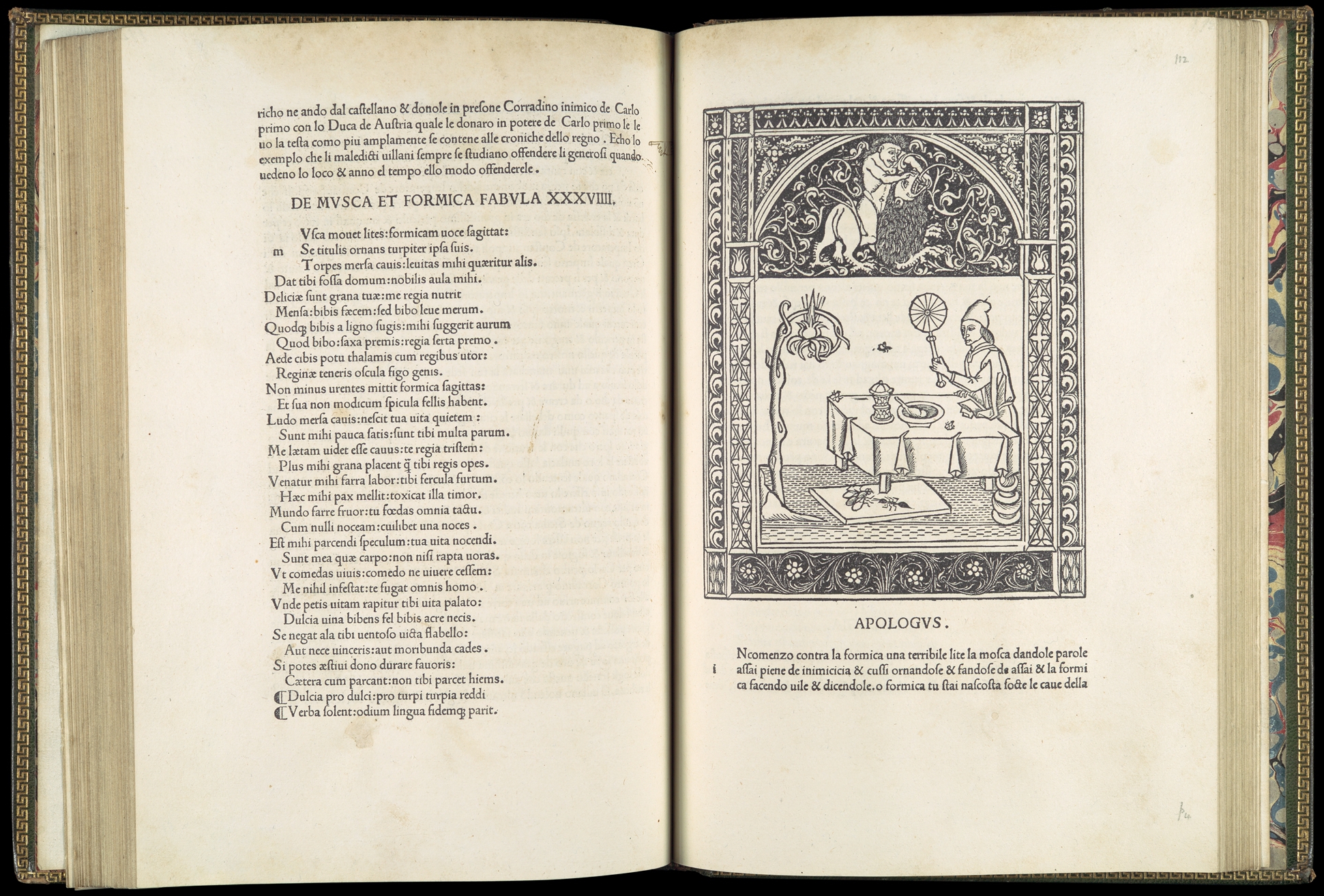
Mardona's divine love for her community is all-encompassing and egalitarian but isolating. Placed above them, they worship her as a divinity in their midst, kneeling before her and kissing her boots, and treating her every word as sacred. Coming from outside the community, Sabadil's love for her is the human love of a man for a woman. This is a new experience for Mardona, whose other lovers have always been intimidated by her divine nature, and she likes it, but doesn't know how to respond. As she makes Sabadil part of the community, she treats him like a pet that she strokes and keeps by her side.
Through his eyes we see the tension grow between his unrequited love and her annoyance at his failure to fit into the community until it reaches an explosive and shocking ending. This is a novel filled with details of 19th century farming life in central Europe and it is a fascinating look at the experience of divine and human love.
Sacher-Masoch is known to modern readers for his writings on the theme of powerful women and the men who become fascinated and enthralled by them. He was also well known in his own time for his writings about the local ethnic groups of central Europe and their customs. The Mother of God combines these two themes and shows the author at the peak of his literary career.

Wednesday, February 03, 2016

Iola Leroy or, Shadows Uplifted

Iola Leroy or, Shadows Uplifted by Frances Ellen Watkins Harper
Frances Watkins Harper was born free in 1825 in Baltimore and was 67 years old when Iola Leroy was published. Before the Civil War she was a public speaker and political activist in the Abolitionist Movement and helped escaping slaves along the Underground Railroad. After the war she travelled the South speaking out for temperance, and the rights of women and African Americans, and other social causes.
Iola Leroy or, Shadows Uplifted is one of the first novels published by an African-American woman. It tells the story of a wealthy Mississippi planter who frees and marries his mixed-race slave. They have two children, Iola and Harry, that are raised without knowledge of their mixed background and educated in the North. In spite of his sincerest efforts to secure their future, after his death greedy relatives thrust Iola and her mother into slavery.
The book deals with Iola's emancipation and the period after the war when she tries to find her mother and brother and reestablish their lives together. As Iola and her brother are light skinned and highly educated, the book also deals with issues of passing and miscegenation. The concept of a single-drop of African blood making a person non-White and subject to ill-treatment by Society is a major theme. Written less than a decade before the Wilmington Massacre of 1898, this was a time when African-American prospects were still promising but were being threatened by racism and separatist thinking.
This novel is a great window on the era prior to the extreme racial repressions of the 20th Century, when Black people had hoped that education, hard work, and social responsibility could bring them social justice in the nation. As such, it is a great source of information written by a leader in the social justice movement of the time.