Sunday, October 10, 2010


The Story of Lottie Deno: Her Life and Times, by J. Marvin Hunter

This book was the last biographical work of J. Marvin Hunter, an amateur historian who wrote and published magazines, pamphlets and books about the history of Texas. He had met Lottie Deno when she lived in New Mexico in 1901 under the name Charlotte Thurmond.

This work is made up of many short pieces that together tell the story of Lottie Deno, her 4 years as a gambler at Fort Griffin Texas in the 1870s, and her later life in New Mexico. By using short sketches to build the story, Hunter quotes many points of view and the focus is not only on Lottie, but also on the history of Fort Griffin and Deming, New Mexico.

During the 1870s Fort Griffin on the Brazos River was the US Army's outpost in their war with the Comanche and Kiowa people, a center for the slaughter of the buffalo, and a stop on the Dodge City Cattle Trail. These activities brought a lot of men with money to spend who were looking for a good time to the town outside the fort. That attracted people like Wyatt Earp, Doc Holliday, John Wesley Hardin, Billy the Kid, Sheriff Pat Garrett and Bat Masterson to what Mr. Hunter calls The Wickedest Town on the Frontier. It also attracted a woman gambler who called herself Lottie Deno.

The author does a good job of gathering together a lot of the published materials about Lottie and Fort Griffin that appeared in magazines and books and making it available again in one place. As a result the book jumps around and repeats itself, mixes facts and legends, and is as much about Lottie's times as it is about her life.

The first chapter is his own telling of her early life in a rich family in Kentucky where her father was a prominent citizen farmer with a love of card playing. Having only daughters, he shares his love of cards with his oldest daughter Charlotte. After his death, she takes up gambling on the Mississippi river boats and New Orleans as a way to support her mother and sister, moves on to San Antonio to gamble, and then is drawn to the fast and easy money of Fort Griffin. To protect her family from scandal she takes on the name of Lottie Deno, which was a short form of the slang term "Lotta Dinaro" - Lots of Money.

The second chapter is a re-publication of a description of "Old Fort Griffin" by Don H. Biggers that appeared in his 1908 Shackleford County Sketches. Biggers focuses a lot on the lawlessness of the town. While it was an Army base, the Army's job was war with the native Americans and not civil law, so the town that sprang up outside the fort was not their jurisdiction or concern. He paints a lawless town where over 50 people were killed in a dozen years with little or no legal proceedings.

Chapter III tells the story of Lottie's arrival at Fort Grffin with a long quote from Edgar Rye's 1909 book The Quirt and the Spur. Mr. Rye calls her "a female monstrosity" and relates a story where she stayed calmly at the card table as everyone else in the room fled as two players argued and shot each other. When the sheriff sees her calmly counting her chips near the carnage, he says she has a lot of nerve and that he wouldn't have "cared to take his chances in that scrimmage." Her reply is "Perhaps not, sheriff, but you are not a desperate woman."

The next two chapters are from the point of view of John Jacobs, one of the sheriffs of Griffin, and an acquaintance of the author in the 1920s. These are followed by a chapter that quotes from Alfred Henry Lewis's 1902 novel Wolfville Nights in which his character Faro Nell is modelled after Lottie. More chapters then tell the story of Fort Griffin from and some of the men who lived and died there. Basically, after the buffalo are slaughtered, the Cherokee and Kiowa are starved onto reservations, the fort closes, the town dies, and everyone leaves. It is a story of its own that deserves telling in more detail.

In Chapter XI Lottie's life picks up again in Deming, New Mexico where the author was a reporter for the local newspaper in 1900 and she is married to a rancher named Frank Thurmond. She is a founding member of the town's Golden Gossip Club, and an upright member of the community. There are only rumors that she may have been Lottie Deno.

Little is told of the saloon and gambling room Lottie and Frank ran in New Mexico after they left Texas. Frank killed a man in self defense, and they decided to give up gambling and move to Deming. Much of the end of the book is devoted to turn of the century Deming life.

One of the strengths of this book is the early sketches of Lottie's life and Fort Griffin that Mr. Hunter is able to bring together in one place. He knew Texas history well and was able to piece together a lot of different sources. However, this approach makes the book fragmented, episodic and dated. Hopefully, a new book by Jan Devereaux, Pistols, Petticoats & Poker: The Real Lottie Deno: No Lies or Alibis, published by High Lonesome Books, will provide a more cohesive in-depth look at this woman that many claim was the model for the beautiful, redheaded Miss Kitty who ran the Longbranch Saloon in the famous "Gunsmoke" television series.

Saturday, September 25, 2010

Mary Louise by L. Frank Baum writing as Edith Van Dyne

L. Frank Baum wrote book series for girls under the nom de plume Edith Van Dyne. Mary Louise is the first of a series featuring Mary Louise, a plain ordinary rich girl whose grandfather is wanted by the State Department. The novel starts with Mary Louise in a private boarding school while living with her grandfather and mother in a small town. All is well and she has been getting very close to the old man until he is recognized by a stranger staying at the hotel. It is then that Mary Louise's family steals away in the night leaving her alone at the school to face the sudden knowledge that her grandfather is a wanted criminal.

She doesn't know where he is or why the government is seeking him, but she knows deep in her heart that he is too good to have done anything wrong. Watched by secret agents who seek to find the old man through her, Mary Louise must find her way through a cloud of suspicion. The book is the story of how she goes about seeking to find her grandfather and to prove his innocence. A very good adventure story but it is plagued by Baum's stereotyping of black servants and a disabled friend that he refers to as "the chair-girl" because of her wheel chair. An interesting glimpse into the children's books of the early 20th century.

Tuesday, September 21, 2010

My Talks With Dean Spanley by Lord Dunsany, 1936

A first person narrative of a man who meets Dean Spanley, an elder minister, at his club and discovers the Dean has a strong belief in Reincarnation. He begins to suspect the Dean has more than a belief, he may have actual memories of a past life and becomes determined to find out. Hoping to find scientific proof of the transmigration of souls if he can get Dean Spanley to talk, the narrator invites him to dinner. Believing in the adage "In vino veritas" he plies the Dean with wine. When Spanley drinks too much Imperial Tokay, a rare Hungarian wine, he starts talking about his former life as a country hound in the first person.
The narrator is astounded by the revelation and invites Spanley back several times hoping to discover scientific proof of reincarnation in Spanley's stories of his life as a dog. Each visit is harder since Spanley does not like to drink to excess, but each lapse reveals more of his canine existence.
An excellent short novel full of wonderful detail and dry understated humor. Recently made into a film called simply Dean Spanley starring Jeremy Northam and Sam Neill, this is a delightful tale.

Tuesday, September 14, 2010


Don Rodriguez: Chronicles of Shadow Valley (1922)
A novel by Lord Dunsany.

"Don Rodriguez: Chronicles of Shadow Valley conveys its young disinherited protagonist through a fantasized Spain, gifting him with a Sancho Panza companion, good luck with magicians, and a castle" -- The Encyclopedia of Fantasy.

Lord Dunsany's first novel, this is a historic fantasy set in a pastoral Spain that could never exist with all the charm and innocence that the author attributes to it. Don Rodrigues sets out on a quest to find a war to fight in so he can win a castle and wealth of his own. Along the way, he finds a loyal servant who wields a mighty fry pan and encounters a magician who shows them how to astral travel and allows them to see the past and the future. Hi finds a lady he loves, wins his castle in a fantastic manner and they "live happily ever after."

The beauty of the story is in Dunsany's prose which is a delight to read and well-suited to the fantastic setting he creates. I totally enjoyed this first novel by one of my favorite authors.

Sunday, August 29, 2010

The Tough Coughs As He Ploughs the Dough: Early Writings and Cartoons by Dr. Seuss is a collection of writings from 1927 to 1937 by Theodore Geisel, from the time before be became known to the world as Dr. Seuss. These are not works for children, but rather humorous pieces for magazines like Judge, Life, College Humor, and Liberty. Filled with word play and absurdist writing, the pieces have lost some of their humor but are still interesting background reading for those interested in Dr. Seuss. The illustrations are probably more important than the writing as they show the development of the cartoon style that made Dr. Seuss famous.

Many of the essays are written under the pen name of Dr. Theophrastus Seuss, which would later be shortened to Dr. Seuss. There is a long piece where Uncle Theophrastus explains to his nephew Quackenbush "The Facts of Life." Another delightful story tells of a corporation that decides to forego profit to manufacture items of the highest "Quality."

A series of one-page Little Educational Charts attempt to explain the most absurd aspects of things like the importance of Simplified Spelling (see the book's title for a sample) and other one-page essays on imaginary uses of birds and beasts and whimsical word meanings were obviously humorous magazine pieces. The book ends with a series of ads for a spray insecticide called FLIT that all contain the catchphrase, "Quick Henry, the Flit."

While the writing has suffered a bit from the passage of time, the artistic humor of Geisel's drawings remains, and provides good background for those who only know his children's books.
Milk: A Pictorial History of Harvey Milk is a tribute to a man who was a major force for Gay Rights in the United States. Billed as a photographic history, it also contains moving statements by people who worked with Harvey Milk during his political career in San Francisco.

Part One is called "An Oral and Pictorial History of Harvey Milk" and is filled with pictures form his life and statements from those who knew him or were influenced by him.

Part Two is titled "Milk, The Making of the Movie" and details the movie starring Sean Penn. Both sections were put together by the Academy Award winning writer of the movie, Dustin Lance Black, based on his research for the film.

The Real/Reel life story of Harvey Milk and the 1970's Gay Scene in San Francisco are laid out side by side in this book which provides insight into both the era and the movie.

Important reading to anyone interested in Milk the man or Milk the movie.

Saturday, August 07, 2010


The Art of the Aloha Shirt by DeSoto Brown & Linda Arthur

The Aloha Shirt is what people on the mainland call a Hawaiian Shirt, a bright-patterned, collared, short sleeve shirt meant to be worn untucked. Although today we cannot imagine a world without them, this book delves into the origins of the classic shirt looking for its creator.

But first the authors look into the roots of the Aloha Shirt which are deep in the multicultural society of these islands. Polynesian, Japanese, Filipino and Chinese influences are found in this garment's past. The Hawai'ian fabric industry is the subject of one chapter with the local small businesses importing and producing fabric designs and competing with the larger mainland factories.

The roots of Dress-Down (or Casual) Friday are found in the adoption of the Aloha shirt as acceptable business attire in Hawai'i starting in 1947. Hawaii's Aloha Friday during the summer months spread to the mainland in the 1960s.

While the exact date and creator of the Aloha shirt has not been discovered by the authors, they do point to the decade of the 1930s as the likely time. The first mention of Aloha Shirts they can point to is a 1938 children's book called Hawaiian Holiday.

The Art of the Aloha Shirt is richly illustrated in full color with pictures on every page. Celebrities in Aloha print garments abound. Many of the pictures are ads from shops or magazines. There are also pictures of shirts housed in the Bishop Museum and the University of Hawai'i's Historic Costume Collection (Linda Arthur, one of the authors, is curator of this collection).

The Aloha Shirt becomes a symbol of Hawai'ian culture, something that the diverse population can find unity in. As such, it is much more than a garment. It becomes a cultural symbol that is not based on ethnicity, but on a shared sense of place.

Saturday, July 31, 2010

The Beats: A Graphic History

This book is "by Harvey Pekar et al." with "art by Ed Piskor et al." While the majority of the text and art are by Pekar and Piskor, the book is actually 25 different pieces on various people and topics of the Beat Generation created by a diverse group of writers and artists.
In the first half of the book Pekar and Piskor tackle the lives of the three major figures: Jack Kerouac, Allen Ginsberg and William S. Burroughs. This is followed by shorter pieces on other people associated with the movement: Kenneth Rexroth, Michael McClure, Philip Whalen, William Everson, Robert Duncan, Lawrence Ferlinghetti, Gregory Corso, Leroi Jones/Amiri Baraka, Charles Olson, Robert Creeley, Philip Lamantia, Gary Snyder, Diane di Prima, Slim Brundage, Jay DeFeo, d.a. levy, and my favorites Kenneth Patchen and Tuli Kupferberg.
To set these biographic pieces in context there are chapters on Jazz, Art, the City Lights Bookstore in San Francisco, and women in the Beat movement.
All together Pekar writes 18 of the 25 chapters, giving the book a continuity yet allowing for diversity of views, while Piskor inks just over half the graphics which keeps the book visually interesting.
Highly recommended even if you only read the two chapters on Patchen and Kupferberg.

Sunday, May 23, 2010

Shadow On The Hearth by Judith Merril

A typical day in a Westchester suburb of New York for a family of four is shattered by a nuclear attack on New York City. Gladys is in the basement doing her laundry, her two daughters, Barbara and Ginny are at school, and her husband Jon has taken the train to Manhattan to his job when the bombs start to fall.

The following week's events are viewed from Gladys' viewpoint as she takes in the children's teacher, a discredited nuclear scientist critical of atomic bombs, and hides him and her Slavic maid Veda from the Civil Defense patrols who might see them as enemy spies or saboteurs.

Written in 1950 this is an early science fiction look at the after effects of a nuclear war. It was adapted the same year with a less provocative script as the television drama Atomic Attack, which was the television debut for Walter Matthau as the young doctor.

Judith Merril does a very good job or of presenting Gladys as the US stay-at-home mom of the post-WWII years facing a world turned upside down. I enjoyed reading the book and recommend it.

Tuesday, April 20, 2010

City of Belief is a novel based on a true story written by a person who was there. The "Author's Note" at the beginning of the book starts with this statement:
"In the early morning hours of November 9, 1965 a young man walked up to the United Nations in New York City, sat on the cement island on First Avenue before the darkened building, doused himself with gasoline and lit a match. The young man was Roger La Porte and he was my friend."
Roger and the author were volunteers at the NYC Catholic Worker, a movement started by Dorothy Day and committed to nonviolence, voluntary poverty, and the Works of Mercy. In 1965 a group of the Catholic Worker volunteers including Roger were involved in anti-war protests and a draft card burning in New York's Union Square.
This novel is a faithful chronology of the events leading up to and immediately following Roger's self-immolation. They have haunted the author for 40 years, and she has finally written about them to share with the world.
It is a story of faith and belief and an accurate depiction of the tumultous times. No one may ever understand what caused Roger to set himself on fire to protest a war he saw as unjust, but this book will give you a glimpse into his life and thoughts.

Friday, March 26, 2010

Besieged, set in 1630's Ulster area of Ireland, is the first of Small's Skye O'Malley series I have read which is a matrilineal historical romance series. It tells the romantic story of Skye's granddaughter Fortune Lindley and Kieran Devers, she a Protestant and he a Catholic, in a very intolerant world. They are faced with the classic “A fish could marry a bird, but where would they live?"

While Small does a fairly good job of portraying the conflict between the local Irish Catholics and their new Protestant landlords, Fortune's family is painted as the only tolerant Protestants in the book. The noble Irish under the cruel Protestant yoke makes the story a bit one sided. Kieran's brother William is a nasty, obsessive villain as is his stepmother, Lady Jane Devers, who marries a poor Irish lord for his land and covets Fortune's large estate.

It is in romance where Small excels and Fortune and Kieran are inspiring lovers. Their passion and devotion are well-portrayed. Her sex scenes are excellent examples of women's erotica, although they are less prominent in this book than they are in works like Love Slave.
Last Dance For Grace : The Crystal Mangum Story — By Crystal Mangum with Vincent Clark

Crystal Mangum was a student at NC Central who in 2006 worked as an exotic dancer. In March of that year she went to a house to dance for a bachelor party being held for Duke University students. She claims she was raped by three people while there. The District Attorney had to withdraw from the case & was disbarred. The Attorney General took over and dropped all charges. She never had a day in court.

Working with Vincent Clark, a documentary film maker, this book is the story she would like the world to know about her. While there are two chapters about the events of March 2006 and one about the legal struggle that followed, the heart of the book is a six chapter biography and a final chapter on how she is putting this event behind her.

Her story is wrapped in three chapters by Vincent Clark who describes the Crystal he met in working on this project. A Foreword by Myra Shird, an NC A&T professor, looks at the broader implications and compares Crystal to Nathaniel Hawthorne's Hester Prynne in The Scarlet Letter.

If you are wanting to know what really happened that night in March 2006, this is not the book that will help you. If you want to know more about "the accuser" Crystal Mangum from her point of view, not that of the press or the Blogosphere, this is her story.

Monday, April 13, 2009

Trouble Under Oz by Sherwood Smith


Trouble Under Oz by Sherwood Smith

This sequel to The Emerald Wand of Oz continues the adventure of Dori and Em, two modern sisters who think they are related to Dorothy Gale (whose adventures in Oz over 100 years ago were chronicles in 14 books by L. Frank Baum). The Nome Prince Rikiki is planning to return home to claim the throne from Kaliko who has been ruling since Rik's father was driven out. Ozma summons Dori, who became friends with Rik in the first book, and asks her to accompany Prince Inga of Pingaree on a mission to visit Rik. She fears that a struggle for power in the Nome Kingdom might trigger a war with their hostile neighbors, and feels Inga, with Dori's help, will be able to communicate with Rik. Meanwhile Em is left at home to cover for Dori's absence.

It is best to be familiar with Baum's original stories to appreciate the many adventures Dori has with Inga and Rik as they revisit lands and people that Dorothy knew 100 years ago. For those familiar with Baum's work this can be a delightful chance to learn more from the latest Royal Historian of Oz. Being the second book of a trilogy, however, do not expect all plot themes to be completely worked out. The third book of this trilogy, while written, has not yet been published. Hopefully soon, the final volume will become available and we can learn the conclusion of this interesting contribution to the Oz series.
Tuesday, April 01, 2008


All Things Oz is editor Linda Sunshine's "whirlwind tour" of Oz, L. Frank Baum's literary fairyland. She teamed up with Oz memorabilia collector Willard Carroll to put together a sampling of Baum's writings, surrounded by images from Carroll's collection that provides a delightful introduction to new readers and wonderful memories for loyal fans.

Sunshine scoured all 13 of Baum's Oz novels as well as his short stories for passages that exemplify the wit and wisdom that has endeared these books to readers for over 100 years. Each page is in full color with illustrations of Oz and its citizens from all over the world. The result is a beautiful book in word and image that is truly a delight for anyone interested in learning about Oz.

Thursday, February 07, 2008


Scouts in Bondage is a photographic collection of book covers of titles that have not withstood the test of time. Compiled by a retired British secondhand book seller, this is an amusement for the bibliophile with a taste for the double entendre. This is a very short book with minimal text. Highlighted are about 45 photos of book covers whose intent was serious at the time but, over time, have developed unintended secondary meanings. Facing these covers is the bibliographic details (Author, title, publisher, date, and size) and occasional excerpts or additional information to add to the amusement.

Being an engineering librarian, I
was especially drawn to the technical titles gone wrong such as:

The Resistance of Piles to Penetration

and

Hardening and Tempering Engineers' Tools

as well as the illustration of the goddess Hygieia holding a water closet pull chain on the cover of The Modern Plumber and Sanitary Engineer.


Sunday, September 24, 2006


I Love [heart symbol] Lord Buddha. Hillary Raphael

The setting for I Love Lord Buddha is the hostess bars of Tokyo in 1997. The main characters are western hostesses who spend their nights socializing and drinking with men in these bars. Amongst them is a charismatic leader from New York who takes the name HIYOKO and starts recruiting these displaced women into a new-Buddhist group called the Neo-Geisha Organization. Reinterpreting Buddhist philosophy through her cultish mind, HIYOKO plans for a cataclysmic event that will shake humanity into exercising Buddhist values so as to avoid a larger global catastrophy. It is a lively story with lots of sex, drugs, and Buddhist theory, which portrays the lack of spiritual values in modern commercial Tokyo.

The plot unfolds as HIYOKO's cousin Heidi Peterson, a sociology grad student from the States, arrives and starts doing her research on the Neo-Geishas and their enigmatic leader. It takes the form of Heidi's notes, interviews, police reports, and pages from various documents following each other in brief chapters, many only one page long.

Fast pacing and an interesting structure give the novel a unique look and feel. Very little is capitalized. which makes reading a bit hard since the break between sentences is only the tiny period. Without a leading capital letter new sentences can be hard to find at times. However this typographic style contrasts well with the fact that HIYOKO is always in all caps.

Well written and plotted the novel does a good job of creating the world of the characters and the moral dilemma of our times.

Monday, September 11, 2006


The Visitors from Oz. L. Frank Baum

This book is considered by some to be the lost "Third Book of Oz" since the material it contains was written in 2004 and 2005 after the publication of Baum's first two Oz books: The Wonderful Wizard of Oz (1900) and The Marvelous Land of Oz (1904). The book features six characters from The Marvelous Land of Oz who leave Oz to travel through the United States of America.

This is probably the worst of Baum's Oz writing. Baum reused ideas from other books, and engaged in what are today offensive racial and ethnic stereotypes. Twenty six chapters of this book were originally Sunday newspaper pieces that were written as promotional material to advertise the books and the upcoming 1905 stage musical called Woggle-Bug. Seventeen of these were part of a contest in which each story ended in a situation that puzzled all the visitors except the Woggle-Bug who told them the answer but which wasn't revealed until the next week. The readers were invited to guess the answers for a chance at a prize. The last and longest chapter was originally published in 1905 as The Woggle-Bug Book. This segment follows the plot of the stage musical and, with its heavy reliance on ethnic humor, gives a pretty good idea as to why the musical failed. At the end of the book are 15 newspaper articles dated between August 18 and October 3 1904 that detail the flight to Earth by the Oz characters and relate their adventures in false news story style.

At the back of the book is a history of the material's creation and publication called "American Fairyland" that was written by David Maxine. Here we learn that two prior attempts to publish these stories in 1960 and 1986 were edited or abridged to remove offensive words and dialect. This is the first time since its original publication that the stories are printed as they were written.

The book does provide a look into life in the US as it was perceived by Baum 100 years ago. In that sense it provides a clearer perspective on Baum's world than his fairy tales. Also the illustrations by Eric Shanower, although created much later than the text, are delightful representations of the stories by the best Oz illustrator.

Friday, September 08, 2006


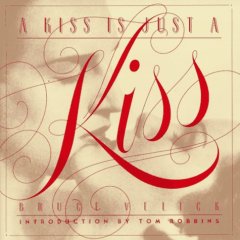
A Kiss is Just a Kiss. Bruce Velick

This is not a narrow-minded boy kisses girl tribute to heterosexual romance although there are lots of pictures like that. The book contains 60 black and white pictures that span the 20th century from 1915 to 1988. In addition to the heterosexual romantic kiss there are men kissing men, women kissing women, people kissing animals, animals kissing people and other animals, children kissing each other, adults kissing children, people kissing statues, statues kissing statues, kissing in the foreground, kissing in the background, and even a person kissing the pope's ring.

Each picture has the photographer's name beneath it and a list at the end of the book lists the photographer, the title, the date, and the owner of each photo. Two are from before the 1920s, three are from the 1920s and 30s, eight are from the 1940s, nine are from the 1950s, five from the 1960s, eleven from the 1970s, and 12 are from the 1980s. Ten have no dates associated with them.

These are famous photographic kisses. Included are William Mortensen's The Kiss, Robert Doisneau's Le Baiser de l'Hotel de Ville, Dennis Stock's Cafe de Flore, Weegee's Palace Theater, an untitled kiss by Elliott Erwitt, Louis Stettner's On a Dutch Ferry, and Alfred Eisenstaedt's Times Square VJ Day,

There are also pictures by Peter Marlow, Bruce Davidson, Joan E. Biren (JEB), Chris Steele-Perkins, Henri Cartier-Bresson, Leonard Freed, André Kertész, Burt Glinn, Mary Ellen Mark, Ernst Haas, Barbara Crane, Gilles Peress, Lou Stoumen, Josef Koudelka, Sage Sohier and many others.

Combine this with a delightful essay on the history and importance of kissing by Tom Robbins and you have a great book. It would make a wonderful gift for a lover or a friend. Buy one for yourself and be inspired.

Tuesday, September 05, 2006


Forever Fifty. Judith Viorst

Judith Viorst has become the poet of aging with books of poetry dedicated to her lyrical and funny perceptions of each decade of life from the 20s to the 60s. With Forever Fifty And Other Negotiations she explores with insight and humor the joys and fears of being in your fifties. The book contains 24 one-page poems that are accompanied by full page graphic illustrations in green ink on a rich cream paper. The 24 graphics are reproduced on the end papers. The attention to design makes this a wonderful gift for a quinquagenarian friend.

The poems are funny and sentimental yet bittersweet. In some poems we see a person who is struggling to accept the limitations of middle age (where running wild is to go for a walk without sunscreen and memory can't be relied upon). In others she seeks the joys that come with the wisdom of years as when she says "We're quicker to laugh, and not so eager to blame." In yet others, she makes affirmations to live life "as a sexy old lady" and lists the things she'd like to do before she goes.
There are poems that take humorous looks at adult children, long-term marriage partners, and young doctors.

Overall, a wonderful but light look at the aging process of the 50s. It is a book you will enjoy, but one that will not burn into your soul.

Monday, September 04, 2006


Nothing Natural. JennyDiski

I found this to be a powerful book that delved deeply into the life of a woman named Rachel who becomes involved in a sadomasochistic relationship with an emotionally distant man. Initially I felt the title referred to this s&m relationship. However, as the author reveals more of Rachel's life, it appears that there is nothing natural in her emotionally starved world. Her parents fought bitterly when she was a child. She struggles with paralyzing spells of depression and is incapable of emotional closeness. She is delightfully articulate and quick witted - an intelligent woman with a large share of emotional distress. We watch her spiraling deeper into a suicidal state and it takes a strong reader to maintain compassion. Finally her darkest hour passes, and the novel ends with her first steps towards a healthier self concept. Compelling reading and wonderful character development - a great first novel.

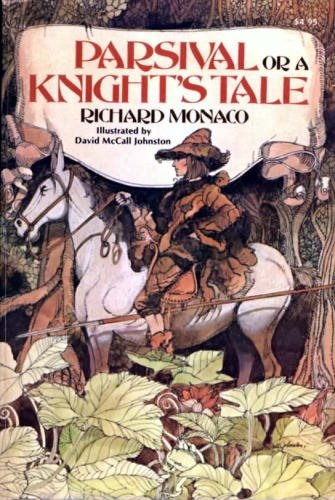
Parsival: Or, a Knight's Tale. Richard Monaco

This is the first of a now out of print four volume series based on the Arthurian Grail quest of the hero Parsival. The other three volumes are: The Grail War; The Final Quest; and, Blood and Dreams.

This first volume follows Parsival from his overprotective mother and his childhood home on his first quest to become a knight at King Arthur's round table. Once he is a knight, he begins his second quest to find the Grail Castle and discover its secret.

A parallel story tells of Broaditch, a servant from his mother's castle, who sets out soon after to find Parsival. The two quests compliment each other with short episodic chapters from each telling the tale of the book.

The book is not for the squeemish. There is a war and lots of bloodshed. The people are bawdy rather than chivalric, and the sexual relationships are not always consensual. However, it is an exciting and humorous retelling of a medieval tale. I can't wait to read the rest of the series.

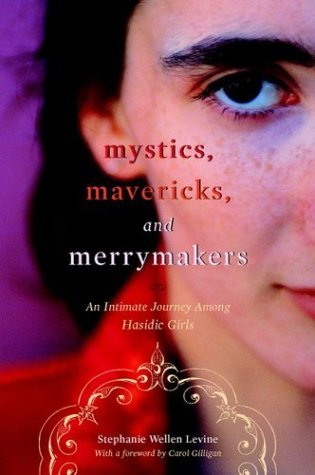
Mystics, Mavericks, and Merrymakers: An Intimate Journey Among Hasidic Girls. Stephanie Wellen Levine

I read this book as a non-Jew who was interested in Hasidism. This particular book attracted me because I am the parent of two teen-age daughters. Having close contact with the problems my daughters face in the modern world I felt would help me understand the issues of Hasidic young women. Although the book is not designed to give a rigorous introduction to Hasidism, I am quite delighted by Stephanie Levine's work and the chance it has given me to have a glimpse into the spiritual and mundane issues of modern Lubavitch Hasidism.

Far from being a broad review of young Hasidic women, Levine focuses on the Lubaticher sect of Hasidism and its community in the Crown Heights section of Brooklyn, New York. She spent over a year living with and interviewing the students, teachers, and parents associated with the Bais Rivka Lubavitch high school, a girls-only school.

Hasidic girls have very little contact with males outside their immediate families. Their religious beliefs allow them only the slightest contacts with the world outside their community. Popular videos and music are not allowed and dietary restrictions only allow eating in the most kosher of restaurants. The "mavericks" part of the title has to do with the rebellious response that the young women sometimes bring to these severe restraints.

The "mystics" aspect of the title has to do with the deeply spiritual aspects of Hasidism where every thought and action of an individual's life has cosmic implications as the community does all it can to bring about the coming of the messiah. The last chaper of this book, "Into The Future," begins with a wonderfully clear and concise description of Lubavitch mystical beliefs.

The irrepressible joy and exhuberance of the young women, that the spiritual practice of Hasidism seems to promote, leads to the author's use of the term "merrymakers" to describe the subjects of this book.

Levine starts off the book with a general introduction to the Crown Heights Lubavitch community and the background to her study. She talks about the Bais Rivka school and its students.

Then in a series of seven chapters she takes in depth looks at seven of the young women she was able to get the closest to in her year of research. We meet their families and see their day to day life. We hear them describe their current life and aspirations. As the most important duty of a Lubavitch woman is to marry and have children, their mate selection and preparations for married life are part of these chapters.

The last chapter contains a look at the future for both the young women and the Hasidic movement. This is a wonderful book for anyone like me who is interested in Hasidism or the lives of young women in the modern world. Levine is a wonderful writer and she treats her subjects with fondness and respect. Yet she is honest and direct. So this study has both objectivity and admiration, a delightful combination in such a work.

Castle Rouge. Carole Nelson Douglas

Irene Adler is a character created by Arthur Conan Doyle and the only woman who ever outsmarted his famous detective, Sherlock Holmes. Carole Nelson Douglas has taken Irene and turned her into a detective with her own series of mystery novels. In this book, Castle Rouge, the action picks up from the previous volume Chapel Noir, with Irene seeking out the person or people who have perpetrated Jack the Ripper like murders in Paris a year after the Whitechapel murders in London. She is in desperate pursuit because it appears that her colleague Nell Huxleigh and her husband have been taken by the same culprits. But who are they? In this second volume Irene leaves Paris first for Prague and then a castle in Romania. Who is responsible for this international crime spree? Don't read the Selected Bibliography at the end of the book until you have finished it. You may find a spoiler of a clue there,
A long tale that stretches across two large volumes, but the excitement never flags. Highly recommended - a feminist point of view on the Victorian era.

Chapel Noir. Carole Nelson Douglas

Irene Adler is the only female adversary to outwit Sherlock Holmes and she may have stolen his heart as well. Carol Nelson Douglas has taken the brief outline of Irene Adler in the Sherlock Holmes adventure A Scandal In Bohemia and fleshed it out into a marvelous sleuth of her own design. She has created her own series of books with Irene Adler as a 19th century detective with a feminist flair.

Adler's latest two-part adventure, Chapel Noir and Castle Rouge, is told through a series of journal entries by her female companion Penelope Huxleigh. Additional chapters are supposedly taken from notes written by a prostitute called Pink and sections of a mysterious yellow book of anonymous authorship. This multiple "authorship" allows Douglas to present her story from different perspectives.

And what a story! In Chapel Noir Adler is called on by Baron de Alphonse Rothschild to investigate a particularly bloody murder in a Parisian bordello. Before long Jack the Ripper is the suspect and Sherlock Holmes (sans Watson) has come to Paris to investigate. As the plot moves on, more famous historical figures are drawn in either as suspects or allies. 470 pages later I found, instead of the end, that this is the first of a two part story.

A rollicking adventure that continues for another 470 pages in Castle Rouge. Lots of fun if you can stand the gruesome aspects of the crimes.

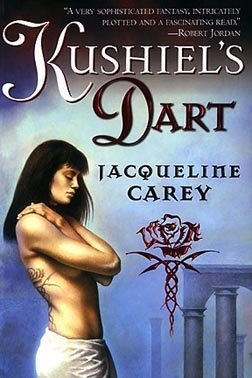
Kushiel's Dart. Jacqueline Carey

What an epic adventure! This book starts out slow and I was tempted to stop reading it often during the first 300 pages.

It is a hard book to read. There is a six page Dramatis Personae that lists the major characters and it can be very confusing at times. The second half is easier as less characters are introduced and the action kicks in big time.

The author sets up an alternative historical France that she calls Terre D'Ange, the Land of Angels, at around the time 800CE. There is a whole alternate theology based on the son of Jesus (Yeshua in the book) and the Magdalene.

The book reminds me of The Hobbit in the sense of it being an epic adventure through many lands and past many challenges, but the hero is a woman and a masochistic prostitute at that. The book is more sensual than explicit with a free love theology as a theme. However, the emphasis is on the machinations of courtly politics and war.

Once the action starts, it is hard to put down.

Folly. Laurie R. King

Laurie King's Folly is a very sympathetic portrayal of the effects of psychosis and madness on the individual. In this case it is Rae Newborn who is literally reborn from her last bout of suicidal mental illness through the solitude of an uninhabited island and the project of rebuilding a burned-out house. We join her as she leaves therapy to live on an isolated island off the coast of Washington state. Her only human contact is a weekly visit by a tatooed man called Ed who drops off her supplies and picks up her laundry and shopping list. She starts off by dumping her medications into the Sound (pharmaceutical pollution!) to live drug free with her imaginary Watchers and her suicidal depression.

The mystery aspect of the novel is based on the old adage: "just because you're paranoid doesn't mean the world isn't out to get you." She is a famous artist with her own and inherited wealth. Her son-in-law is involved in shady dealings and always seeking money from Rae. Her geat uncle Desmond originally built the house and disappeared when a mysterious fire destroyed it just before completion. Is someone out to get her or is she just psychotic? As the work on the house proceeds and her health improves this question keeps up the suspense.

The structure of the novel is broad sections named after the progress of the house reconstruction (Clearing the Ground, Laying the Foundations Building Walls, Raising the Roof Beam, and House Warming). Each of these is introduced by some brief statement by an anonymous Victim who seeks vengeance against The Thief. Who these two are the ultimate mystery of the novel. Each section is divided into chapters that are told from the point of view of Rae Newborn. To break up this a bit, the author introduces chapters throughout the text that are selections from Rae's journal, Desmond's journal, Rae's letters to her granddaughter Petra, and letters from Petra.

Laurie King is a master of character development and locale. Her depiction of Rae and the people with whom she interacts brings these people to rich and complex life. Even when the readers know they are minor characters, we are still treated to people who bring a complexity to their roles. This is also true of the setting in the San Juan islands. The pace and ecology of this community is lovingly portrayed. Add to these the technical details of house carpentry and woodworking, and you have a very rich and satisfying novel.

Folly is an excellent mystery. Without the known anchors of Ms. King's mystery series (Mary Russell and Kate Martinelli), this book may lack some of the success of books in those series. I found it difficult at the start because Rae has been suicidally depressed and I have a natural reluctance to make friends with people like that. Yet it is by confronting our discomfort that this book is ultimately successful in providing a deep insight into the stigma of mental illness.
Wednesday, August 16, 2006


Harding's Luck. Edith Nesbit

Are Edith Nesbit's novels where J. K. Rowling got the idea for her Harry Potter series in which magical witches and wizards live secretly among normal humdrum people (muggles)? It was Nesbit, who wrote 60 children's novels, that first started writing about everyday English children discovering magical people, charms, and spells in their midst. One of the founding members of the Fabian Society, Nesbit was famous in her time for her Socialist beliefs and friends. However, presently it is her children's books that are her enduring legacy.

Harding's Luck is the second of a pair of novels about Dickie Harding a young orphan in 1906 London who uses a crutch because his left leg doesn't work. When his father died he left Dickie an old toy that was to bring him luck, but as the story opens there is little luck or joy in the child's life.

Nesbit's Socialist beliefs are strongly represented in her portrayal of Dickie's poverty. She describes life for the poor of the time as follows. "...All the green trees are gone, and good work is gone, and people do bad work for just so much as will keep together their worn bodies and desolate souls. And sometimes they starve to death." She also portrays a society strictly divided by class in which Dickie is poor but has noble blood which elevates him above those around him.

The magic of the story is a spell involving the toy his father gave him that puts him in contact with a trio of magical moles called Mouldiwarps and a nursemaid witch. This group transport him back 300 years to the time of King James I where he is Richard Arden, a young boy of noble family who has two healthy legs. He travels back and forth between his London and that of James I with the help of the Mouldiwarps. In the process he saves the Arden family's fortune and has to decide between his present-day London and that of 300 years ago.

Nesbit is a wonderful storyteller and the plot is full of detail and adventure that make it a delight to read. Her use of the street language of the time makes this a difficult book for young readers of today, but adults who like children's literature will find it a delightful glimpse of English life. H. R. Millar's 16 original drawings help bring the tale to life. This Books of Wonder edition suffers from bad proofreading. I found over a dozen misspellings that should have been caught in the editing process. Although this is one of a two volume series, it can be read alone with no problem.

Saturday, August 12, 2006


To Play the Fool. Laurie R. King

To Play the Fool is the second of a series of mystery novels by Laurie King that feature the San Francisco homicide detective Kate Martinelli. The first book, A Grave Talent, was an Edgar Award winner.

This book picks up about a year after the first, and finds Martinelli and her partner Al Hawken investigating the death of a homeless man in Golden Gate Park. There are no witnesses or evidence, but an enigmatic old man called Brother Erasmus who speaks only in quotations becomes a prime suspect. Quickly the story changes from a homicide investigation to an attempt to find out about the mysterious Erasmus, who is either a saintly fool or mentally ill.

Laurie King is in her element as the scholarly street person quotes from the Bible and Shakespeare to answer all questions, leaving the two worldly detectives to puzzle over his meaning. Either he killed the man, or he knows who did. They must find a way to make him talk in a way that will make sense to the legal system to solve the crime.

As with A Grave Talent, King creates wonderfully complex characters that draw the reader into the story. Also her plot is sufficiently complex to keep you guessing. I fell in love with the kindly Brother Erasmus and the people who were drawn to him. A delightful story that is well told.

Tuesday, August 08, 2006


The Amorous Busboy of Decatur Avenue. Robert Klein

The Amorous Busboy of Decatur Avenue is Robert Klein's memoirs of growing up in the Bronx in the 1950s. Born in 1942, Klein writes affectionately of the basic influences of his youth during the years 1951 to 1966. Each chapter begins with a picture of Klein during the period discussed.

His parents were children of immigrant Jews who were "careful, cautious, wary people" and passed on their concerns to Klein and his sister. His bedroom was a Castro convertable ottoman in the living room of their small 6th floor apartment.

The first four chapters cover his life in junior high and high school in the Bronx. Having grown up in the Bronx myself during this time, I found these very well written and full of delightful details.

The next five chapters are about his life at Alfred University in rural upstate New York. Here he confronts anti-Semitism and develops a love of acting and comedy. He also works summers in the Catskill Mountain resorts made famous in the movie Dirty Dancing. He is no Patrick Swayze, and his amorous nature is mostly unfulfilled.

The last six chapters tell the story of his breaking into show business. His first success in Chicago's Second City and his friendship with Rodney Dangerfield are highlights of this section.

One of the recurring themes of the work is his sexual relations over time. Beginning with his losing his virginity to a 112th Street prostitute, Klein reminisces about the women in his life and the sexual and sometimes loving relations he had with them. Although he is not very graphic in his descriptions, this male oriented portrayal of sex in the 50s and early 60s may seem insensitive by modern standards. Yet it is his very honesty at representing the male attitudes of the time that makes this aspect of the book especially interesting. He says he writes "not to titillate but to communicate the excitement that sex held for me and its importance in my life." This was a time of great changes in sexual attitudes and his depictions of his and his friends' sexual interests over these 16 years shows how radical the change was.

All in all this is a wonderful memoir of New York life in the 1950s. It is also an insightful portrayal of college life at the time, especially in an era when Jews were still being discriminated against in fraternities and other aspects of academia. Lastly, Klein does a great job of describing his beginning career as an actor. How he learned his craft, the problems he faced, and the people he knew are all well represented.

Sunday, July 30, 2006

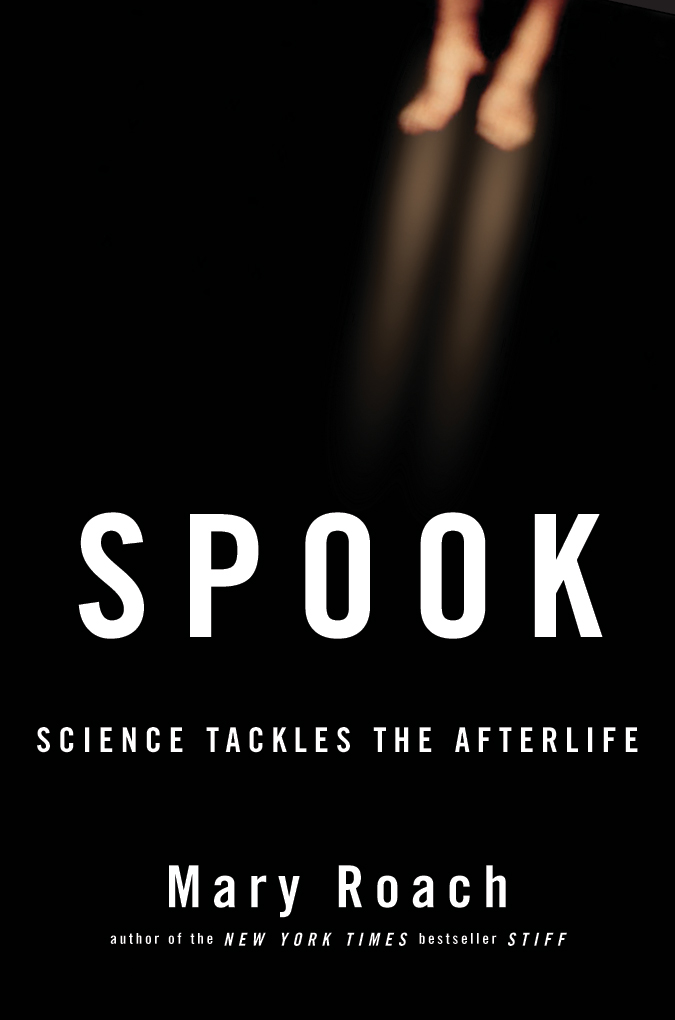
Spook: Science Tackles the Afterlife. Mary Roach

Spook provides a light-hearted look at the current status of research into the existence and survivability of the soul. Mary Roach calls it "a book for people who would like very much to believe in a soul and in an afterlife for it to hang around in, but who have trouble accepting these things on faith." At the end of the book, she admits that she began this project "from a state of near absolute ignorance." This is one of the book's most endearing features, since the reader gets a glimpse of how Ms. Roach goes about researching a topic.

The book does not end up with a definitive answer. If science had proof for or against the afterlife, it would have been big news. So this is an exploration of the current state of the research. The author claims that she does not approach the topic as a debunking skeptic, but she does throw in a lot of humorous asides in an attempt to amuse as well as explore.

Chapter One, "You Again," is about reincarnation. Ms. Roach goes to India for a week to visit Kirti S. Rawat, director of the International Center for Survival. Her purpose is to accompany him as he examines a claimed case of reincarnation. She meets the child, his family, and the family of the deceased man that the child claims to be. She also runs into cultural differences in a society where many people believe in reincarnation and don't need scientific proof.

The second chapter is a historic discussion on past research by people who believed there was a soul. Questions such as whether the soul came from the sperm or the ovum, or whether it entered the fetus at some point in its development are reviewed. Also looked at are those who searched for the exact bodily organ that contained soul.

"How to Weigh a Soul" is the third chapter. It explores the research done to see if the soul has weight. If so, can a drop in weight at death be proof of the existence of the soul leaving? The famous experiment by Duncan Macdougall that determined the soul weighs 21 grams is reviewed as well as other more recent attempts. The fourth chapter goes on to look at the attempts to photograph or capture an image of the soul as it leaves the body.

The next couple of chapters delve into the claims of mediums who say they can establish communication with departed spirits. Chapter 5 is a history of the attempts by mediums to produce ectoplasm, a physical manifestation of spirit energy. Chapter 6 then goes on to look at current research with gifted mediums at the VERITAS Research Program of the University of Arizona conducted by Gary Schwartz. This is followed by the author taking a Fundamentals of Mediumship course at Arthur Findlay College in England.

Chapter 8 "Can You Hear Me Now?" looks into attempts to use technology to establish communication with dead souls. EVP (Electronic Voice Phenomena) on tape recorders and radio static is the current trend, but Ms. Roach also looks into the history of this field.

Chapter 9 begins a section where Ms. Roach looks to see if physical phenomena, rather than spirits, may cause the feelings of contact with the beyond. First she visits Dr. Michael Persinger at the Consciousness Research Lab at Laurentian University in Sudbury Ontario. He is studying the ability of complex electromagnetic fields to produce hallucinations that might resemble contact with the dead. Chapter 10 looks into whether low frequency sound waves (10 - 20 hertz) could do the same thing. Ms. Roach visits Vic Tandy who teaches at Coventry University whose research is in this area.

Chapter 11 is my personal favorite. It deals with a 1925 North Carolina ghost who appeared to his son to tell him where to find the most recent version of his will. The case went to court and the new will was accepted by the family. Both the old and new wills were on file in the courthouse, and Ms. Roach brings in the president of the American Society of Questioned Document Examiners. Although the family decided to accept the new will, it turns out to be a poor quality forgery. Yet the story of family intrigue is so interesting that the chapter left me wanting someone to write more about this case.

The last chapter looks into what Mary Roach feels is the most promising of the current research to prove the existence of the soul. Based on the reports of people who have had Near Death Experiences (NDEs) who claim they felt themselves rising out of their bodies and looking down on the room they are in, this research places an object that can only be seen from the ceiling in rooms where people might possibly experience an NDE. Interviews are then conducted to see if they experienced an NDE and saw the object. This research is being conducted by Bruce Greyson at the University of Virginia.

The books ends with a 13 page bibliography that goes chapter by chapter through the resources Mary Roach used for the book. Some may criticize her for attempting to write such a book without being an expert in the field. I find that her newness to the topic gives her a fresh unbiased perspective. However, I feel that she attempts to cover her inexperience with humor that sometimes detracts from the work. If you can endure the jokes, the information provided is well presented.

Saturday, July 22, 2006


The Living House of Oz. Edward Einhorn with illustrations by Eric Shanower

The Living House of Oz is Edward Einhorn's second collaboration with Eric Shanower on an Oz novel. The first, Paradox in Oz, was critically aclaimed, and took Ozma, the fairy ruler of Oz, on a rollercoaster ride through time into an alternative Oz where good and evil characters were reversed.

The Living House of Oz has the classic structure of an Oz novel: a young child coming of age visits Oz and, through his adventures and interactions with the good people of Oz, he matures and overcomes a crisis. In this case Buddy and his sorceress mom have fled to Oz to find safety, but have to hide because his mother uses illegal magic to protect him from danger. When she is discovered and brought to Ozma, all Oz is threatened by her enemies.

Although the structure is traditional, Einhorn brings it new life with his examination of the two themes of Nature vs. Nurture and the Role of Law in a Just Society. Einhorn's delightfully eccentric characters, like the living hat stand called the Earl of Haberdashery and the tuneful flying piccolo Flutefly, lend the work a joyful and humorous presence that is brought to life by Shanower's beautiful illustrations. His color cover and endpapers and the black and white drawings throughout the book show that he is still the best living artist of Oz themes. Einhorn has shown himself to be a master of the genre by skillfully weaving in, not only themes from his previous novel, but also from two of L. Frank Baum's original series: The Emerald City of Oz and Glinda of Oz. Together Einhorn and Shanower are the best Oz Historians since the original team of Baum and Neill. They capture the essence of Oz as Baum and Neill imagined it and keep its timeless character, while presenting a sensibility that can be understood by a modern audience.
Friday, July 21, 2006


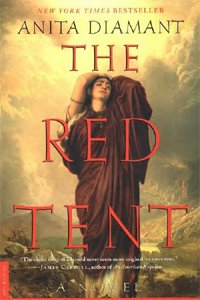
The Red Tent. Anita Diamant

Based on the second half of Genesis in the Old Testament Bible, The Red Tent tells the story of Jacob, his four wives, 12 sons, and one daughter from the women's point of view. It is a fictional life story of Jacob's daughter Dinah, whose name only appears in the Bible 9 times, with 7 of those in chapter 34 of Genesis.

Told in the first person, Dinah starts with how Jacob came to her family and married her mother Leah and her aunt Rachel. The red tent of the title is the place to which the adult women retreat during the new moon when they are menstruating, and is the place where the women's traditions and stories are passed on. Month after month Dinah, and we the readers, slowly learn the structure of this early tribal culture that will eventually become the Jewish people.
Unlike the Genesis version, this is a strongly matriarchal story, and the activities and visions of Jacob and his 12 sons are just background to the childrearing, farming, cooking, spirituality, and crafts traditions of the women of this time. Especially strong are the birthing traditions because Dinah is portrayed as a midwife.

Anita Diamant does a wonderful job of revealing the culture and setting through the words of someone of the time. Dinah is telling the story and it is not until the very end that we discover her intended audience. This is a well-crafted glimpse into the struggles and joys of ancient tribal women of the Middle East.

Wednesday, July 19, 2006


Vox. Nicholson Baker

Back in 1993, before Internet erotic chatrooms, Jim and Abby meet through an erotic phone chat service and begin a conversation that becomes the text of this novel. Devoting a whole novel to one erotic phone call allows the author to develop his characters better than your average pay-by-the-minute erotic service would normally allow. Cost becomes no object to these two people a continent apart as they explore their fantasies with each other. While the conversation doesn't maintain a high level of stimulation throughout, there are exciting moments. Overall, a good light work with exciting episodes and a climactic ending.

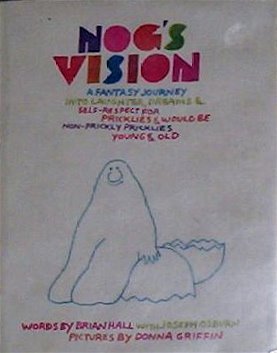
Nog's Vision. Brian P. Hall

Nog's Vision is subtitled A Fantasy Journey into Laughter, Dreams & Self-Respect for Pricklies & Would Be Non-Pricklies Young & Old. It is a parable illustrated with line drawings by Donna Griffin that is suitable for all ages.

Into a world called Prickle City, where everyone is defined by their function, a laughing visionary dreamer named Nog is born. The people don't know what to do with this misfit until Nog shares his dreams with them. The dream transforms the people of Prickle City.

It is the author's hope that it will transform you too, Gentle Reader. So if you are seeking a positive vision of self esteem and inner worth, this may be the book for you. Make Nog's Vision your own.

Monday, July 03, 2006


In Cold Blood. Truman Capote

On November 15, 1959 Perry Smith and Dick Hickock broke into a rural Kansas farmhouse where they bound and gagged the four people they found there: Herb and Bonnie Clutter, and their teenage children Kenyon and Nancy. They took about $40, a small radio and a pair of binoculars. When they left, the Clutters were all dead of shotgun blasts to their heads.

In Cold Blood tells the story of the events leading up to the murder and those following it in a straightforward chronological manner. The Clutters were highly respected members of the small town of Holcombe and their deaths came as a big shock. The murderer's thought they left no clues and had committed a perfect crime. The book treats murdered and murderers with a similar respect for their basic humanity. Although a terrible crime was committed the author is able to present all sides of the story.

Truman Capote truly immersed himself in the community and in the lives of the criminals to provide as much detail as could be found. This is a classic work that is well crafted and thought provoking. Sadly, it also was the last major work of the author.

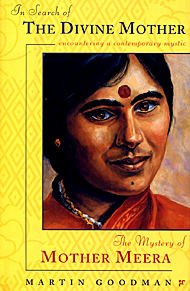
In Search of the Divine Mother: The Mystery of Mother Meera - Encountering a Contemporary Mystic. Martin Goodman

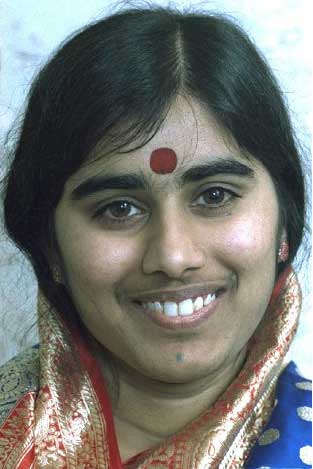
In Search of the Divine Mother by Martin Goodman is a very human attempt to understand the mystery of the incarnation of the Divine. Christians claim this mystery to explain how Jesus, a man born of woman, was also the Christ: God come to Earth to redeem humans of sin. The gospels of the New Testament are the Christian story of how this happened 2,000 years ago. Mr. Goodman took as his starting point Mother Meera, a woman born in 1960 in the Andhra Pradesh region of India who claims to be an avatar (or incarnation) of the Hindu goddess the Divine Mother.

The book is in three parts. In the first part, "A Journey into Devotion" we learn how Goodman and others receive "darshan" (being in the presence of God) from Mother Meera in her home in the small German village of Thalheim where she has lived since 1985. "Her darshan consists of a ritual, where she will touch a person's head, and then look into his eyes. During this process, she reportedly 'unties knots' in the person's subtle system and permeates him with light. She doesn't charge any money for doing so and she will not give lectures." -- WIKIPEDIA.

The second and main part of the book is called "The Life Story." Goodman was encouraged by Mother Meera and her followers to go to India and to write a book about her life. They gave him a list of contacts and he went. He interviewed these people and others who knew Mother Meera, Venkat Reddy, the uncle who discovered her, and Adilakshmi, her devoted friend and follower. Among those he interviewed were Mr. Reddy's family, whom he left to pursue his devotion to the child-god he had found among them. Here Goodman explores the question of how the Divine manifests itelf in the human. Does the human know of their divinity from birth? How does their divinity manifest itself on the material plane? How does a very human creature respond to their divine nature? How do others, who have no knowledge of the Divine, interpret the divine spark in someone they know? These are difficult questions that are not easily answered in the limited vocabulary of human discourse. Goodman makes a valiant attempt yet, as with all writing, we see more of the author than what he is trying to describe.

The third part "A Journey into Life" tells of his attempts to get his words published. Mother Meera and Adilakshmi ask him to delete his first draft and he complies. He struggles with his decision and, in anger, writes a second draft which is also never published. The book we have is a later draft and this last chapter is his attempt to come to terms with his contact with the Divine. He sums up by saying: "Mother Meera gives powerful spiritual transmission that helps people bud into the fullness of life.... I have met a power that comes from Mother Meera, and it has transformed my life. It did not come from her words but from within the silence of her public meetings. ... It is wonderful to know her through her silence alone." He sees her as "a superb channel" of the Divine, that the Divine energy flows through her human form to those who approach her. Yet he seems to be saying that she maintains human form and does not transcend it.

Goodman's devotion to Mother Meera helped him to come to terms with his own homosexuality, something that was also stated by her first biographer Andrew Harvey in his book Hidden Journey. Her unconditional love and silent acceptance were very healing to both men. When her 1997 book Answers Part 2 states that "Homosexuality is against the law of nature," both men are shaken from their devotion. Goodman states: "...since I know with certainty that Mother Meera is wrong in her condemnation of homosexuality, I cannot accept her word on anything else."

This is a wonderfully honest attempt to write about the human experience of the Divine. It will be insightful reading for any who are interested in spiritual growth.

Wednesday, June 28, 2006


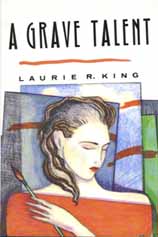
A Grave Talent. Laurie R. King

A Grave Talent is the first novel written by Laurie R. King. it is also the first in a series of mysteries that features the detective Kate Martinelli, A lesbian detective in the San Francisco Police Department. It won the 1993 Edgar Award for Best First Novel.

In this book Kate has just been promoted to detective and is assigned to work with a seasoned male detective who has recently transferred from Los Angeles. The case involves young girls who are strangled, but not molested, and left on the grounds of a rural gated community which is a home to various unconventional folks. When a famous female artist, who is living in the community under another name, turns out to be an ex-con who was convicted of murdering a child, it appears they have their culprit. Yet after meeting her, they start to have their doubts.

At first the young inexperienced woman and the hardened male detecive seem an odd couple that will not get along. Yet the novel is as much about their finding commonalities, and finally friendship, as it is about solving the high-profile case. This turns out to be a strong start to a mystery series that will deal with character development as well as criminal activity.

Laurie King has also written the Mary Russell series of historical mysteries involving a young woman and an older detective, the fictional Sherlock Holmes. She seems at home with the older man/young woman dynamics of both these series and brings a very human side to her characters while writing convincing mysteries.

Sunday, June 11, 2006

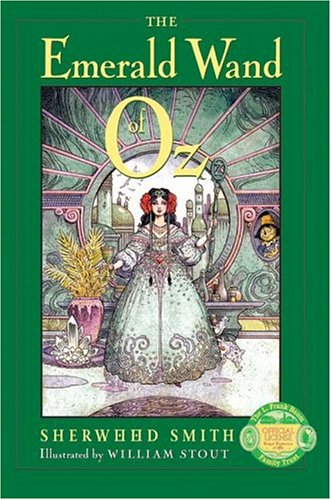
The Emerald Wand of Oz. Sherwood Smith

The Emerald Wand of Oz is an Oz story in the classic form created by L. Frank Baum over 100 years ago. Yet it has a modern flavor that may make it acceptable to a young audience.

It has a seal on the front cover proclaiming that Smith has an Official License to be Royal Historian of Oz that comes from The L. Frank Baum Family Trust. Before the Baum Oz books came into the public domain this was very important because the family trust controlled the use and depiction of the characters created by Baum. Lately this has been less relevant, and many authors have taken their hand to writing non-official Oz books with varying degrees of success.

In this book two sisters, from Lawrence Kansas, who believe they are related to Dorothy Gale get transported to Oz by a tornado. They get adopted into a community of children who groom a herd of wild unicorns, and pick up a strange friend who, like them, wants to escape from the possessive and vain unicorns. Their goal is to find Glinda and ask to be returned home to Kansas. Yet, as in so many Oz stories, there is a threat to the fairy land of Oz. This time it is the niece of the Wicked Witch of the West, who has taken up residence in her aunt's old castle, and has cast a spell on the fairy ruler Ozma, the good witch Glinda, and the Wizard. As in the classic Oz stories, a group of Ozzy characters who seem silly and helpless join together to defeat the villain and restore order. Once things are returned to normal, there is a banquet in the Emerald City, and the children are returned to their normal life much more mature and aware of the importance of group action and compassion.

This is planned to be the first of a three volume series by Smith, and so there are parts of the plot that do not get resolved. This gives the plot a loose feeling that Baum would never have tolerated. Sadly, Byron Preiss who was funding this project tragically died last July, and his publishing company declared bankrupcy this February. So the future of the project is deeply in question. Hopefully, someone will pick it up and see it to completion. Smith feels that the other two books are even better than this one, and it would be a shame if they never see print.
The Emerald Wand of Oz. Sherwood Smith

The Emerald Wand of Oz is an Oz story in the classic form created by L. Frank Baum over 100 years ago. Yet it has a modern flavor that may make it acceptable to a young audience.

It has a seal on the front cover proclaiming that Smith has an Official License to be Royal Historian of Oz that comes from The L. Frank Baum Family Trust. Before the Baum Oz books came into the public domain this was very important because the family trust controlled the use and depiction of the characters created by Baum. Lately this has been less relevant, and many authors have taken their hand to writing non-official Oz books with varying degrees of success.

In this book two sisters, from Lawrence Kansas, who believe they are related to Dorothy Gale get transported to Oz by a tornado. They get adopted into a community of children who groom a herd of wild unicorns, and pick up a strange friend who, like them, wants to escape from the possessive and vain unicorns. Their goal is to find Glinda and ask to be returned home to Kansas. Yet, as in so many Oz stories, there is a threat to the fairy land of Oz. This time it is the niece of the Wicked Witch of the West, who has taken up residence in her aunt's old castle, and has cast a spell on the fairy ruler Ozma, the good witch Glinda, and the Wizard. As in the classic Oz stories, a group of Ozzy characters who seem silly and helpless join together to defeat the villain and restore order. Once things are returned to normal, there is a banquet in the Emerald City, and the children are returned to their normal life much more mature and aware of the importance of group action and compassion.

This is planned to be the first of a three volume series by Smith, and so there are parts of the plot that do not get resolved. This gives the plot a loose feeling that Baum would never have tolerated. Sadly, Byron Preiss who was funding this project tragically died last July, and his publishing company declared bankrupcy this February. So the future of the project is deeply in question. Hopefully, someone will pick it up and see it to completion. Smith feels that the other two books are even better than this one, and it would be a shame if they never see print.

Friday, June 09, 2006

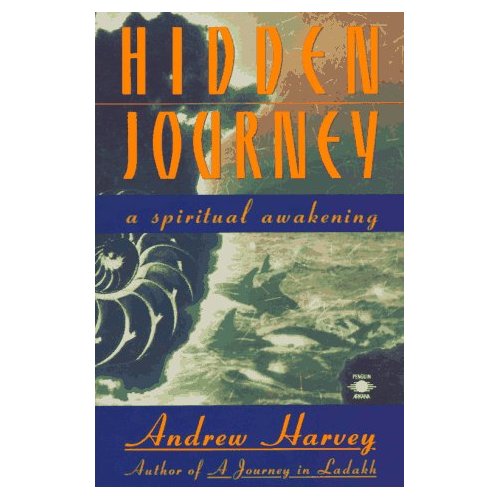
Hidden Journey: A Spiritual Awakening. Andrew Harvey

Hidden Journey reminds me of the Joan Osborne song "If God Were One Of Us." It tells the story of Andrew Harvey's nine years of spiritual growth while a pupil of Mother Meera, an woman who claims to be an incarnation of God on Earth. He meets Meera at the Aurobindo ashram in Pondicherry at the end of 1978 when he is 27 and she is 18. She has been brought there by Mr. Reddy, an Indian who had been seeking the Mother Goddess his whole life and discovered Meera when she was an 11 year old servant in his in-laws' home.

The book is more about Harvey's mystical journey, but people interested in Mother Meera will also find the book useful. He describes her silent meetings with followers (darshan) where she first holds the devotee's head in her hands and then looks into their eyes, supposedly imparting her grace in this process. Also her early life in India and Thalheim Germany are presented, but in a very subjective way through the practice of Mr. Harvey.

Since Mother Meera is silent during her public appearances, much of what we learn of her is from question and answer periods that Harvey held with her in private. However, even these are presented basically as leading questions by Harvey to which Meera agrees. The other method that Harvey uses to reveal her thoughts is through Mother Meera's voice in Harvey's head. He presents Meera as being able to communicate with him telepathically and many discussions in the book, presented in italics, are of this nature.

Another large portion of the book is devoted to the mystical gifts of visions and dreams that Harvey gets from Meera during his spiritual progress. Many of them are of glowing radiances, golden glows, and other lights. While these and other unusual occurences present a very lively and dramatic view of the mystical path, I found them repetative and skipped over a lot of them.

The book does present how an average human being with a fair share of personal problems can make spiritual progress through mystical practice. However, although Harvey made lots of progress, one gets the idea that he still has a way to go.

Monday, June 05, 2006

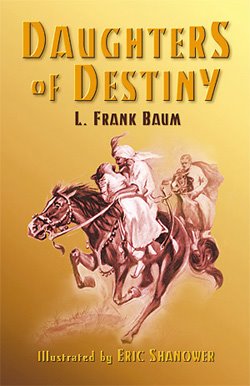
Daughters of Destiny. L. Frank Baum

Daughters of Destiny was originally published 100 years ago under the pseudonym Schuyler Staunton. This was the name Baum used for 2 of his novels written for an adult audience. It takes place in London and Baluchistan, on the Arabian Sea, which is now part of the countries of Pakistan and Iran. Famous for his children's books about the land of Oz, Baum was excellent at creating uncomplicated and strong characters and developing plots based on their interactions.

This book is no exception. A group of six Americans hires a Baluchi prince in exile to guide them to Baluchistan to negotiate the rights for a railroad. The prince is hoping to gain the throne when the current monarch dies. Their business plans get sidetracked by local intrigue over succession to the throne of the dying king.

Three of the Americans are women: the daughters of the two businessmen, and an aunt. They get swept up in the local affairs and romantic interests blossom. It is their destinies that drive the plot forward.

Baum's characters are either devious and plotting or noble and altruistic, and good wins out over evil in the end. Sadly, his ethnic portrayals are racist and stereotypical which makes this novel an interesting glimpse into the racial bias prevalent at the beginning of the 20th century. A good read for Baum fans and people interested in the portrayal of the Middle East in literature, but this will never be more than fringe literature in our modern culture.

The illustrations by Eric Shanower are well done and capture the essence of Baum's characters. While there is a hardbound edition limited to 250 copies, the complete work is also available in Oz-Story #4, both from Hungry Tiger Press.